

To the Malaysian public,
Over the past few months, Malaysians have heard troubling stories emerging from hospitals across the country — from Queen Elizabeth Hospital in Sabah to Raja Permaisuri Bainun Hospital in Ipoh, Perak.
Different hospitals, different states, different leadership teams, yet the concerns from frontline health care workers sound remarkably similar. Apparently, exhaustion, understaffing, and unsafe workloads are now becoming a nationwide “standardisation project”.
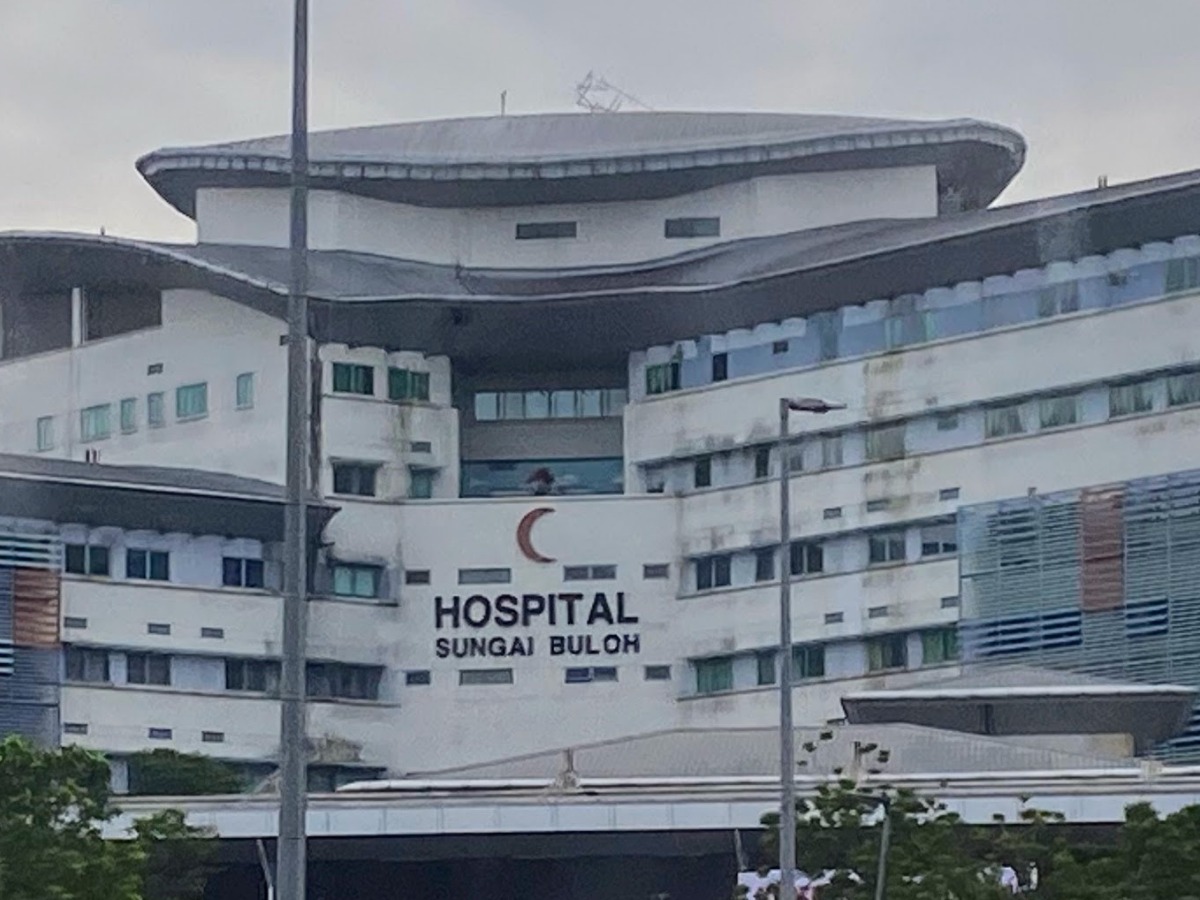
Today, I would like to share what many health care workers are quietly experiencing at Sungai Buloh Hospital.
The Department of Internal Medicine currently operates with approximately 40 active medical officers. To someone looking at an Excel sheet in an air-conditioned meeting room, perhaps that number sounds perfectly acceptable. Unfortunately, patients are not managed using spreadsheets.
These 40 medical officers are responsible for four major medical wards — 4A, 4B, 4C, and 4D — each carrying approximately 35 beds. That alone amounts to 140 beds.
On top of that, the department also manages lodger and multidisciplinary short-stay unit (MDSU) services, adding another 30 to 35 beds, together with medical admission ward (MAW) aka high-dependency unit and cardiac critical care (CCU) coverage.
But the workload does not stop within the main hospital compound. Internal Medicine from Sungai Buloh Hospital is also responsible for multiple general medical and geriatric wards at Pusat Kusta Negara, the building opposite the hospital. These include Ward 50, 51, 52, 54, and 55, each containing approximately 17 beds.
In simple terms, one department is now expected to function like several departments simultaneously.
Naturally, because the system believes in rewarding efficiency properly, another new ward, MDSU, was recently opened as part of administrative expansion and KPI objectives.
Clearly, when manpower is already critically stretched, the most logical solution is obviously to increase the workload further.
Perhaps exhaustion is now considered a renewable resource.
The Internal Medicine outpatient clinic (MOPD) meanwhile sees approximately 100 patients daily. Simultaneously, the Emergency Department generates approximately 32 to 40 reassessment cases daily, alongside another 18 to 20 new referrals every single day.
Peripheral services contribute another 20 to 30 reassessments daily, together with five to 10 new referrals on top of existing cases.
Yet despite these numbers, some services continue functioning with only one or two medical officers covering entire clinical areas – in Internal Medicine at a tertiary referral hospital that is one of the busiest health care systems in the country.
This is no longer simply “busy”. This is sustained cognitive overload dressed up as “service expansion”.
The public must understand something very important: medicine is not factory work. Doctors are not machines running on unlimited battery life simply because they wear stethoscopes.
Every additional ward means more patients, reviews, referrals, documentation, ward rounds, procedures, calls, and opportunities for exhaustion-related mistakes.
Yet this expansion did not come with proportional manpower growth, meaningful salary adjustment, additional allowance, or workload protection.
Meaning two departments may technically receive similar pay, while one department carries dramatically heavier patient volumes, referrals, complexity, and cognitive burden.
And this is where the frustration becomes deeply demoralising.
Internal Medicine has always been the backbone — and arguably the brain — of the hospital. When patients become too complicated, Internal Medicine absorbs the burden. When systems become congested, Internal Medicine becomes the shock absorber. When referrals pile up endlessly, Internal Medicine keeps the hospital functioning.
And what becomes the reward for performing efficiently? Another ward opens.
Apparently in public health care, competence is sometimes treated less like an achievement and more like a punishment mechanism.
The more the department absorbs, the more the system assumes it can continue absorbing forever, until exhaustion itself quietly becomes institutional policy.
Perhaps the most disturbing part is this: the hospital director continues pushing service expansion and KPI-driven projects despite obvious manpower strain on the ground.
Opening new wards without adequate staffing is not visionary leadership; it’s administrative ignorance disguised as achievement.
To be fair, this situation should not be blamed entirely on the Head of Department. Most clinicians understand how hospital hierarchy works.
When hospital-level KPI expansions are introduced, departmental leaders themselves often have limited power to refuse. Their hands become tied between protecting staff, maintaining services, and complying with administrative expectations from above. Which makes the situation even more worrying.
People on the ground may recognise the strain, but can’t stop the machine from expanding further.
Doctors are not complaining because they dislike hard work. Internal Medicine has always been demanding. The real concern is whether the workload being imposed remains safe, humane, and sustainable.
Cognitive overload in medicine is dangerous. Exhausted clinicians do not suddenly become superheroes. They become human beings functioning under unsafe levels of fatigue.
Fatigue in health care eventually leads to delayed reviews, missed deterioration, medication errors, emotional burnout, and eventually the loss of experienced health care workers from public service altogether.
Then one day, after enough doctors resign, migrate overseas, go private, or emotionally detach from the system, leadership will once again organise meetings asking why retention is collapsing.
Perhaps another KPI dashboard can answer that too.
Human beings have limits. No administrative presentation can negotiate with biology forever.
The author is a medical officer at Sungai Buloh Hospital in Selangor. CodeBlue, which has requested comments from Sungai Buloh Hospital, is providing the author anonymity because civil servants are prohibited from writing to the press.
- This is the personal opinion of the writer or publication and does not necessarily represent the views of CodeBlue.


