

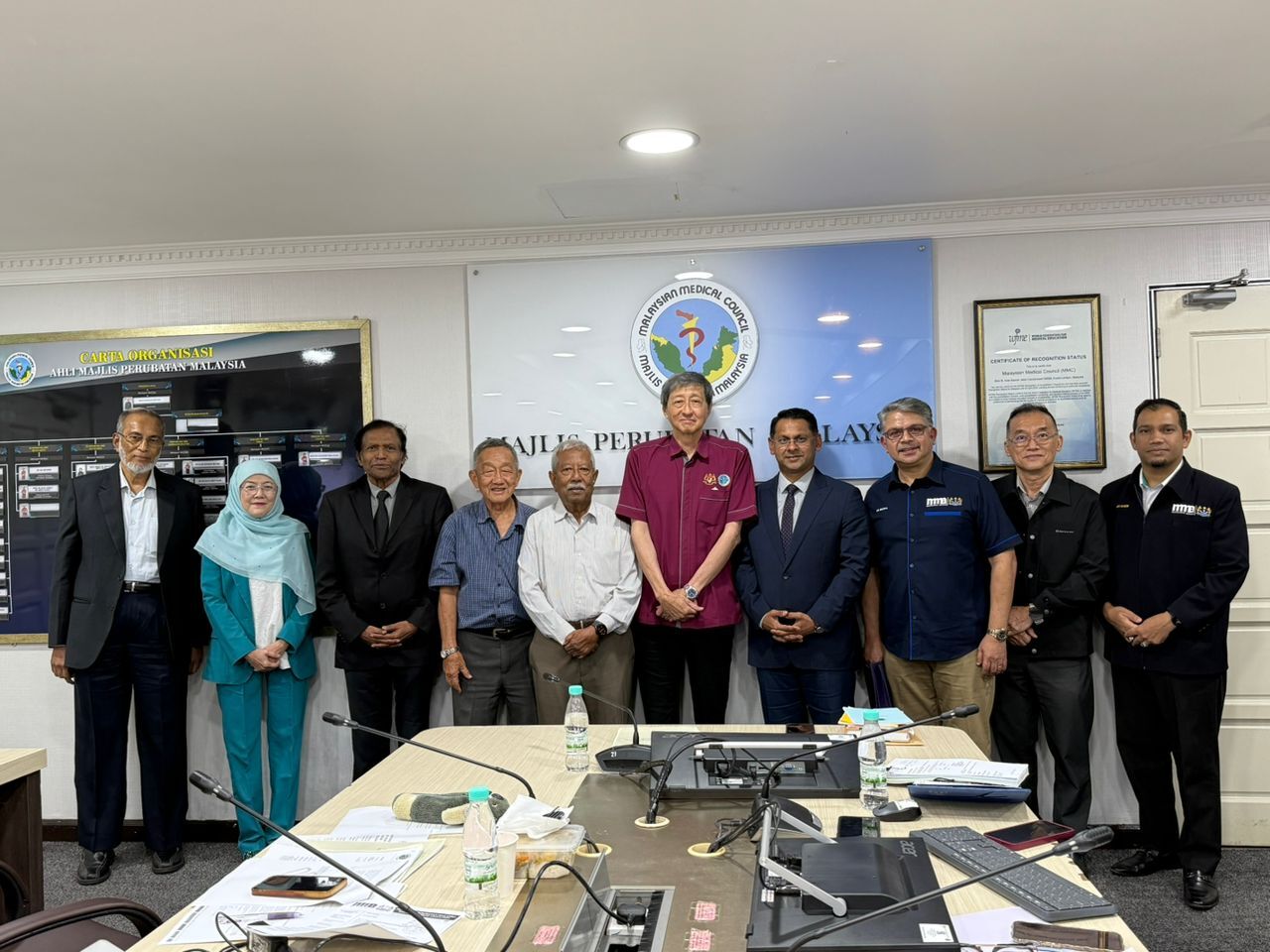
KUALA LUMPUR, May 21 — The Malaysian Medical Council (MMC) has prohibited fee-splitting practices involving doctors by private hospitals and payers like insurance and takaful operators (ITOs) and third-party administrators (TPAs).
The regulator of the medical profession said fee-splitting is defined under regulations of the Private Healthcare Facilities and Services Act (PHFSA) 1998 (Act 586) as any form of kickbacks or arrangements made between practitioners, health care facilities, organisations, or individuals as an inducement to refer to or receive a patient.
MMC’s Code of Professional Conduct 2019 similarly prohibits registered medical practitioners (RMP) from practising fee-splitting because the premise for referral must be quality of care.
“There shall be no clauses in the contractual agreements between health care facilities or insurance companies or third-party administrators and RMPs, or through any other health care delivery conditions which would control, or modify through discounts or any other financial arrangements, the professional fee chargeable by the practitioner, or in any way control access of patients to the practitioner based on such demands, as stated in Section 83 of the PHFSA,” MMC chief executive officer Dr Zakiah Mohd Said wrote in a May 15 letter to the Malaysian Medical Association (MMA), as sighted by CodeBlue.
“All financial and administrative arrangements must safeguard the patient’s right to choose his preferred doctor and ensure that clinical care remains solely guided by the best interests of the patient, free from external financial or institutional and corporate influences.
“No patient shall be denied access to any practitioner based on decisions which may arise from any contract-related agreements between an insurance company or third-party administrators and the medical practitioner.”
The MMC also said its prohibition of fee-splitting practices will cover any agreement by a medical practitioner to “any demand or action by any institution or organisation to extract or retain a portion of a practitioner’s fees as condition or inducement for the referral or assignment of patients.”
The Council’s decision on the issue of fee-splitting was made at its 462nd meeting held last January 20 after a discussion by the MMC’s ethics committee.
MMC’s decision was relayed to MMA in response to a complaint by the doctors’ association about recent reports indicating that private hospitals are allegedly compelling independent specialist doctors to reduce their professional fees due to discount arrangements negotiated between hospitals and medical insurers.
“These pressures are being applied without the doctors’ consent, and under threat of exclusion from hospital practice or insurer panels,” said MMA honorary general secretary Dr Vasu Pillai Letchumanan in an April 22 letter to the MMC, as sighted by CodeBlue.
“As doctors’ professional fees are regulated under the 7th and 13th Schedules of the PHFSA, any unauthorised deviation also constitutes a legal breach.
“If these actions are permitted to continue, they will not only compromise ethical standards but may implicate a significant portion of the medical fraternity in potential misconduct, triggering large-scale disciplinary proceedings.”
The MMC told MMA that it has made the following decisions:
“Referral of patients should be based on quality of care and not on financial arrangements between practitioners and third-party agencies.
“Providing discounts to third-party agencies as the basis for referral and assignment of patients restricts the freedom of choice of patients and is unethical.
“Fee-splitting or kick-back arrangement is unethical as it undermines patient care. This includes any arrangements between practitioners and any institution or organisation for the purpose of procurement or assignment of patients.”
The MMC clarified that the sharing of fees by two or more practitioners managing a patient, like performing an invasive procedure together, or acting for another – with the patient’s knowledge and consent – isn’t considered fee-splitting.
MMA’s Response: MOH, Bank Negara, MyCC Must Act
In response to the MMC’s decision, MMA urged the Ministry of Health (MOH), Bank Negara Malaysia (BNM), and the Malaysia Competition Commission (MyCC) to enforce the MMC’s ruling.
The MMC only has jurisdiction over medical practitioners. Malaysia does not have legislation regulating TPAs. Although ITOs fall under the central bank’s jurisdiction, conduct with health care providers or decision-making processes on medical claims are mostly unregulated due to the absence of legislation.
Health care providers and standards of care are heavily regulated, but the commercialisation of medicine remains in a regulatory grey area in Malaysia. Only the Domestic Trade and Cost of Living Ministry has an explicit consumer protection mandate, but it rarely ventures into medicine.
MMA said general practitioners (GPs) must agree to a TPA’s contract terms to be on its panel.
“Those terms often include deducting 10 to 15 percent from the doctor’s professional fee, plus registration and annual renewal fees, as the price of receiving patient referrals,” said MMA president Dr R. Arasu in a statement yesterday.
“For private hospitals, the arrangement works differently, but the outcome is the same. Insurers and TPAs negotiate contracts directly with private hospitals, which are regulated under the Private Healthcare Facilities and Services Act 1998.
“As part of those contracts, hospitals are asked to provide discounts on their charges. The hospital, now squeezed from above, passes that pressure downward. Private specialists working in those hospitals then face their own contractual demands from the hospital for discounts on their professional fees.
“The specialist never signed with the insurer. The specialist never signed with the TPA. But they absorb the discount at the end of a chain that starts with a commercial negotiation they had no part in.”
MMA told MOH and BNM to enforce Act 586 and a consumer protection mandate respectively.
The doctors’ group also demanded action from MyCC as it criticised the agency for not formally responding to its 2024 complaint.
“When an intermediary controls patient access and uses that control to extract fees from doctors and hospitals, the Competition Act 2010 is directly relevant.”
MMA further told private hospitals to push back on contractual demands that breach Act 586, besides telling employers to audit their TPA arrangements.


