

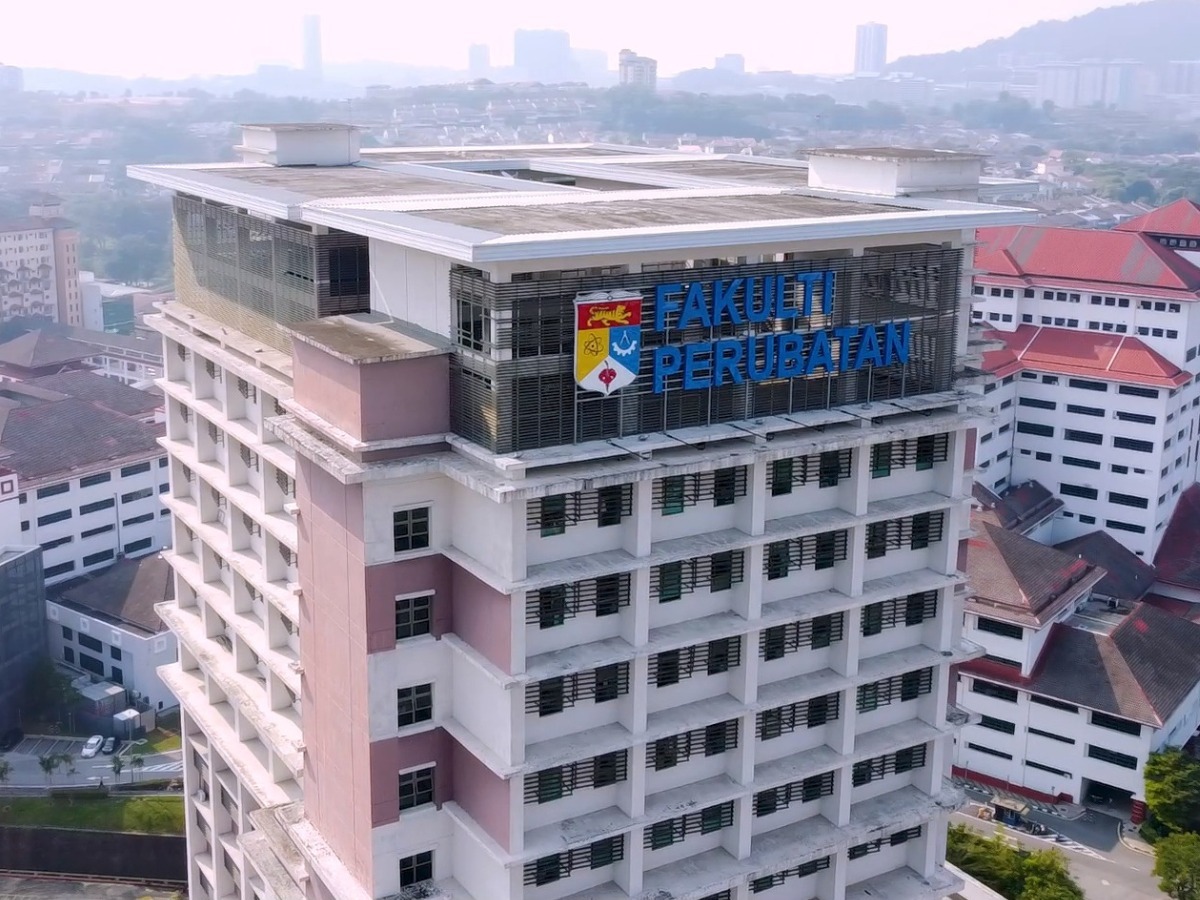
KUALA LUMPUR, May 29 — The public health medicine fraternity is pushing for the derecognition of Universiti Kebangsaan Malaysia’s (UKM) Doctor of Philosophy (Community Health) as a specialist qualification by next year.
The Academy of Medicine of Malaysia’s (AMM) College of Public Health Medicine (CPHM), Malaysian Public Health Physicians’ Association (PPKKAM), and the Public Health Specialty Committee have opposed amendments to the first revision of specialty-specific requirements (SSR) for public health medicine that was issued by the Malaysian Medical Council (MMC) in July 2025.
“We do not agree with the recognition of a PhD as an equivalent pathway to Public Health Medicine specialisation,” they said in a recent letter to MMC president Dr Mahathar Abd Wahab, as sighted by CodeBlue, that requested a meeting with him last April 24.
“To ensure fairness and an orderly transition of standards, we propose that a sunset clause be established, whereby recognition of the PhD as a specialist pathway (Third Pathway/Fourth Schedule) be completely discontinued by 2027. After this date, only recognised structured specialist degrees (MPH/DrPH) should be accepted for specialist registration.”
The three groups were responding to MMC’s January 14 letter that stated the Council’s decision to retain amendments to the first revision of Public Health Medicine SSR.
These included the relaxation of entry pathway requirements (Part 1) without comprehensive public health training and retention of the PhD under Schedule 4 of the Medical (Amendment) Act 2024 as a pathway towards recognition as a Public Health Medicine Specialist (PHMS).
“We wish to emphasise that this decision has serious implications for specialist medical standards and public health safety,” said the public health medicine groups.
The public health medicine fraternity insisted that a PhD wasn’t equivalent to specialist training because PhD training was research-oriented and wasn’t designed to produce competencies in making high-risk public health decisions, managing population health crises, or managing outbreaks.
“Recognising a PhD as a specialist pathway would create a false equivalence between research expertise and expertise in public health medicine practice,” said the public health medicine fraternity.
“This is because a PhD does not have a comprehensive coursework curriculum encompassing the seven competency domains of the Doctor of Public Health (DrPH).”
Citing an April 15 letter by UKM’s Department of Public Health Medicine at its Faculty of Medicine, the public health medicine fraternity noted that the public university has acknowledged that its public health PhD programme is conducted “entirely by research” and isn’t a postgraduate specialist programme because it doesn’t possess the clinical/field competency measurement criteria required for Public Health Medicine specialisation.
The public health medicine fraternity also claimed that UKM confirmed that its Master of Community Health Science programme did not fulfil SSR Part 1 because it only contains 15 credits in core disciplines, far below the minimum requirement of 40 credits stipulated in the SSR.
“This clarification from the academic institution itself proves that the amendments recognising these programmes as specialist pathways are inconsistent with the academic structure and competency standards practised by the degree-awarding university itself,” they said.
Public Health Medicine Requires ‘Structured’ Training
The public health medicine fraternity further argued that it was impractical and risky to say that competency deficiencies could be completed after graduation, stressing that public health medicine requires structured training of at least 48 months encompassing seven domains simultaneously.
“‘Attachment training’ after graduation without a structured curriculum and standardised assessment cannot replace formal specialist training.”
According to the public health medicine fraternity, abandoning the principle of structured training that requires a single transcript will result in fragmented and inconsistent training, difficulty in competency assessment, and uncontrolled variation in specialist quality.
“Malaysian Qualifications Agency (MQA) standards are insufficient to assess the specific professional competencies required for the functions of a Public Health Medicine Specialist,” they said.
“If multiple transcripts for SSR Part 1 are to be introduced, they should only be accepted if they involve full postgraduate degrees under recognised medical and health faculties. The accumulation of fragmented/piecemeal course certificates or credit units that do not form a holistic curriculum cannot be accepted.”
The public health medicine fraternity asserted that the Medical Act doesn’t expressly authorise the Medical Education Committee (MEC) to make substantive amendments to specialist standards that were developed through consultation with subject matter experts and subsequently approved by the MMC.
“The role of the MEC in this context is administrative and supportive in nature, and does not ordinarily include the power to amend specialist standards without endorsement from the relevant technical body,” they said.
“The MEC has no jurisdictional basis to amend the SSR without SSC (specialty subcommittee) involvement. These amendments are vulnerable to challenge on grounds of procedural validity and undermine the integrity of the national specialist standards-setting system.”
The fraternity claimed that if the SSR amendments proceeded, “the integrity of specialist standards would be compromised, the capacity to respond to health crises will be affected, and the credibility of the Public Health Medicine Specialist profession will be eroded.”
Public Health PhD Akin To Local ‘Parallel Pathway’
An anonymous source, who claimed to represent students of UKM’s public health PhD programme, said derecognition as a specialist qualification for registration on the National Specialist Register (NSR) would be the first for a local programme.
UKM is the only public health PhD listed on Schedule 4 of the Medical Act, unlike similar PhD programmes offered by other public universities that have yet to be recognised as specialist qualifications in public health.
The medical doctor explained that a typical public health programme is four years’ long, comprising one year of Master’s in public health (MPH) and three years of a Doctorate in public health (DrPH).
However, private universities do not offer DrPH because they can only offer clinical postgraduate programmes if they have a hospital attached. Hence, students who study Master’s in public health in private universities often go to UKM for a PhD to get gazetted as public health specialists. UKM offers both DrPH and PhD programmes.
Public health PhD programmes can be self-funded or sponsored by the government’s HLP scholarship.
“A lot of students from MPH who can’t do DrPH do the PhD programme because it’s a second chance. It’s like a parallel pathway, just that it’s locally run,” the doctor told CodeBlue.
He countered critics’ claims about the PhD programme being unstructured, pointing out that PhD students sit in the same classes as DrPH, like research methodology, for example.
“I will be the first to admit that PhD is more of an academic qualification compared to DrPH. But these are the best people to finally go into the public health system and produce academicians,” said the doctor.
He observed that public health specialists with a PhD “function and act the same way” as those with a DrPH, saying the former are only identified when one specifically looks at their qualification.
One of the differences between PhD and DrPH, he said, is that the former requires one-year gazettement as a specialist, compared to six months for the latter.
The doctor, however, pointed out that thesis submission is more rigorous under a PhD programme than DrPH because the PhD Viva process involves questions from not just public health physicians, but also experts from fields related to one’s thesis. A student may also be asked to show their research dataset.
Derecognition Of Local Programme Sets ‘Dangerous Precedent’
The doctor said UKM public health PhD students are now asking if the MMC will derecognise the programme “cold turkey”, just like how Newcastle University Medicine Malaysia (NUMed) graduates were left in the lurch after the United Kingdom passed its Medical Training (Prioritisation) Act 2026 into law last March.
“They’re wondering what will happen to them,” he said.
“Why are we derecognising a local programme that’s already listed on the NSR? This will set a very bad and dangerous precedent. At least NUMed graduates have an alternative because they can work in Malaysia.
“But if your local authorities derecognise your own local programme here, where else can you go? It’s like you’re being disowned by your home land.”
The doctor also noted that many UKM public health PhD students are on government scholarships. “They were put on bonds, so where does that leave the government?”
He said UKM’s public health PhD programme is taken up by other specialists, such as family medicine specialists, psychiatrists, or even nurses who want to enter academia and become professors.
UKM’s PhD programme is also heavily subscribed by aspiring public health specialists from Pakistan, Iraq, and India, with the Pakistani government sending students to the Malaysian public university for the programme.
“A lot of people from overseas are so impressed with this programme,” said the doctor. “I have seen a lot from Iraq who went back as full-fledged professors, but they still want to do work with Malaysia because this is where they were educated.”
He explained that public health specialists with PhDs typically work in research institutes like the Institute for Health Systems Research (IHSR) under the Ministry of Health’s National Institutes of Health (NIH) that produces National Health and Morbidity Surveys.
“This is where applied characteristics of public health research can be applied,” said the doctor. “You get a lot of people with very robust capacity.”
“I’m not belittling DrPH, which is more for field work. But a PhD is academic plus field work.”
AMM and CPHM declined to comment. CodeBlue has also requested comments from MMC and UKM.


