

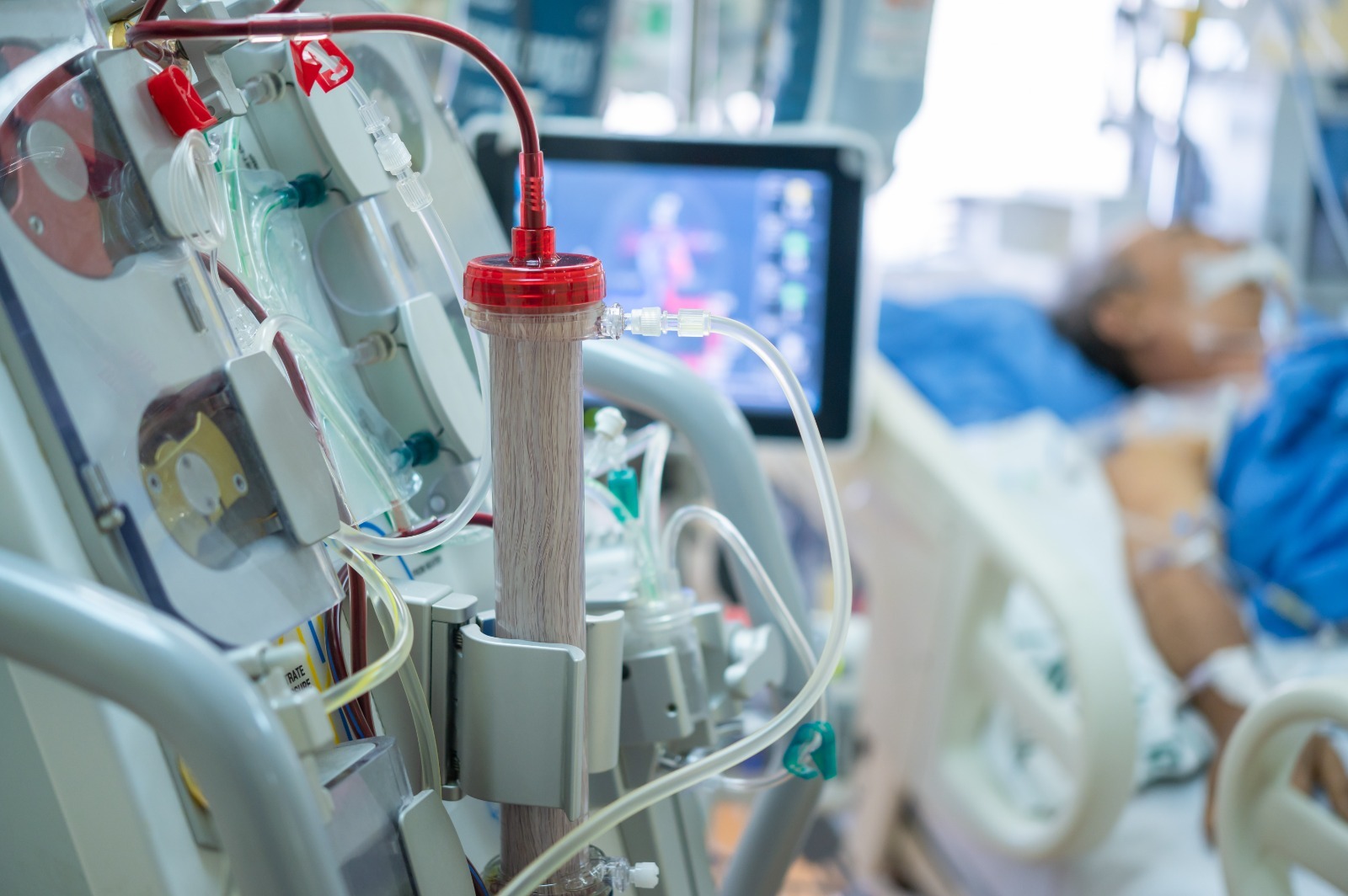
KUALA LUMPUR, April 14 — Malaysia is facing an emerging shortage of dialysers and other product components of haemodialysis (HD), a life-saving treatment for more than 50,000 patients in the country.
Galen Centre for Health and Social Policy chief executive Azrul Mohd Khalib said although there is no confirmed nationwide dialyser shortage yet, distributors of this critical dialysis component are already expressing growing concern that a “shortage is already occurring, or about to occur, in pockets of smaller dialysis centres and charities across the country which are particularly vulnerable.”
Prices of the critical medical devices are also reportedly increasing.
“Dialysers, especially for single use, are a massive consumable that is required for dialysis. This will impact particularly those which depend on imported dialysers, especially if current supply chain disruptions worsen,” Azrul told CodeBlue.
“The risk is being driven by the West Asia conflict, higher fuel and freight costs, shipping delays, and Malaysia’s dependence on imported medical devices, components, and raw materials.
“Although Malaysia does have local manufacturing capacity for dialysers, the majority are imported. Local manufacturers are also vulnerable to imported raw materials, components, and disruptions to global shipping routes.”
Azrul explained that distributors rarely stockpile dialysers because these are fast-moving consumables essential for treatment.
HD therapy cannot be performed without a dialyser that acts as an artificial kidney.
In a previous op-ed, Azrul wrote that the Hormuz crisis could trigger a dialysis crisis in Malaysia, pointing out that the health care system is deeply dependent on plastic-based medical devices, consumables, and disposables.
Naphtha, a vital petroleum derivative used in plastic manufacturing and petrochemicals, is essential for the production of blood tubing sets, IV lines, catheters, sterile packaging, syringes, dialyser housings, nebulisers, specimen containers, drainage bags, valves, clamps, and countless other components.
Malaysia has one of the highest rates of end-stage renal disease in the Asia Pacific region and globally, with an estimated 60,000 dialysis patients in Malaysia.
Shortage Of HD Concentrate Canisters, Bottles
A supplier of HD products in Malaysia has stopped accepting new customers for HD concentrate orders, due to shortages of raw materials used to produce canister packaging for the solution.
Imported plastic resins from the Middle East are in short supply, even though supply of the concentrate solution itself to make dialysate isn’t being disrupted.
“We are the same like other companies – our canister supplier takes raw materials from Middle East suppliers,” an official at Company X told CodeBlue.
“However, we’re able to source from one local concentrate supplier that buys raw materials from Petronas Chemicals.
“But we’re taking precautionary measures by limiting taking new orders from new customers. We’re focusing only on existing customers for concentrate product.”
Another pharmaceutical company, Company Y, similarly said it’s now facing a “limited” stock of bottles for HD concentrate packaging because bottle manufacturers are encountering difficulties in obtaining raw materials.
“What we’ve heard is that they’ve had issues getting sufficient granules. This is for the 10-litre bottle. It’s not the same supply availability as it used to be,” an official at Company Y told CodeBlue.
The pharmaceutical company expects a potential disruption in its supply of HD concentrates, which are packaged in the bottles, to customers in perhaps a few months’ time. Currently, there are still bottles in the system awaiting distribution.
“Of course we’re worried,” said Company Y.
No Stockpiles For ‘Just-In-Time’ Concentrate Bottles
The pharmaceutical company pointed out that it doesn’t stockpile bottles for HD concentrate packaging as 10-litre bottles take up a lot of storage space. Only some inventory is held in-house because fresh stocks used to come in regularly.
“You obviously don’t stock these things,” said Company Y. “They’re not raw materials; they’re JIT (just-in-time) stuff. In terms of stock control and inventory holding, we don’t have a lot of it.”
The Company Y official added that this was the first time they’d ever encountered such an issue.
While medicine stockpiles are common in Malaysia and other countries, especially after the Covid-19 pandemic, Iran’s blockade of the Strait of Hormuz – one of the world’s most critical maritime chokepoints – has triggered a global energy crisis, with shortages of petrochemical-derived products across industries, including health care.
Company Y said manufacturers of bottles for dialysis concentrate packaging might consider using a different specification of granules.
Pharmaceuticals and medical devices, however, are very tightly regulated, compared to consumer goods like milk that can be easily repackaged if plastic bottles aren’t available.
Still, Company Y believes that stability issues might not be a major concern if HD solution is repackaged because dialysis concentrates aren’t complex products and are mainly made just of “water with salt”.
“You do have to think about alternatives that might be viable.”
Officials from Companies X and Y requested anonymity due to the sensitivity of the issue.
When asked if dialysis concentrates could be repackaged in other materials if the original canister or bottle was facing shortages, former Negeri Sembilan head state nephrologist Assoc Prof Dr Lily Mushahar said new innovations need approval from the Medical Device Authority (MDA).
“It’s not easy for innovations of new material,” she said. “New material needs to be compatible with the human body and have no potential risks, for example allergic reactions that can cause death.”
In a statement last Thursday, the Ministry of Health (MOH) warned of imminent shortages of medicines and medical devices in Malaysia, especially certain “critical medical devices, particularly imported products in high-risk categories”, but didn’t specify what these were.
Health Minister Dzulkefly Ahmad told reporters last Friday that drug prices have risen by about 30 to 40 per cent, with even higher price hikes for medical devices at up to 100 per cent. He also claimed that medicine supply was sufficient until the end of June, but didn’t mention medical devices.
At a National World Kidney Day 2026 event in Selangor last Sunday, jointly organised by the National Kidney Foundation of Malaysia (NKF) and the Malaysian Society of Nephrology (MSN), Dzulkefly didn’t talk about potential shortages of critical haemodialysis medical devices and consumables due to the Persian Gulf conflict. Neither did patient groups publicly raise concerns at the event.
Chronic disease patient groups in Japan have already expressed worries about potential shortages of medical supplies, including for dialysis, due to disruptions in supply of naphtha, an ingredient used to make plastic.
Japan Times reported Prime Minister Sanae Takaichi as saying that the Japanese government was working to ensure the stable distribution of naphtha and ethylene, adding that Japan currently has enough stock of naphtha to cover domestic demand for four months.
Dialyser Core Component Of HD, Impractical To Convert Most HD Patients To PD

Prof Dr Lim Soo Kun, who is MSN president and a consultant nephrologist at Universiti Malaya, explained that a dialyser in haemodialysis acts like a “filter” or artificial kidney, while dialysis concentrate solution mixed with purified water forms the dialysate, which is like a “special cleaning fluid”.
As blood passes through the dialyser, waste products and excess water (from the patient’s blood) move across the membrane into the dialysate, which then carries them away. The blood and dialysate flow in opposite directions to make this cleaning process work better.
It’s impossible to perform haemodialysis without a dialyser.
“Based on current technology, dialyser is the core component of HD treatment,” Dr Lim told CodeBlue. “The improvements that we have now are different types of dialysers with better efficacy.”
According to the Malaysian Dialysis and Transplant Registry 2024, up to 70 per cent of dialysis patients reuse their dialysers.
“Having said that, more and more HD centres, especially private and NGO (non-governmental organisation) centres, are converting to single-use dialyser. In government (MOH) settings, it is still mainly reuse because of costs,” said Dr Lim, who was the former head of the renal division at Universiti Malaya Medical Centre (UMMC).
UMMC has been using dialysers on a single-use basis for nearly a decade, he said, adding that practices differ across other university hospitals.
Dr Lim explained that using dialysers on a single-use basis is mainly to lower cross-infection risk. “The dialysis clearance is also better. This is because sometimes centres tend to reuse too many times.”
When asked how quickly HD patients can be converted to peritoneal dialysis (PD) – which doesn’t require a dialyser as one’s own peritoneum is used as the natural semipermeable membrane – Dr Lim stressed that not all patients are suitable or able to perform PD despite Malaysia’s PD-first policy.
“This is because PD is a home therapy where success is dependent on many factors, including family support, home environment, patients’ self-care ability and health literacy etc.,” he said.
“The current PD policy is aiming to increase the PD uptake to 20 per cent by 2030. This means that we are looking at a majority of patients in Malaysia who are still HD patients. Personally, I do not think converting most patients to PD is the practical solution for the crisis of short supply of HD consumables.”
The nephrologist said patients with kidney failure who do not receive timely appropriate treatment may die from uremia (very high urea or waste in the blood), fluid overload (excess water in the body), or high blood potassium leading to cardiac arrhythmia (abnormal heart rhythms) etc.
Dr Goh Heong Keong, a consultant nephrologist and physician at Gleneagles Hospital Penang, said private hospitals like Gleneagles practise single-use for dialysers.
“If the Tenckhoff catheter can be inserted, HD patients can be converted to PD immediately. Some centres would prefer the surgical wound to heal (about two to four weeks) before starting patients on PD, but basically the Tenckhoff catheter can be used immediately after operation,” Dr Goh told CodeBlue.
“Patients with end stage renal failure would likely die eventually without dialysis but some patients, especially the elderly, could live up to months with conservative management.”
Many Dialysis Facilities Reuse Dialysers

Senior consultant nephrologist Dr Lily explained that during haemodialysis, a patient’s blood goes through the dialyser or artificial kidney. Toxins move to the dialysate and clean blood then returns to the patient.
This process at a standalone dialysis centre or hospital, during which the patient is hooked up to a haemodialysis machine, is continuous for about four hours. HD patients need to undergo the treatment about three times a week.
A dialyser is necessary for HD therapy. “That’s the only way for the blood to be cleansed,” Dr Lily told CodeBlue.
She said many dialysis facilities across the public and private sectors reuse dialysers up to 12 times for the same patient for cost control. The medical device is put through a reprocessor machine to remove blood clots in the small fibres. After that, patency is tested to ensure that the dialyser is effective for reuse.
“If the patency isn’t good, even after just three times of reuse, we will dispose of it.”
Hence, in dialysis facilities practicing reuse, one dialyser can last a month for one patient.
When asked what could be done in a crisis of dialyser shortages, Dr Lily said dialysers could be reused more than 12 times, as long as the medical device is still efficacious based on patency tests.
The senior consultant nephrologist – who recently retired from public service and is currently lecturing at IMU University and running a clinic at UCSI and Tuanku Ja’afar Seremban Hospital (HTJ) in Negeri Sembilan – said plastic tubing lines for HD treatment are single-use.
Patients Will Die Without Dialysis
Kidney failure patients cannot survive without dialysis, Dr Lily said, with deaths occurring from as early as a few days after stopping the therapy to as long as four to six weeks, based on previous cases of voluntary or palliative HD cessation.
According to theMalaysian Dialysis and Transplant Registry 2024, Malaysia had about 55,000 dialysis patients at the end of 2024. PD patients comprised only about 12 per cent at 6,648 out of 55,237 total patients dialysing on December 31, 2024. Malaysia reports about 9,000 to 10,000 new dialysis patients every year.
When asked if patients could be quickly converted from HD to PD during a crisis, Dr Lily said this was unrealistic due to the sheer number of HD patients in the country at some 49,000 by the end of 2024.
The senior consultant nephrologist explained that an end-stage kidney disease (ESKD) patient wanting to switch to PD must first undergo a procedure for PD catheter insertion into the abdomen. This depends on the availability of nephrologist or surgeon manpower, as well as availability of an operating theatre (OT) or procedure room.
“If we can have the facilities, we can do three to four patients every day. But in places like Seremban, we can only do five cases in a week,” said Dr Lily.
Some patients may not be suitable for home-based PD therapy either because they live in a nursing home or single rented room without proper hygiene. They might also be unable to do PD themselves due to poor vision and have no family members to assist.
Dr Lily, a PD-first champion, said PD is much more cost-effective than HD because the home-based treatment doesn’t require as much infrastructure or human resource. A health care professional is required to take care of six HD patients, compared to a ratio of 1:42 for PD in places like Seremban. Thailand, which practises a PD-first policy, has a 1:200 ratio.
“If there’s really a crisis and no one is supplying dialysers, we have to convert HD patients to PD in a short span of time, but we have so many patients on HD,” she said. “It’s going to be a huge problem.”


