

Several months ago, concerns were raised about the requirement for three consecutive years of LNPT (Laporan Nilai Prestasi Tahunan) assessments before specialists could apply for subspecialty training. At the time, many regarded these concerns as hypothetical.
Last Tuesday, the results of the latest subspecialty training application exercise were released. The concerns are no longer hypothetical.
A significant number of specialists who completed local Master’s programmes were rejected, mainly because they were short of one LNPT assessment. These rejections cut across the board, including internal medicine, surgical, ENT, paediatric etc.
Let us be clear about what happened. These doctors were not rejected because they failed specialist examinations, poor performance, or lacking competency or suitability for further training.
They simply found themselves one LNPT short.
For many affected physicians, this outcome was particularly difficult to accept because the missing LNPT arose during the very years they spent undergoing Master’s training while continuing to serve in public hospitals.
And that is where the controversy begins.
Most Malaysians hear the term “Cuti Belajar Bergaji Penuh” and imagine doctors spending several years away from service to focus entirely on their studies.
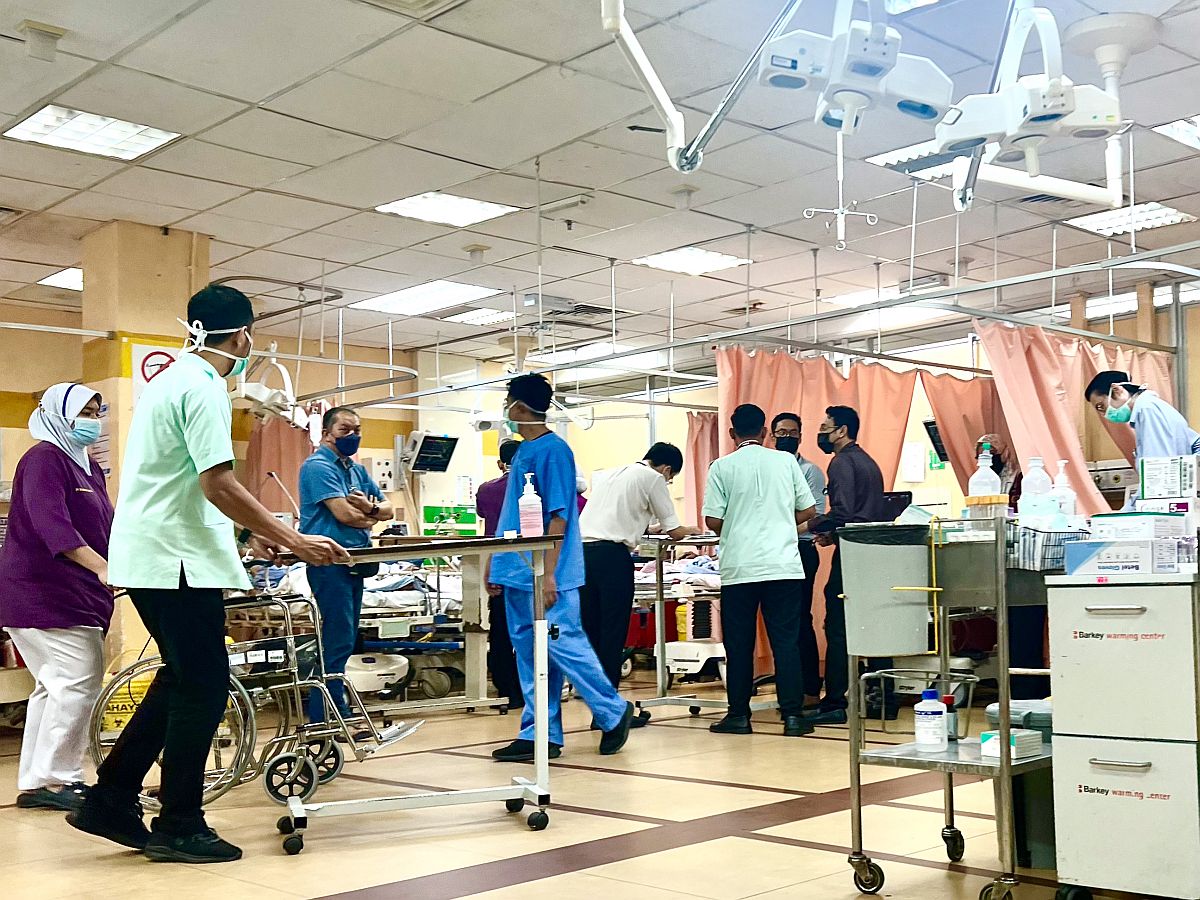
The reality is very different. Master’s trainees continue to run wards, conduct clinics, perform procedures, supervise junior doctors, cover on-call rosters, and manage critically ill patients. In many hospitals, they are an indispensable part of the workforce.
At the same time, they are expected to complete specialist examinations, academic requirements, workplace-based assessments, research projects, and dissertations.
In other words, they are simultaneously providing service and undergoing specialist training.
This is why many affected physicians struggle to understand how years that were considered valuable enough for hospitals to depend upon can later become a disadvantage when applying for subspecialty training.
This Did Not Happen In Isolation
What makes the recent outcome particularly concerning is that it is merely the latest example of a broader problem.
Earlier this year, CodeBlue highlighted how Malaysia may require as long as 13 to 15 years to produce a subspecialist physician.
The striking observation was that much of this delay does not arise from additional educational requirements or superior clinical training. Instead, it frequently arises from waiting periods, service requirements, administrative prerequisites, and eligibility criteria that must be fulfilled before doctors are even allowed to proceed to the next stage.
A typical physician may spend five to six years in medical school, two years in housemanship, years as a medical officer before entering specialist training, four years completing a Master’s programme, additional years as a newly qualified specialist, and only then become eligible to apply for subspecialty training.
Subspecialty training itself then requires another three to four years. When everything proceeds smoothly, the journey can easily approach 15 years.
The uncomfortable reality is that many of those years are not spent acquiring new clinical skills. They are spent waiting for permission to continue progressing.
The recent LNPT issue has become another example of how administrative requirements can add delays to an already lengthy pathway.
No one is arguing that standards should be lowered or that subspecialists should be produced faster at the expense of competency.
The question being asked is much simpler: Are we adding years of meaningful training, or years of bureaucracy?
When Bureaucracy Becomes A Retention Problem
This issue extends far beyond a single subspecialty intake exercise.
Malaysia has spent years discussing health care brain drain. We worry when doctors leave for Singapore, Australia, the United Kingdom, or the Middle East. We worry when specialists leave government service for the private sector. We worry about workforce shortages and increasing waiting times for patients.
Yet we often focus exclusively on salary while overlooking another important factor: whether talented doctors believe there is a fair and predictable pathway for professional growth.
The physicians affected by this policy are not junior doctors at the beginning of their careers.
They are newly qualified specialists who have already completed one of the most demanding phases of medical training. They have passed examinations, undergone gazettement, and spent years serving within public hospitals.
These are precisely the individuals Malaysia should be encouraging to stay. Instead, many now face further delays before they can even begin the next stage of training.
The situation becomes even more difficult to justify when one considers that these additional years are often not accompanied by meaningful improvements in remuneration, incentives, or career progression.
The workload, responsibilities, expectations, and administrative requirements increase. But the rewards frequently remain unchanged.
At some point, talented doctors will inevitably begin asking a difficult question: “Is the system helping me become a better doctor, or simply keeping me waiting?”
That question becomes even more uncomfortable when doctors observe that health care systems in countries such as Singapore, Australia, and the United Kingdom are often able to produce subspecialists through more streamlined pathways while maintaining equally rigorous standards.
No doctor is asking for an easy route. Medicine should be demanding, rigorous, and require sacrifice.
But there is a fundamental difference between rigorous training and prolonged bureaucracy. Patients benefit from the former. Nobody benefits from the latter.
The Message We Are Sending
Perhaps the most troubling consequence of this episode is the message it sends to future generations of doctors.
For decades, young medical officers have been encouraged to pursue local Master’s programmes as a pathway towards specialist qualification.
Yet today, some affected physicians are asking a question that should concern every policymaker: “If I had known this would happen, would I still have chosen the Master’s pathway?”
For some, the answer is becoming increasingly uncomfortable. Not because they regret becoming specialists or because they believe other recognised pathways are inferior or superior.
But because they feel disadvantaged for choosing a pathway that the system itself encouraged and invested heavily in.
No health care system should create circumstances where doctors begin to regret undertaking specialist training or create circumstances where highly motivated specialists feel punished for pursuing further expertise.
Policies do more than determine eligibility. They shape behaviour and influence career decisions. Ultimately, they determine whether talented people choose to stay.
A Question For Policymakers
Months ago, concerns were raised that Malaysia’s specialist and subspecialty training pathway had become increasingly burdened by administrative hurdles rather than educational requirements.
On June 16, 2026, many newly qualified Master’s-trained physicians experienced the consequences firsthand.
They did not fail their examinations, gazettement, or their patients. They simply found themselves one LNPT short.
If Malaysia genuinely wishes to produce more subspecialists, strengthen specialist services, and address the growing challenge of brain drain, then we must ask whether our policies are facilitating the development of future experts or unintentionally delaying them.
Because every year a subspecialist is delayed is another year patients wait. Every talented physician who becomes disillusioned is another specialist we risk losing. And every specialist who leaves because of preventable bureaucratic obstacles represents a loss that Malaysia can ill afford.
We trained these doctors. We relied upon them. We needed them. We should not be creating new reasons for them to walk away.
The author is a physician in public service.
- This is the personal opinion of the writer or publication and does not necessarily represent the views of CodeBlue.


