

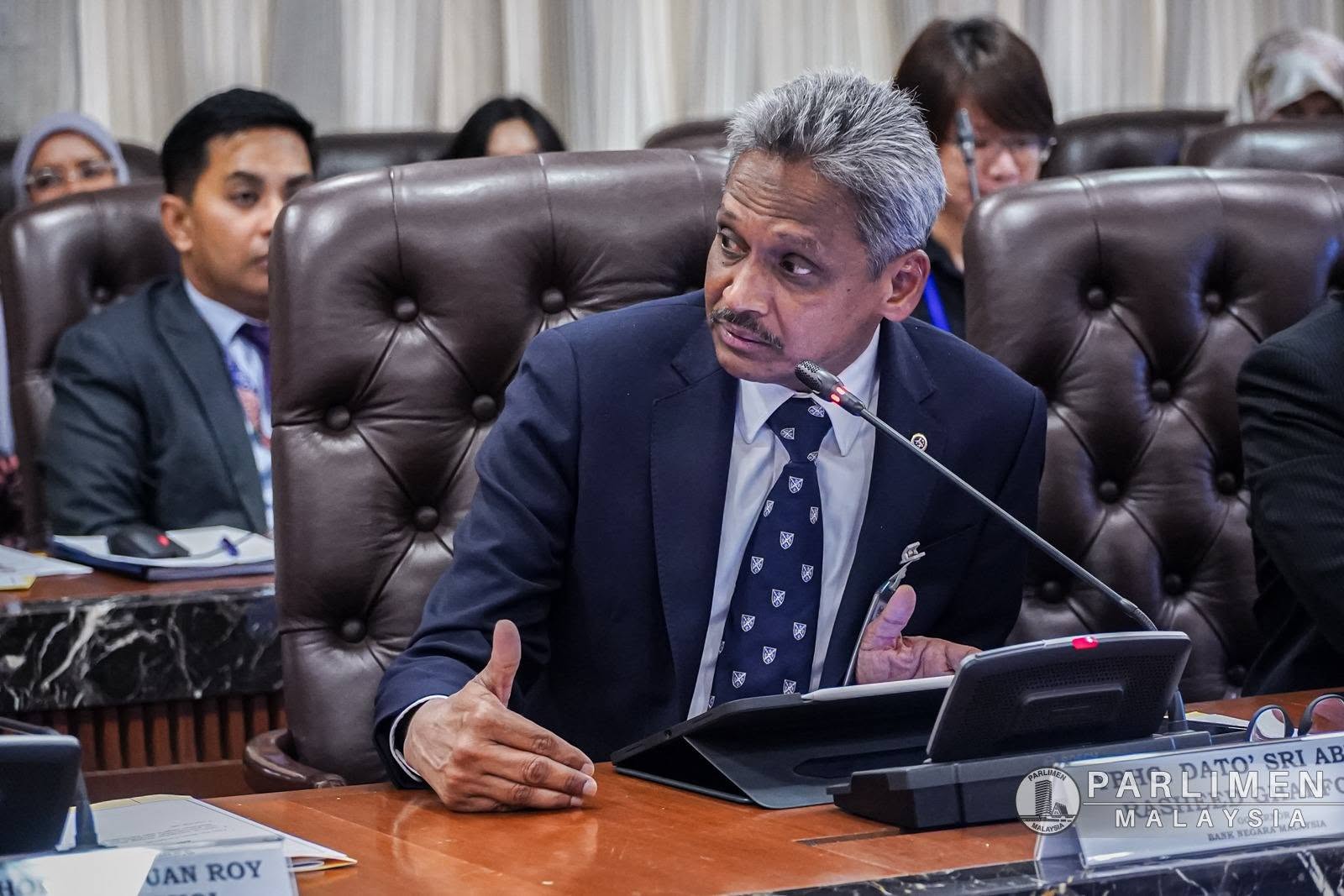

KUALA LUMPUR, July 1 — Bank Negara Malaysia (BNM) says it’s mandated to protect the financial sustainability and solvency of insurance and takaful operators (ITOs) so that these companies can make claim payouts.
BNM governor Abdul Rasheed Ghaffour told Parliament’s Public Accounts Committee (PAC) in a hearing on February 24, 2025, that safeguarding ITOs’ financial sustainability was the central bank’s “mandate and also main objective in terms of regulating insurance premium adjustments.”
“This is because, when we look at medical and health insurance/takaful (MHIT) products, they are becoming increasingly unsustainable due to inflation and rising medical costs. Bank Negara Malaysia scrutinises every application for premium adjustments to ensure the sustainability of these products,” said Abdul Rasheed, according to the Hansard.
“ITOs must also first take affordability into account by limiting premium increases in accordance with their internal policies, which have been approved by their respective Boards of Directors.
“They are also not permitted to adjust premiums to increase their profit margins. This is strictly prohibited by Bank Negara Malaysia. The review process also ensures that they provide alternative products so that policyholders whose premium payments would increase have the option of switching to more basic or lower-cost plans that better match their financial means and medical protection needs.”
In another PAC hearing on June 19, 2025, the BNM governor explained that the central bank protected the insurance and bank industries to ensure continued services to the people.
Bayan Baru MP Sim Tze Tzin had pointed out that Bank Negara is “seen as protecting the industry rather than protecting the consumer”, citing frequent emails by the central bank to policyholders that their insurance disputes were simply a “commercial decision”.
“If we do not properly safeguard and closely monitor the stability of insurance companies, ensuring that they are able to continue operating, it could lead to instability in the financial sector. In that event, they may no longer be able to offer insurance products for the public’s use,” said Abdul Rasheed in response.
“So, that’s why we are also protective about this industry. Not protective but more of making sure they can continue to be sustainable, both insurance and banks. That’s where I think if people see — perceive us to be so protective on the insurance industry and the bank is for that reason, not because something we want to make a profit.”
The BNM governor insisted that the central bank maintained fairness to consumers by penalising banks and insurance companies for wrongdoing.
“Sometimes, although we say commercial decisions, the fact that there is a letter that comes from Bank Negara to the insurance company, they will react already without us having to tell them to do anything. From what we have seen, from the data that we have, Yang Berhormat, about 80 plus percent of the cases that comes to us has been resolved,” said Abdul Rasheed.
BNM: No Copay Cap, Some Willing To Bear RM10,000 Copayment

Abdul Rasheed also told the PAC in February 2025 – more than a year ago – that the central bank was awaiting data on the performance of copay features in health insurance, in response to Sim’s suggestion to cap copayments to 5 per cent. Copayments are a fixed amount or percentage that a policyholder pays whenever health care services are used.
At the same hearing, then-BNM deputy governor Jessica Chew Cheng Lian, who now serves as the central bank’s technical adviser on financial stability following her retirement, explained that BNM wasn’t capping copayments because the higher the copayments, the lower the premiums.
She also noted then that many MHIT products in the market only imposed maximum RM500 deductibles per policy year. A deductible is the initial amount the policyholder must pay before coverage begins.
“So, we want to provide options for policyholders from different backgrounds and different income levels. Some policyholders actually prefer high copayments. For example, those who can afford it may be willing to bear a copayment of, say, RM10,000 if they are hospitalised—that is, RM10,000 paid out of their own pocket,” Chew told the PAC.
“ITOs do offer products like this, and the premiums for these plans are much lower. For that group of policyholders, this is their preferred type of product. In fact, that takeout for that group is actually higher.”
Chew also said BNM would set an “appropriate” copayment amount for its Base MHIT product.
About a year later in January, the central bank’s White Paper suggested far more severe deductibles and copayments for the government’s own Base MHIT product than what officials talked about at the PAC hearing.
Under the Base MHIT’s standard plan with an RM100,000 annual limit, for policyholders seeking treatment at “in-network hospitals”, RM500 deductible per disability applies to policyholders aged under 61 and RM1,000 for those aged 61 onwards. For those who go to “out-of-network hospitals”, policyholders face those same deductible amounts plus a 20 per cent copayment capped at RM3,000 per disability.
For the Base MHIT’s standard-plus plan with an RM300,000 annual limit, a whopping RM10,000 to RM15,000 deductible is charged.
Bank Negara’s 2024 annual report found that the majority of Malaysians had difficulty raising RM1,000 as emergency funds.
Contrary to Chew’s comments at the PAC that medical plans with higher copayments have “much lower” premiums, monthly premiums for the central bank’s own Base MHIT product are only RM30 to RM50 cheaper under the standard-plus plan with RM10,000 to RM15,000 deductible versus the standard plan with RM500 deductible (for those aged 31 to 35).
The government’s discrimination against senior citizens with deductibles twice as high as younger adults under the Base MHIT product isn’t even standard practice in the private market, as ITOs charge the same deductibles or copayments regardless of age.
BNM: Equitable Community Rating Punishes Young, Healthy People

BNM officials also sought to defend the risk-pooling design of conventional private health insurance, even as PAC members highlighted the injustice of punishing older and longstanding policyholders with large premium hikes.
“As people grow older, the likelihood of falling ill and the probability of making insurance claims naturally increase. This is the main factor driving premium increases for individuals moving into certain age brackets,” Abdul Rasheed told the PAC.
“However, through our efforts to review risk pooling and related measures, we will seek to address this issue. In addition, the Base MHIT product that I outlined earlier will also give policyholders the opportunity to choose plans that are better suited to their medical protection needs. So this is what we will do.
“If we find any premium adjustments that don’t follow the rules set by Bank Negara Malaysia, action will be taken on the ITO.”
Chew explained that based on the concept of risk-pooling in health insurance, premiums collected are meant to pay for the current claims experience, not to pre-fund future claims. Hence, premium adjustments for older people, who tend to make more claims, will be “a little higher”.
She said using community rating with flat premium rates for everyone, instead of risk-rating, required a large number of policyholders.
“That is precisely why we want to pursue this basic product. If it can be offered at scale, it may help moderate premiums for all policyholders,” Chew told the PAC.
“Otherwise, if we were to impose a flat premium on all policyholders, there is a possibility that young and healthy individuals would also end up paying very high premiums. If that happens, it could discourage people from purchasing insurance in the first place. That would create another problem.
“That is why we are now looking at how to review the risk-pooling mechanism. Equally important is the introduction of a basic product, which, by achieving a large scale, could give us greater scope to moderate premium adjustments.”
Abdul Rasheed told the PAC that 91 per cent of policyholders faced premium hikes of 40 per cent and under in 2024, with only a “minority” facing larger increases of more than 40 per cent.
Sim rebutted by saying that policyholders aged 40 to 49 faced 50 per cent premium hikes. “I don’t think this is a minority; actually it’s the majority. This is a big demographic who is paying for this. So, I think the insurance company is not telling the truth to Bank Negara.”
Abdul Rasheed backed Chew’s opposition to community rating that may end up imposing high premiums on young adults equivalent for older people, saying: “We also want to achieve the goal of being inclusive, so that insurance products can be enjoyed by all Malaysians.”
“We also want to encourage younger people to start purchasing insurance. Why? Because we do not want to place additional pressure or strain on the government’s public health care system.”
The government’s Base MHIT product adopts risk-rating like the private market, with premiums based on an individual’s age, gender, and health status. In its White Paper, BNM said full community rating, although equitable, could lead to substantially higher premiums borne by healthy lives and eventually cause the risk pool to become unsustainable in a voluntary system.
In another PAC hearing on June 19, 2025, Chew claimed that the Base MHIT product would enable risk-pooling across ITOs because currently, in the private market, each ITO bears its own risk pool.
“So with the standardised base product, we can risk pool for the whole system and that will really bring down the premium pressure.”
BNM’s White Paper did not explain the mechanism or governance structure for creating an independent risk pool for the Base MHIT, from which premiums are collected and claims are paid out, as opposed to each ITO managing its own premium collection and claim payouts.
Base MHIT ‘Pathway’ To National Health Insurance With EPF Contributions
In the June 2025 PAC hearing, Abdul Rasheed said the government’s Base MHIT product could be a “pathway” toward national health insurance by policyholders using retirement savings in their Employees Provident Fund (EPF) to pay for premiums.
“So, this could be also a test case for us. To start with this base product and then we have some kind of support from the government to help people to buy the insurance coverage, whether through EPF or MySalam assistance, tax incentives, and the like. Then it will slowly lead toward National Health Insurance.”
Last Thursday’s tabling of the PAC report on health insurance and private hospital charges – more than a year after the committee launched its inquiry in February 2025 – revealed the government’s misplaced optimism in how quickly it could implement its Reset initiative.
Abdul Rasheed told the PAC in June 2025 that the government targeted end 2025 to finalise the Base MHIT product design, first quarter of 2026 for a pilot phase, and the second half of 2026 for a wider rollout.
Rakan KKM – a proposed private hospital wing programme by the Ministry of Health (MOH) to benchmark diagnosis-related groups (DRG) for private health care – was expected to receive its first patient in December 2025, according to MOH deputy secretary-general (finance) Zahrul Hakim Abdullah’s testimony to the PAC on August 14, 2025.
Zahrul even touted the launch of Rakan KKM in four government hospitals – Cyberjaya Hospital, Putrajaya Hospital, Sultan Idris Shah Serdang Hospital, and the National Cancer Institute (IKN) – by the fourth quarter of 2025 before expansion to other main hospitals this year.
The last time the government spoke about Rakan KKM, a key pillar of the Reset initiative as a showcase private health care facility to use Base MHIT and DRG, was when Health Minister Dzulkefly Ahmad told reporters last January 6 that the “premium economy” model would start at Cyberjaya Hospital in the first quarter of this year, “at the latest, March”, without further delay.
In its response to the PAC report last Friday, the Joint Ministerial Committee on Private Healthcare Costs didn’t mention when Rakan KKM would be launched, only that the Base MHIT would be piloted by the end of July. Finance Minister II Amir Hamzah Azizan told the Dewan Rakyat yesterday that a nationwide rollout was targeted for January 2027.
This is the first article in a CodeBlue series on the PAC’s 1,999-page report.


