

If you believe that Malaysia’s crumbling health care system is solely the fault of underfunded government budgets or exhausted public hospital staff, look closer at your own dinner plate: the greatest threat to our national health is entirely self-inflicted.
As a nation, we often find comfort in blaming systemic infrastructure when public hospital waiting lines spill out into corridors or specialist appointments are pushed back by months.
But the uncomfortable truth is that we are also feeding our own crisis. An ounce of prevention is worth a pound of cure, yet we collectively continue to choose the cure, straining the national safety net to its absolute breaking point with diseases that were entirely preventable.
Malaysia has quietly earned the unenviable title of the heaviest nation in Southeast Asia holding the highest prevalence of obesity in the region. Health data reveals that more than half of the country’s adults are overweight or obese, with over 23.1 per cent of the adult population clinically classified as obese.
We are currently facing a massive, slow-motion epidemic of non-communicable diseases (NCDs) — such as diabetes, ischemic heart disease, hypertension, chronic respiratory diseases, and cancers — that threatens to bankrupt our public reserves and overwhelm our health care providers. This is no longer a localized warning or a distant policy concern; it is a clear national emergency.
Understanding The Numbers
The dimensions of this epidemiological crisis are detailed in the National Health and Morbidity Survey (NHMS) 2023. The structural findings present a sobering assessment of our population’s physical baseline:
The Weight Burden: Over half of all Malaysian adults — specifically 54.4 per cent — are classified as either overweight or obese.
The Numbers: Nearly one in three adults has hypertension, and one in six lives with diabetes.
The Silent Trio: Approximately 15.6 per cent of the adult population lives with diabetes, 29.2 per cent battles hypertension, and 33.3 per cent suffers from hypercholesterolemia.
The Multi-Illness Trap: In a highly concerning trend, nearly 2.3 million Malaysians are simultaneously managing three distinct chronic NCDs. Furthermore, roughly half a million citizens live with all four major metabolic risk factors at once.
Sugar and Salt Consumption: 47 per cent of adults consumed sugar beyond the recommended level of more than 7.5 teaspoons per day, and three in four adults consumed excessive salt, averaging 7.3g daily – far exceeding the World Health Organization’s (WHO) recommended limit of less than 5g per day.
What makes these statistics profoundly alarming is their shifting demographic footprint. Historically, metabolic disorders were viewed as illnesses of advanced age. Today, these conditions are increasingly diagnosed in patients in their late twenties and thirties. We are actively compromising our economic engine, as the working-age population is increasingly sidelined by chronic illness.
Cancer Risks And Screening Rates
In Malaysia, the lifetime risk of developing cancer is one in eight for all adults. Over 65 per cent of cancer cases are diagnosed at advanced stages (Stages 3 and 4). The risk of developing cancer increases significantly with age, with approximately 88 per cent of cases diagnosed in adults 50 and older.
Breast Cancer: 46 per cent of women or ≥18 did not perform breast self-examinations; 71 per cent of women or ≥40 have never had a mammogram.
Cervical Cancer: 65 per cent of women or ≥20 had not undergone a Pap smear in the past 3 years.
Colorectal Cancer: 88 per cent of adults or ≥50 have never had a foecal occult blood test (FOBT)
Health Metric | National Adult Prevalence |
| Overweight and Obesity | 54.4 per cent |
| Hypercholesterolaemia | 33.3 per cent |
| Hypertension | 29.2 per cent |
| Diabetes Mellitus | 15.6 per cent |
The Hidden Price Tag: Health Care Costs Vs. Corporate Brain Drain
While the visual strain of this epidemic manifests in crowded emergency rooms, the true financial devastation happens quietly behind office desks and factory lines.
A landmark joint study released by the Ministry of Health (MOH) and the WHO, titled “Prevention and Control of Noncommunicable Diseases in Malaysia: The Case for Investment”, reveals that NCDs inflict a staggering RM64.2 billion annual economic loss on Malaysia – equivalent to roughly 4.2 per cent of our Gross Domestic Product (GDP).
The Economic Burden That Exceeds The Health Budget
Consider the arithmetic. The annual economic burden of NCDs in Malaysia — including cardiovascular disease, cancer, diabetes, and chronic lung disease — is estimated at a staggering RM64.2 billion. This comprises RM12.4 billion in direct health care treatment costs and RM51.8 billion in indirect costs, including productivity losses and premature deaths.
Let that sink in. The NCD burden of RM64.2 billion already exceeds the MOH’s entire 2026 allocation of RM46.52 billion. We are spending more on the consequences of NCDs than the government allocates to the entire health portfolio. As the saying goes, we are robbing Peter to pay Paul – except there is no Paul left to pay.
The WHO has warned that without urgent intervention, Malaysia faces RM30 billion in productivity losses from NCDs over the next 15 years, alongside over 180,000 preventable deaths. This is not a distant threat. It is happening now.
Cost Component | Financial Impact |
| Direct Medical Treatment Costs | RM12.4 Billion |
| Total Indirect Productivity Losses | RM51.8 Billion |
| Workplace Presenteeism Losses | RM30.0 Billion |
| Workplace Absenteeism Losses | RM1.8 Billion |
- The Presenteeism Tax (RM30 billion): Employees showing up to work while physically compromised by NCD complications—such as chronic fatigue, blurred vision, or diabetic nerve pain—and operating at a fraction of their normal capability.
- The Absenteeism Cost (RM1.8 billion): Working-age adults taking frequent medical leave or emergency time off due to acute flare-ups.
- Premature Mortality: Active, skilled professionals dying long before reaching retirement age, permanently erasing their economic output from the national ledger.
A Culture Of Excess And Inactivity
You are what you eat, and our modern landscape has made unhealthy choices the path of least resistance. Our status as a celebrated culinary destination has a dark secondary effect: a cultural normalisation of dietary excess.
Refined sugars, high-sodium processed foods, and midnight dining have shifted from occasional indulgences to daily baseline habits. This is heavily compounded by an engineered physical environment that actively discourages basic movement.
The National Health and Morbidity Survey (NHMS) confirms that nearly 30 per cent of Malaysian adults are entirely physically inactive. We live in a highly motorised, sedentary society where deliberate exercise is often treated as an optional luxury rather than a daily biological requirement.
A profound public denial compounds this crisis. Millions of citizens skip annual health checkups, choosing comfortable ignorance over early medical intervention.
They only engage with the health care apparatus when a catastrophic health event occurs — a sudden stroke, a heart attack, or advanced kidney failure. By that stage, the window for low-cost, preventative care has closed, leaving behind an expensive, lifelong burden on the state.
A Choice Between Responsibility And Collapse
Ultimately, the NCD epidemic is a mirror reflecting our collective choices. As you make your bed, so you must lie on it. We cannot demand an efficient, world-class public health care system while simultaneously feeding it an endless, preventable stream of chronic illnesses driven by personal lifestyle choices.
If our current trajectory remains unchecked, the sheer volume of metabolic disease will completely overwhelm our public hospitals, leaving fewer resources, funds, and beds for unavoidable medical crises like genetic disorders, occupational accidents, and infectious outbreaks.
The survival of our national health care framework relies on a fundamental shift in public consciousness. Health is not an entitlement that can be abused and subsequently repaired for a nominal fee at a government clinic. It is an individual and civic responsibility.
It is time to step away from collective denial, look honestly at our daily habits, and realise that saving the health care system begins with saving ourselves.
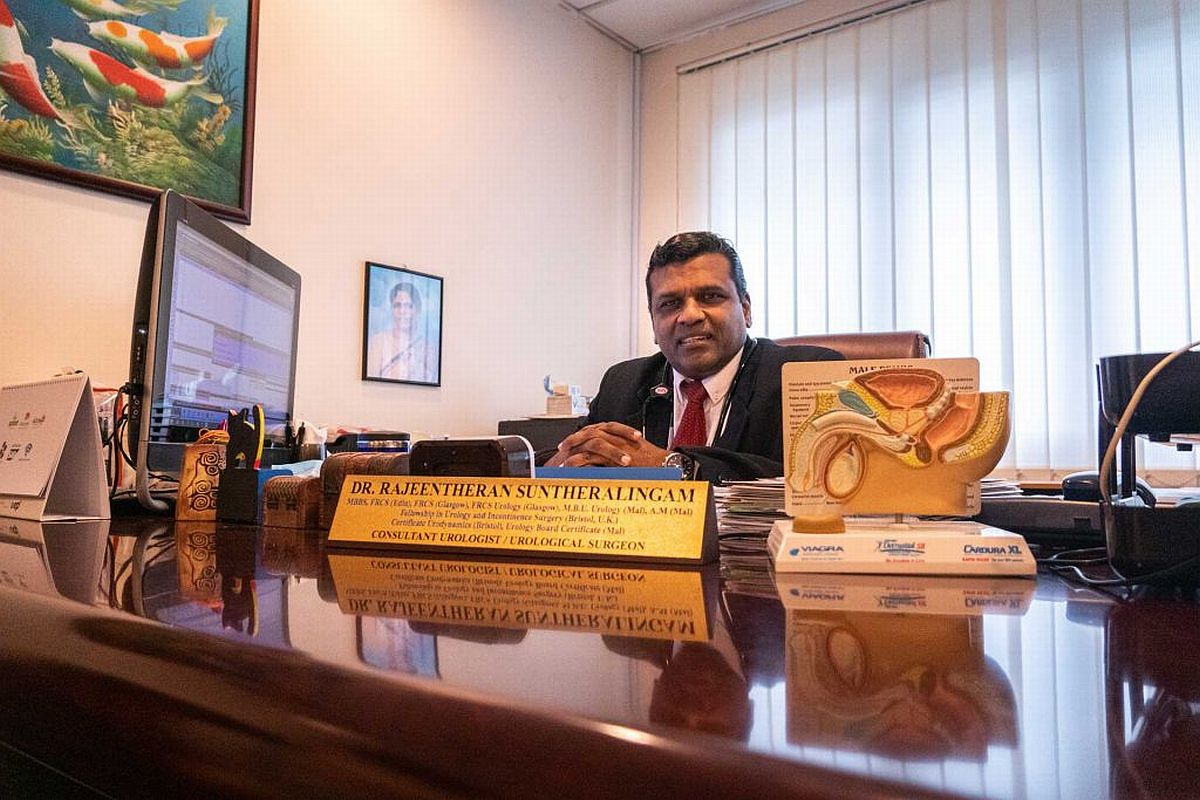
The author is a senior consultant urologist and urological surgeon at Damansara Specialist Hospital.
- This is the personal opinion of the writer or publication and does not necessarily represent the views of CodeBlue.


