

KUALA LUMPUR, June 8 — The Ministry of Health (MOH) has established blanket charging protocols for certain medical procedures to guide private medical practitioners and insurance and takaful operators (ITOs).
In the same breath, the ministry has reminded ITOs that any letters previously issued by the MOH in relation to billing or insurance claims were case-specific and context-dependent, and shouldn’t be applied as a general policy reference for other claims.
“The Medical Practice Division has since received several queries from health care practitioners and the insurance industry seeking clarification on appropriate charging practices for certain medical procedures performed in clinical settings,” said MOH medical practice division director Dr Hirman Ismail in a letter dated last January 7, as sighted by CodeBlue.
“In line with the provisions under the 13th Schedule of the Private Healthcare Facilities and Services (Private Hospitals and Other Private Healthcare Facilities) (Amendment) Order 2013, and following consultations with relevant medical professional societies, this Division hereby issues the following charging protocols as guidance for private medical practitioners and the insurance industry.”
Dr Hirman’s circular listed the following procedures:
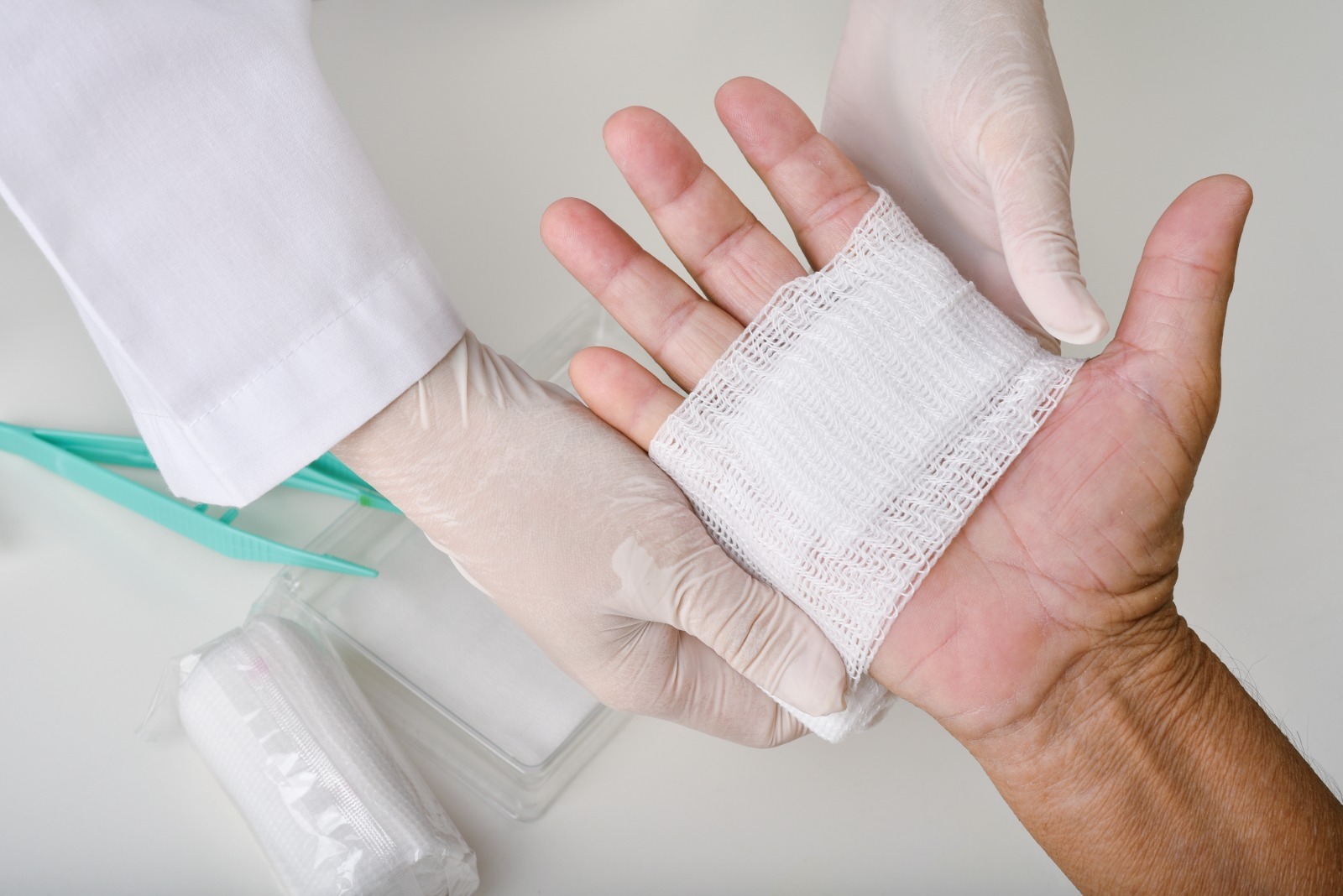
- Wound dressing performed in a ward or treatment room is not separately chargeable because it’s considered an integral part of the primary procedure.
- Wound debridement is not separately chargeable because it’s regarded as an integral component of the primary procedure performed.
- Removal of catheters or drains is not chargeable because it’s considered an intrinsic component of the insertion procedure.
- Charges are permitted only for surgical suture removal procedures listed under specific disciplines in the 13th Schedule. Other suture removal procedures are not separately chargeable.
- When plaster of Paris application is performed in conjunction with another primary procedure, the application of a plaster cast is not separately chargeable.
- When bone grafting is performed in conjunction with another procedure, it is chargeable at 50 per cent of the maximum fee, applicable only when an autograft is used and harvested from the iliac crest.
- Spinal cord monitoring that is performed during spine surgery is not chargeable separately, as the primary spine surgery inherently includes the spinal cord monitoring performed intraoperatively.
- The demonstration and evaluation of use of nebuliser, aerosol generator and metered dose inhalers (MDI) are considered as integral components of a consultation and not chargeable separately.
- Practitioners are advised to use the “venesection” and “venepuncture” procedures in the 13th Schedule when charging for blood-taking and venous cannulation respectively for both paediatric and adult patients.
- Steroid injections administered in conjunction with radiofrequency ablation are not separately chargeable.
- Administration of intravenous (IV) infusion is considered intrinsic to the “consultation with examination and treatment plan” fee stipulated in the 13th Schedule.
- Exploratory laparotomy is separately chargeable only when performed as an emergency procedure, in circumstances where the underlying pathology or diagnosis is unknown or has not been established prior to surgery.
- The repair of the dura is not separately changeable, as it is regarded as an integral component of the primary cranial surgery.
- Adhesiolysis is not separately chargeable, as it is regarded as an integral component of the primary surgical procedure performed.
Dr Hirman’s circular also mentioned exemptions for certain medical procedures that could be charged separately in certain circumstances.
“These charging protocols are issued to promote uniformity and transparency in billing practices in accordance with the 13th Schedule. However, general procedures without attached charging protocol, which is considered part and intrinsic to the primary procedure, is still applicable to all cases.”
His circular was distributed to the Association of Private Hospitals of Malaysia (APHM), Life Assurance Association Malaysia (LIAM), General Insurance Association of Malaysia (PIAM), Malaysia Takaful Association (MTA), and the Malaysian Medical Association (MMA).
Ex-APPS President: Circular Ignores Real-World Clinical Complexity
Association of Private Practitioners Sabah (APPS) immediate past president Dr James Jeremiah claimed that the MOH circular has raised unease across the private medical fraternity.
He acknowledged billing transparency as a legitimate goal, but felt that the manner of implementation raised serious concerns about professional autonomy and the sustainability of private health care.
“The circular’s blanket declarations that wound dressing, debridement, IV infusions, and adhesiolysis are ‘intrinsic’ to primary procedures and largely non-chargeable ignore real-world clinical complexity,” said Dr James in a statement to CodeBlue.
“A diabetic patient with a chronic infected foot ulcer requiring repeated debridement, specialised dressings, and infection control represents substantial clinical effort and consumable costs.
“A post-operative wound dehiscence requiring long periods of meticulous surgical debridement deserves appropriate compensation.”
Dr James stressed that “blanket administrative rules” from Putrajaya cannot adequately capture these realities, adding that the circular effectively armed insurers and third-party administrators (TPAs) with ammunition to dispute, delay, and deny legitimate claims.
“Doctors will increasingly find themselves writing lengthy justifications and appealing rejections rather than focusing on patient care,” he said.
“There is also a perverse long-term consequence: when complex, labour-intensive cases become financially unviable, practitioners will inevitably avoid them. This ultimately also harms patients.
“MOH’s proper role in private health care is patient safety, quality standards, and ethical governance, not micromanaging every billable component of a clinical encounter.”


