

A house built on sand cannot stand. For years, Malaysia has been pouring the foundations of new hospitals while the very ground beneath – our workforce, our financing, our primary care network – erodes into silt.
There is a peculiar inertia that afflicts nations approaching crisis. It is the belief that a nation can cure its health care system by commissioning new buildings.
They recognise the symptoms, commission the reports, and then reach for the most visible solution – a new building, a ribbon-cutting, a photograph in a hard hat. Malaysia is no exception.
Malaysia has been seduced by this fallacy for decades – announcing hospitals, drawing blueprints, cutting ribbons – while the living tissue of the system has quietly necrosed.
Nurses who held the hands of the dying when the Berlin Wall still stood receive the same derisory allowance today. Young doctors, exhausted by contract purgatory, flee to Singapore in numbers that would shame any profession.
The Treasury sharpens its axe, demanding RM4.65 billion in health cuts, even as the government presses ahead with yet another hospital in Petaling Jaya.
A fool repeats his folly. It is time to break the cycle. Beyond the blueprint of bricks and mortar lies a different arsenal – remedies that address the actual pathology, not merely its architectural expression.
These are the measures that might, if implemented with courage, pull Malaysian health care back from the precipice.
The Ghosts Of Pasir Gudang
The 304-bed Pasir Gudang Hospital, declared operational in August last year, remains more than 60 per cent unfilled. THis is not an isolated failure. It is a harbinger.
A new hospital in Petaling Jaya would confront precisely the same predicament: a gleaming structure populated by empty chairs.
A new hospital would not create a single new doctor, nurse, or radiographer. It would simply redistribute them from surrounding facilities such as Kuala Lumpur Hospital, Universiti Malaya Medical Centre, Shah Alam Hospital, thus reducing their capacity to solve PJ’s problem by creating a new one elsewhere.
The Petaling Jaya Hope
For more than a generation, the people of Petaling Jaya have been sustained by nothing but promises – site surveys, political pledges, and ministerial assurances – while the public hospitals of Sungai Buloh, Shah Alam, and Kuala Lumpur have slowly buckled under the weight of an impossible demand.
Now it appears, at last, a 500-bed facility has been confirmed for Taman Medan. The land is identified. The vertical design is approved. The Selangor Menteri Besar has promised speed.
But as Malaysia’s public health care system groans under the weight of a collapsing workforce, runaway inflation, and a Treasury wielding a RM4.65 billion budget cut, the pursuit of yet another building is not just misguided. It is a dangerous evasion.
If the government is truly serious about serving the 2.3 million residents of the Petaling district, it must first submit to various reforms. These are not optional addenda.
The question is not whether we have solutions. We do. The question is whether we have the collective will to implement them. The people of Malaysia are waiting. They have waited long enough.
Stabilise The Workforce: No hospital can function without hands to heal. The most urgent measure is the permanent resolution of the contract doctor crisis.
Resolve the workforce crisis by abolishing the contract doctor system, and most urgently, raising the nursing allowance from its frozen RM100 to a minimum of RM500 immediately, with annual inflation indexing thereafter.
Leverage Existing Private Capacity: The proposal to lease an existing private hospital in Petaling Jaya is well-intentioned but operationally incomplete.
The government should instead negotiate structured public access agreements with multiple private hospitals across the Klang Valley with a reserved bed allocation system requiring private hospitals above a defined size to maintain beds for public patients at negotiated government rates.
This would convert existing private capacity into accessible public capacity without conversion costs, staffing disruption, or capital expenditure.
Strengthen Primary Care as the Gatekeeper: The government health clinic network in Petaling Jaya is underperforming, sending patients to hospitals for conditions that could be managed at a lower level. Strengthening clinics in Damansara, Taman Medan, and elsewhere would reduce hospital congestion more effectively than any new building.
Redirect Capital Expenditure to Where It Is Most Needed: The RM1 billion estimated for a new PJ hospital would fund the upgrade of equipment, expansion of intensive care units, and replacement of ageing scanners in multiple existing Klang Valley hospitals.
Establish a Universal Financing Mechanism: The root cause of access inequity in Petaling Jaya is the absence of a national health insurance scheme. Structured as mandatory social contributions by employers and employees, such a scheme would allow residents to access both public and private capacity without the current distortions of cost and wait times.
Accelerate Digital Transformation: Many hospitals still rely on legacy systems, outdated software, and paper records. A national interoperable electronic medical record system would optimize capacity planning, reduce errors, and improve continuity of care.
Redirect Capital from New Hospitals to Upgrading Existing Primary Care Facilities: The Backbenchers Club (BBC) has proposed that the government temporarily defer the construction of new hospitals and priorities the upgrading of existing facilities, including ensuring the availability of medical equipment and refurbishing dilapidated health clinics.
This enhances treatment capabilities at the community level, reducing congestion at public hospitals.
Expand the Cottage Hospital Model to Empower Primary Care Clinics: The Ministry of Health (MOH) has proposed transforming health clinics into “cottage hospitals” where minor procedures can be carried out without patient referral to tertiary hospitals, with inpatient beds supplied, especially in remote areas.
This model enables patients to be treated closer to their homes and reduces the need for referral to tertiary hospitals.
Also evaluate placing family medicine specialists at health clinics and restructuring primary care into cluster-based networks, with integration of the cottage hospital model explored especially in underserved and rural areas. Modest investments in primary care yield outsized returns in reduced hospital congestion.
Integrate Public-Private Workforce Training and Service Sharing: Medical experts have called for private health care professionals to contribute to training and providing services in the public sector under the MHIT framework.
This reciprocal arrangement would allow public sector staff to gain exposure to private sector efficiency while private sector specialists help fill gaps in public facilities, creating a virtuous cycle of capacity building rather than zero-sum competition.
Implement the Four Leaps of Health System Reform: MOH has designated 2026 as the year for implementation of four major leaps: comprehensive digitalisation (the efficiency engine), financing reform (the sustainability engine), human capital and welfare (the justice engine), and public health and ethics (the moral engine).
As the health minister has declared, “We can no longer move incrementally or take small steps. The time has come for thorough structural changes.” This needs to be implemented immediately.
Strategically Leverage Medical Tourism for Technology Transfer and Capacity: The government’s 2026 Malaysia Medical Tourism Year initiative, far from threatening the public system, promises significant benefits: technology transfer from private medical groups investing in advanced facilities, creation of high-skilled job opportunities, and reduction of the government’s health care funding burden through increased economic activity from the sector.
Establish an Independent Oversight Commission: The decision to build a new hospital in Petaling Jaya has been made without transparent cost-benefit analysis, without a published staffing plan, and without a clear funding source beyond vague assurances of “rolling plans.” This is no way to spend RM1 billion of public money.
Parliament should establish an independent Health Infrastructure Oversight Commission, with members drawn from medical, economic, and engineering disciplines. The commission would have the power to recommend delay or cancellation. It is the foundation of responsible governance.
Establish a Reform Council for Transparent, Inclusive Governance: Empower an inclusive reform council comprising MOH, private providers, specialists, and general practitioners, bringing together insurers, private hospitals, doctors, consumer groups, and academia to drive reform. This committee should be empowered with binding authority, not merely advisory capacity.
Conclusion
A fool and his money are soon parted. Malaysia has been parting with billions on monuments to political ambition while the foundations of its health care system crumble.
The remedies laid out here are not speculative. They are the accumulated wisdom of every honest health economist, every exhausted nurse, and every patient who has endured a nine-hour wait in a corridor.
The question is whether we have the political will to stop building monuments and start building health.
The people of Petaling Jaya, and of every overcrowded hospital in this land, are watching. They have waited long enough for a government that understands the difference between a ribbon and a recovery. Let us not disappoint them again.
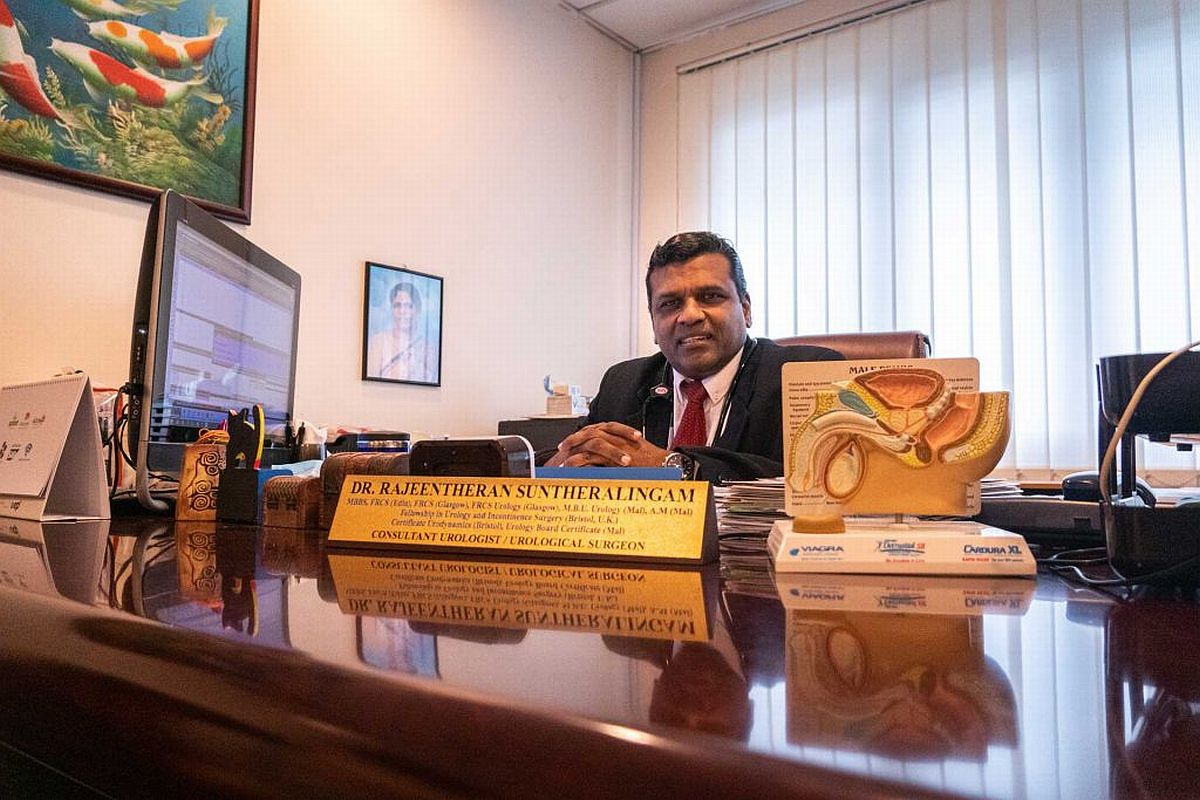
The author is a senior consultant urologist and urological surgeon at Damansara Specialist Hospital.
- This is the personal opinion of the writer or publication and does not necessarily represent the views of CodeBlue.


