

KUALA LUMPUR, June 10 — The Public Service Department (JPA) has acknowledged specialist doctors’ concerns about a new requirement for subspecialty training that effectively translates into a five-year waiting period for eligibility.
JPA said it has discussed the new requirement for applicants to have three consecutive years of complete 12-month Laporan Nilai Prestasi Tahunan (LNPT) before specialists can apply for subspecialty training.
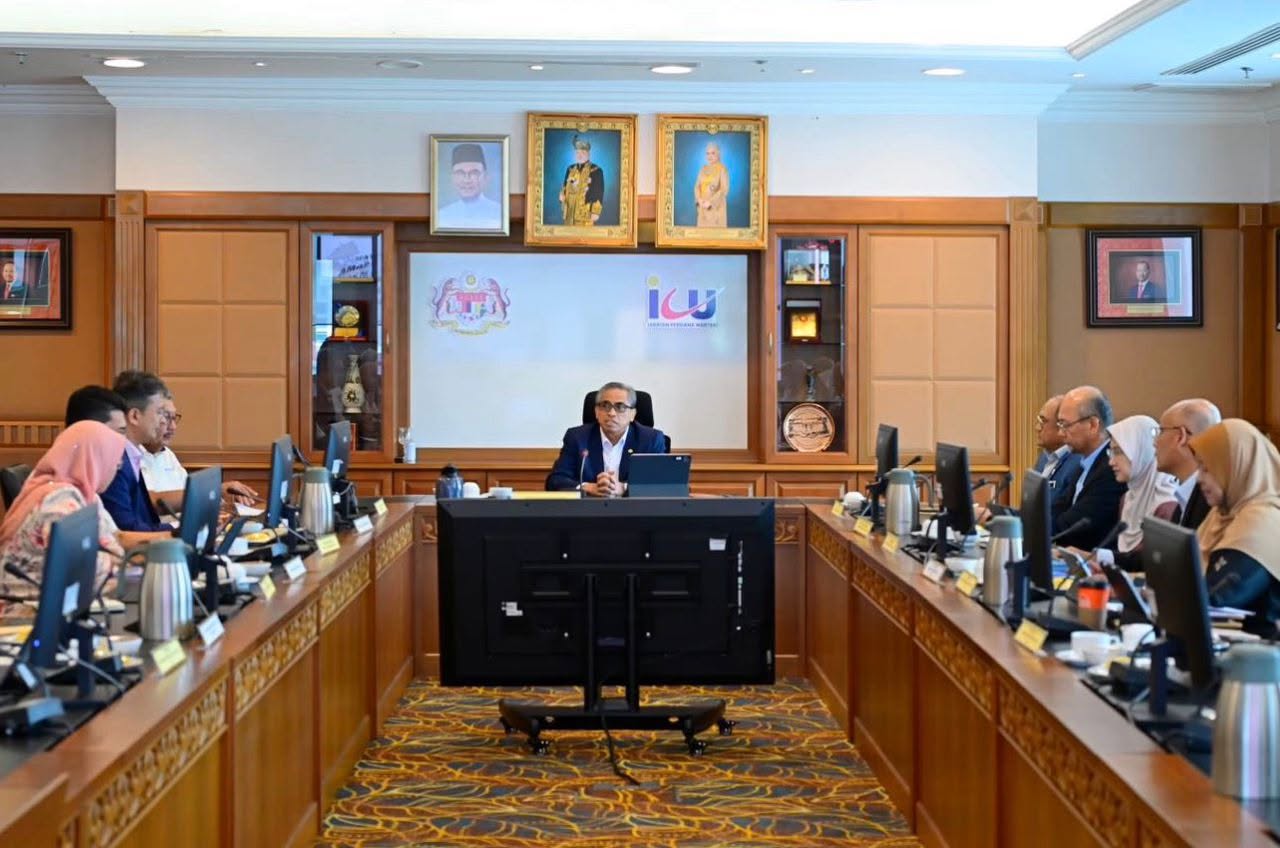
“The matter has recently been discussed at the highest level involving the Chief Secretary to the Government (KSN), the Director-General of Public Service (KPPA), senior JPA management, and the Ministry of Health (MOH),” JPA told CodeBlue in a brief statement on Monday.
“JPA is aware of the concerns raised by stakeholders and has requested further input and recommendations from MOH on the implementation of the requirement. We are currently awaiting MOH’s feedback before further consideration can be made.”
A specialist serving at a public hospital said the rule introduced by JPA in January this year means that the year of gazettement may not count if the specialist was gazetted mid-year; the specialist must subsequently collect three complete LNPT years, await the application cycle, and then enter the next subspecialty intake.
“A doctor gazetted in mid-2023 may therefore collect LNPTs for 2024, 2025, and 2026, apply in 2027, and only enter subspecialty training in 2028. That is effectively five years after gazettement,” he wrote to CodeBlue recently.
“For a country short of specialists, this is not a small administrative detail. It is a national workforce decision.”
The specialist said the new requirement for three consecutive full LNPT years appeared to disproportionately affect specialists trained under local Master’s programmes across internal medicine, surgery, orthopaedics, anaesthesiology, obstetrics and gynaecology, ENT, paediatrics, radiology, emergency medicine, psychiatry, pathology, and many other fields.
Many of these doctors entered Master’s programmes after years serving as medical officers. During training, they worked in hospitals, sometimes under heavy service pressure, and rotated between hospitals and universities with registrar-level responsibilities.
“Yet because of how the system classifies their training, those same years may not produce the LNPT record now required for subspecialty application. The result is difficult to accept.
“The system treats Master’s trainees as workers when hospitals need manpower, students when records are generated, and incomplete civil servants when they apply for further training. It is an elegant administrative paradox which is also profoundly demoralising,” said the specialist.
Parallel pathway graduates, on the other hand, may be less affected because many remain continuously in service posts, allowing uninterrupted LNPT documentation.
13 To 15 Years To Be Subspecialist In Malaysia, Among Longest Globally
The specialist noted that it takes approximately 13 to 15 years from medical school graduation to practise as a subspecialist in Malaysia, one of the longest in the world.
In the United States, medical graduates enter structured residency programmes almost immediately after graduation. Residency typically lasts between three and seven years. Subspecialty fellowship adds one to three years.
The total pathway from medical school to practising subspecialist: eight to 14 years, without mandatory administrative waiting periods inserted between stages.
In the United Kingdom, the Foundation Programme begins within months of graduation. Core training and higher specialty training follow in structured stages. The pathway is demanding, but it is designed to advance doctors. There are no service-obligation gaps sitting between a completed qualification and the next stage of training.
In Singapore, structured residency begins within a year of graduation. The system is competitive, but the architecture is efficient – each stage flows to the next without bureaucratic waiting periods anchored to administrative calendars.
In Australia, the intern year starts immediately and fellowship training through the relevant specialist college begins within a few years. The pathway is long, as all specialist pathways are, but the emphasis is on forward progression.
According to the specialist, the long journey to becoming a subspecialist in Malaysia isn’t because the training itself is longer, but because the pathway between training stages is filled with waiting periods: up to a year waiting for a housemanship placement, two years of compulsory medical officer service before a specialist training application may even be submitted, and now, with the new JPA directive, up to five years after specialist gazettement before even applying for subspecialty training.
“The extra years do not come from additional learning, but from administrative policies. A specialist may already be trained, gazetted, working, bonded, and needed but still told to wait because the system cannot decide how to count the years already spent serving it. Apparently, service only counts when the paperwork agrees,” he wrote.
He noted that a subspecialist in Malaysian public service earns the same as a specialist, without a higher pay scale or incentive for the years of further training or advanced expertise. Yet, subspecialists are bonded, usually for a decade or more, with penalty clauses that can amount to hundreds of thousands of ringgits if the bond is broken.
“JPA did not introduce this rule by accident. Administrative directives are deliberate policy choices, made by identifiable decision-makers within an identifiable institution,” he wrote.
“It is a fair and necessary question to ask: what problem was this rule designed to solve? What evidence supports the conclusion that a five-year post-gazettement LNPT requirement, applied asymmetrically between training pathways, will improve the quality of Malaysia’s subspecialty workforce, rather than simply delay and deter it?
“JPA can change what it has created. This rule was introduced in January 2026. It can be reviewed, revised, or rescinded. This authority rests with JPA, and the director-general of the department must be willing to address, publicly and substantively, the consequences of the directive that was issued under its purview.”


