

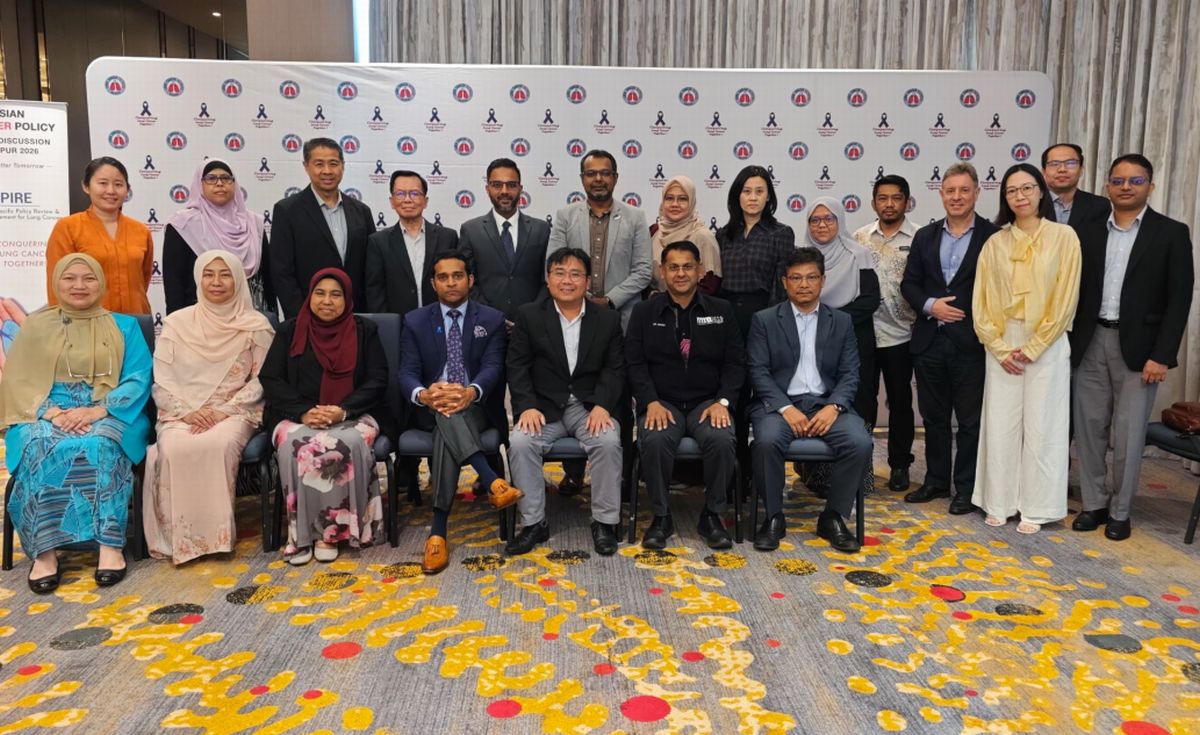
KUALA LUMPUR, June 10 — Lung Cancer Network Malaysia (LCNM) and ASPIRE for Lung Cancer, an Asia-Pacific policy think tank recently co-hosted an interactive lung cancer policy roundtable discussion with key stakeholders from the public and private health care sectors, academia, primary care, the Malaysian Medical Association (MMA), and the Ministry of Health (MOH).
MOH representatives included senior officers from the Pharmacy division, Health Transformation Office and governmental clinical Heads of Service for Oncology (Dr Ros Suzanna Bustamam), Respiratory Medicine (Dr Mat Zuki Mat Jaeb), General Thoracic Surgery (S Narasimman), Nuclear Medicine (Dr Siti Zarina Amir Hassan), and senior radiologists including Dr Aida Abdul Aziz (president of Malaysian Society of Thoracic Radiologists).
ASPIRE has conducted similar regional forums in Hong Kong, Taiwan, Thailand, Indonesia and South Korea in recent years.
The high-level, multi-stakeholder roundtable forum, chaired by LCNM president Prof Anand Sachithanandan, featured insightful presentations from Dr Mat Zuki, Prof Anand and Dr Lye Mun Tho, followed by robust forum discussions moderated by Prof Liam Chong Kin (University of Malaya), Dr Hilmi Lockman and Dr Ros Suzanna, respectively.
General Family Practice was represented by eminent general practitioners including Dr R. Arasu (MMA president), Dr Ramon Varughese (CEO, Qualitas Health), and Dr Nor Hazlin (president of Malaysian Family Medicine Specialists Association).
A wide range of critical issues were discussed, including the rising lung cancer burden in Malaysia, optimal modality and frequency of screening, biomarker testing, compliance with local CPG guidelines, access to cutting-edge therapies, and various strategies to surmount real-world challenges.
According to Prof Anand, given Malaysia’s dichotomous health system with considerable geographical discordance, with many facilities and services concentrated in the Klang Valley or private sector, strategic public-private partnership is an imperative.
For instance, only two MOH centres are equipped with PET scanners, an essential staging tool for lung cancer. To ensure the success of the MOH’s National Lung Health Initiative (LHI) and for screening to be truly impactful, it must be large-scale and targeted.
LCNM has pioneered the local use of AI-enabled chest X-ray (Ai-CXR) screening which is now the bedrock of the LHI, but as a nation, the wider network of private primary care services nationwide should be mobilised for screening and triage, a move echoed by Dr Arasu, who represented over 10,000 private GPs.
Given limited resources and the high disease burden, Prof Anand reiterated the rationale to leverage the vast resources and expertise of private hospitals and specialists to ensure timely quality care as time-to-treatment initiation significantly impacts patient outcomes in terms of survival.
LCNM previously spearheaded the development of Malaysia’s first clinical practice guidelines (CPG) for lung cancer, in collaboration with the Malaysian Thoracic Society, Malaysian Oncological Society, and Malaysian Association of Thoracic and Cardiovascular Surgery, which, according to Prof Anand, will serve as an actionable roadmap for the LHI in terms of how to best manage newly diagnosed early-stage lung cancer.
A common theme iterated by both public and private specialists at this forum was financial constraints, which limits patient equity and access to efficacious game-changing cancer treatments like oral targeted therapies and systemic immunotherapy.
Prof Anand highlighted the need for health care professionals to lobby for sustainable dedicated funding to accomplish the goals of the Lung Health Initiative.
Additionally, he shared LCNM’s hope and vision that lung cancer be made a prominent example as the first notifiable cancer-related disease to ensure mandatory and timely reporting of newly diagnosed cases.
There is a pressing need for a contemporary real-time registry to facilitate better workforce and resource planning, as the current National Cancer Registry data, though comprehensive, only reports every five years, and even now, the most contemporary publicly available data is from 2017-2021, which is over five years ago.
Prof Anand also shared that LCNM intends to conduct further roundtable discussions with different relevant stakeholders in the coming year to address issues of financial toxicity, developing a national screening programme, and a registry to guide workforce planning.
This press release was provided by LCNM.


