

KUALA LUMPUR, June 3 — The government is proposing a mandatory long-term care insurance scheme, as policymakers examine whether elder care financing should involve mandatory contributions, new taxation, or an EPF- or Socso-style fund.
Rashidi Yahaya, group chief executive officer of Seterra Group and chairman of Kendana, the National Caregiver Council, said the scheme is still being developed, with the final premium, contribution mechanism, and benefits subject to validation.
Rashidi chairs the National Long-Term Care Insurance Framework under the National Long-Term Care Committee. The Malaysia Productivity Corporation (MPC) is also involved in the initiative. He said the committee recently met representatives from the insurance industry, Retirement Fund Inc (KWAP), and Bank Negara Malaysia (BNM).
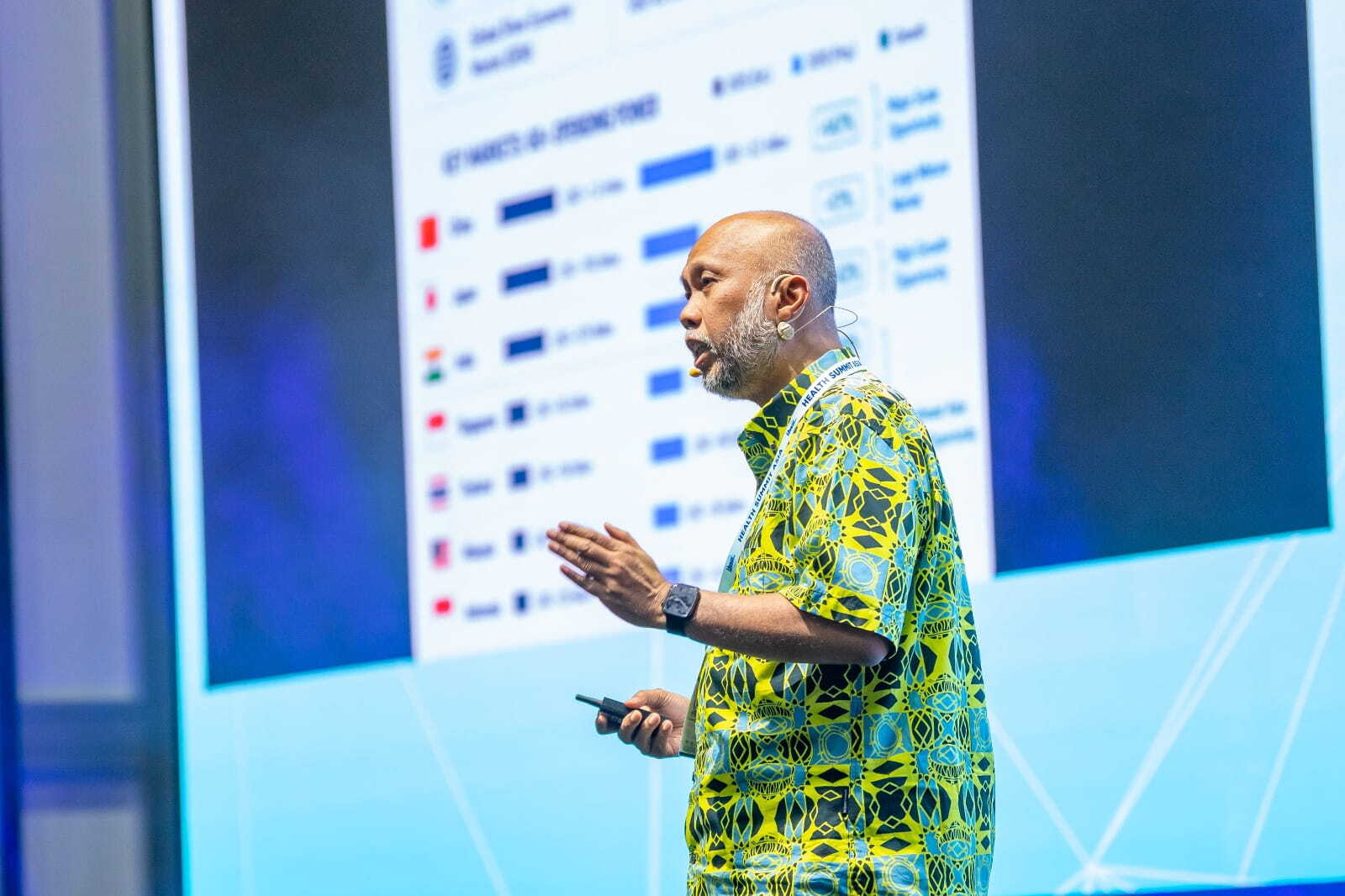
“The naysayers will tell you the premium is going to be very expensive and I don’t blame them – ‘long-term care insurance, higher risk, et cetera, at least RM10,000 a month’,” Rashidi said at Health Summit Asia 2026 here last May 21.
“We are working on a RM100 premium base and it goes up, and you can add on.”
Rashidi said the committee is also studying how public funds could be raised for the scheme, including whether a new tax or contribution mechanism would be needed.
“Of course, in doing so, we have to look at how we raise the funds from the public. Do we introduce another taxation, et cetera? Of course, this is another thing we have to navigate,” he said.
He said long-term care insurance could sharply reduce families’ out-of-pocket burden for care if implemented by 2030, the target year for the national framework.
“Meaning that if we have long-term care insurance in the future, we’re targeting 2030, the cost of care from out-of-pocket will only be 10 per cent, and 90 per cent, insurance will take care,” Rashidi said.
Rashidi said Malaysia is studying several financing models, including whether the scheme should be mandatory or structured through a fund similar to EPF (Employees’ Provident Fund) or Socso (Social Security Organisation). EPF and Socso involve mandatory contributions too.
“At the end of the day, no country starts long-term care insurance without government intervention,” he said.
He said governments in countries with long-term care insurance or similar financing schemes typically create the basic fund first, before other players enter the system.
Health insurance and long-term care insurance are separate products. Conventional health insurance generally covers medical treatment, hospitalisation, and health care costs. Long-term care insurance is intended to support care needs arising from ageing, frailty, disability, or loss of independence.
These may include home care, daycare, caregiver support, assisted living, nursing care, community-based care, and hospital-at-home services.
Rashidi said long-term care insurance would be critical to shifting Malaysia’s elder care system away from hospitals and towards home and community-based care.
RM100 Monthly Premium Cannot Cover Everything, Rashidi Says
Malaysia is looking closely at Japan’s long-term care insurance system, which was introduced in 2000, Rashidi said.
Under the Japanese model, citizens begin contributing to a national scheme from age 40, with funding currently split roughly between premiums and government funding.
“Once you hit 40 years old in Japan, you have to contribute to a national scheme. At the moment, it’s 50 per cent premium, 50 per cent government funding, and they have really strong community infrastructure,” Rashidi said.
He said Malaysia is also studying models from Australia, Germany, Sweden, and Singapore as it searches for a workable approach.
“We are looking at these models. We hope to find a sweet spot,” Rashidi said.
Rashidi said Singapore’s long-term care financing model was among those being examined, though he did not elaborate on the specific design Malaysia may adopt.
However, he cautioned that long-term care insurance is difficult to design and may require repeated adjustments after implementation.
“When Japan launched their long-term care insurance, they had seven iterations before they thought they got it right, but still didn’t get it right,” Rashidi said.
He said Japan did not fully anticipate that its citizens would live beyond 100 years, highlighting longevity risk as a major challenge in designing a sustainable long-term care insurance system.
Sustainability is one of the main issues being studied for Malaysia’s proposed scheme, including how much coverage can realistically be provided.
“When we look into this, it’s something that we learn from other countries. Whether to have a system for long-term care insurance, you need to look at sustainability,” Rashidi said.
“But the problem lies also that we may not be able to cover everything. If you pay RM100 premium, you cannot expect the payout to be RM50,000. It doesn’t make sense.”
Civil Servants May Be First In Long-Term Care Insurance Pilot
Rashidi said Malaysia is targeting a pilot for the long-term care insurance framework next year, with the national framework targeted for 2030.
“When I got involved three years ago, I was astounded by the fact that we have never even looked at having long-term care insurance. It was like a new subject matter in 2022. We were talking about it for the first time,” Rashidi said.
He said the pilot may begin with civil servants before being expanded to the wider public.
“We look to pilot that by next year, so we are moving slowly to a direction where previously it wasn’t there. We are looking at perhaps starting with government servants first and then we move on to the public.”
Long-Term Care Insurance Framework Targeted For 2030, But Timeline Uncertain
Rashidi said a long-term care insurance summit is also being planned for October, possibly as a public event.
“By October this year, we should have a long-term care insurance summit. Maybe it’s open to the public. We invite them to come and attend,” he said.
He stressed that the 2030 target remains an aspiration and could be affected by political developments.
“That’s our target but anything can happen in between. We could have an election in November and start the process all over again,” Rashidi said.
“But we are aiming to have the Long-Term Care Insurance Framework by 2030 and we’re looking to pilot that by next year.”


