


KUALA LUMPUR, July 2 — Multinational insurance companies have questioned the need for health screenings, investigative procedures, and hospitalisations in the private sector in Malaysia that they deem to be “excessive”.
Frank testimonies by C-suite executives of insurance giants in a 2025 inquiry by Parliament’s Public Accounts Committee (PAC) offered a never-before-seen glimpse into the mindset of an industry that rarely speaks publicly about issues.
Officials from Allianz and AIA were especially harsh in their criticism of private health care providers and patient behaviour, based on Hansard in the PAC’s 1,999-page report on a rise in health insurance premiums, private hospital charges, and the impact on public health care. The report was tabled in the Dewan Rakyat last week.
Besides questioning screenings, diagnostics, and treatment, top insurance company executives also took issue with the unbundling of private hospital charges, itemised billing, and utilisation of medical equipment.
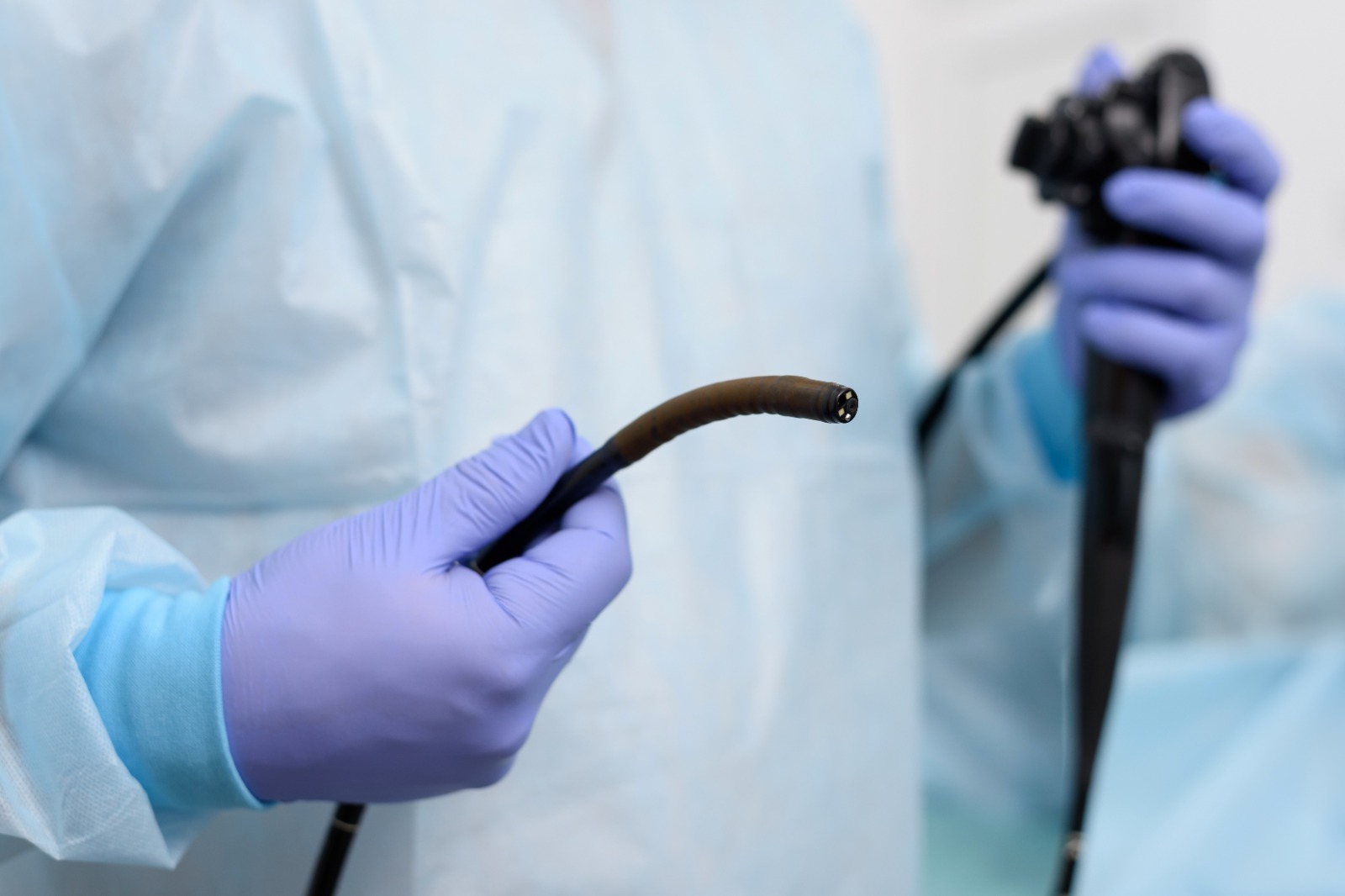
‘Excessive’ Health Screenings, Combined GI Scopes And Polyp Removal

Then-AIA Bhd chief health care officer Heng Zee Wang, who was appointed as the company’s chief executive officer (CEO) last October, told the PAC on June 19, 2025, that the issue wasn’t about profit-making in the insurance and hospital industries, but about reducing “wastage” in private health care.
He then cited health screenings as an example.
“Medical resources are very valuable. The public side have insufficient amount of screenings and you know, but yet in the private side you know, we use this excessively,” said Heng, according to Hansard.
“Maybe you can use the spare capacity to support some of the shortfall we have in the government’s facility and at the right price, which is what you know Datuk Seri Dzul talked about funneling some of the B40 patients, at the right price, to the private hospital,” he added, referring to Health Minister Dzulkefly Ahmad.
Then-AIA Bhd CEO Ben Ng Kee Heng, who is now AIA Group chief risk officer, cited “stories” of how people could walk into a hospital with a medical card for check-ups. AIA’s global headquarters are in Hong Kong.
“You know, medical check can cost RM500 to RM2,000 or RM3,000. So, all these things – just because you pay a buffet price doesn’t mean you can waste the food right? I mean, that is not something that we want to encourage,” Ng told the PAC in proceedings on February 26, 2025, according to Hansard.
Life Insurance Association of Malaysia (LIAM) CEO Mark O’Dell alleged that the insurance industry was seeing “a lot of abuse” by private health care providers, citing gastrointestinal (GI) scopes as an example.
He noted that scopes for screening purposes generally aren’t covered under medical plans, but policyholders can submit claims if polyps are found.
“Also, when you’re treating for a condition, you usually don’t need an upper and a lower. You might need one or the other depending on your condition,” O’Dell, who isn’t a medical doctor, told the PAC on June 19, 2025, based on Hansard.
Heng then informed the proceedings that combined upper and lower scopes of one’s digestive tract (gastroscopy and colonoscopy) were performed for about 65 per cent of AIA customers who underwent the exam at a particular hospital upon presenting with stomach discomfort, in line with the Klang Valley average.
“But if you were to compare this with 12 international best practice, typically, the need to do combined scope may range from 10 to 20 percent. Maybe in the insured case may go up to 30 percent, taking into account some wastages.
“But over here, don’t know whether this is the Malaysian stats, we see a staggering 60 over per cent in prescribed upper and lower scopes. Hence there is a big question on what is medically necessary and how do we enforce or to call a check about this practice,” said Heng, who isn’t a medical doctor.
AIA CEO Cites ChatGPT Data On ‘Red Flags’

Heng also raised cases of gastric polypectomy, a procedure to remove stomach polyps to prevent the possibility of them turning into cancer, saying AIA found an average 21 per cent cases with gastric polypectomy based on its samples.
“Again, if we were to compare with — just to confirm this, I actually did a quick check on ChatGPT. The so-called best practices range could be one to three per cent. In the insured case, maybe two to six per cent, double the rates,” Heng told the PAC.
“It is quite interesting that ChatGPT actually says ‘red flags’ if you see anything that’s more than 10 per cent,” he added. “I mean, in this case you look at 21 per cent.”
O’Dell then quipped: “So, you see, we face many pressures on whether it’s medically necessary or not. We’re not always in a very good position to challenge the medical necessity and procedure.”
Allianz Malaysia Bhd chairman Zakri Mohd Khir, who isn’t a medical doctor, cited clinical practice guidelines (CPG) that he said required stool samples to be taken first when one has a stomach problem.
“Take the sample to the lab, see got blood, or got this, whatever bacteria, and stuff like that. Then, that’s a telltale sign, if you don’t have, you don’t have to do the scope, okay,” Zakri told the PAC on June 19, 2025, according to Hansard.
“But, if you have something else, then only you do the scope. That is missing. Very hardly now any doctor will ask you to do stool sample. That one major step which can save so much money is not done.”
According to the Malaysia National Cancer Registry Report 2017-2021, colorectal cancer was the second most common cancer in Malaysia in that period. In terms of incidence, age-standardised rates (ASR) are highest for colorectal cancer and ninth highest for stomach cancer in men.
In the February 26, 2025 proceedings, Zakri made a blanket accusation that “most” private medical practitioners in Malaysia don’t follow CPGs but “use more” in overtreatments: “Their motivation is to make more profit.”
He maintained that Allianz doesn’t interfere with doctors’ drug prescriptions or administration of procedures, but merely vets “excessive overtreatment”.
Zakri called for an ombudsman to enable insurers to file complaints against hospitals for breaching CPGs.
Allianz: ‘Now We See A Lot Of People That Sakit Sahaja Terus Hospital’

Allianz General Insurance Company (Malaysia) Bhd chairman Muhammed Abdul Khalid complained about people going to hospital directly when they fall sick, adding that Allianz sought to reduce the number of people who go to a hospital.
“Now we see a lot of people that sakit sahaja terus hospital, sakit sahaja terus hospital. Because like one of the YBs said, ‘you pay so much, you never claim. Masuk hospital might as well’. So, we want to reduce, they want to reduce that,” Muhammed told the PAC on February 26, 2025, according to Hansard.
He, however, insisted that patients were Allianz’s priority, saying: “We want the best for you.”
Muhammed said that, in his personal opinion, priority should be on ensuring quality and timely access to public health care for all Malaysians, not private insurance.
He further described Allianz, headquartered in Germany, as a “very responsible company” that was nearly 30 per cent owned by locals here. Its second largest shareholder in Malaysia is the Employees Provident Fund (EPF) and third largest is the Social Security Organisation (Socso).
“As a listed company, a private company, we have a duty to shareholders also,” said Muhammed, who is also on Allianz Malaysia Bhd’s board of directors.
Then-Allianz Life Insurance Malaysia Bhd CEO Charles Ong Eng Chow, who is now retired and serving as the company’s advisor, questioned the need for hospitalisation, particularly gastro cases.
“In the past, they hospitalise you when necessary. Over the last two three years, what we have seen is the hospitalisation has actually increased a lot. For example, if you have a gastro, is it necessary to go for hospitalisation?” Ong, who isn’t a medical doctor, told the PAC on February 26, 2025, according to Hansard.
AIA’s Ng, who isn’t a medical doctor either, questioned the need for hospitalisation for mild flu symptoms, saying: “Health care is not luxury — we are saying some, these simple diseases and maybe you know, if you don’t need to be hospitalised. If it’s flu, if its symptoms is not very serious, perhaps you know it could be treated on outpatient basis.”
Doctors have previously highlighted the high risk of influenza-related deaths among individuals with chronic conditions, like heart disease or diabetes, as well as senior citizens aged 65 and above.

O’Dell said in the February 2025 proceedings that in 2000, when medical plans became very popular, that health insurance products then used to have “inner limits for everything”, including different classes of surgeries and operating theatres. Premium increases used to be very steady and the insurance industry did not foresee the level of medical inflation that led to sharp premium hikes.
“The two things that led to — that really contribute to inflation are the cashless card and 100 per cent as charged. You know when companies introduced those, they might have looked at those as innovation, but actually it ended up being just the wrong things to do, actually, in hindsight.”
Allianz Malaysia chairman Zakri described cashless facilities in health insurance as a “literal credit facility”, akin to a credit card for use at a private hospital. “So, I think one of the issues, like Mark mentioned, it has not been used very wisely. But all of us, we are guilty of that, particularly not really educating people in respect to that.”
Munich Re, a reinsurance company based in Germany, similarly criticised the “buffet syndrome mindset”, besides alleging “unnecessary” medical tests and prescribed medicines for insured patients.
“There is also what is commonly known as buffet syndrome mindset where policyholders tend to claim in order to receive back with perceived value of what they have paid for with their insurance premiums. This is also made easier with cashless cards, where policyholders are less incentivised to understand or question what charges are actually being billed,” said Catherine Love Soper, Munich Re head of health, Southeast Asia, in the August 8, 2025 proceedings, according to Hansard.
“And then there is of course, fraud, waste, and abuse incidents where unnecessary medical tests may be carried out and unnecessary medication prescribed, unfortunately.”
Prudential Senior Management’s Bonuses Up To 10 Months’ Salary

Then-Prudential Assurance Malaysia Bhd CEO Lim Eng Seong testified in Parliament on February 26, 2025, that Prudential staff receive bonuses of about three months’ salary on average, while senior management bonuses go up to 10 months’ salary. Prudential’s global headquarters are in Hong Kong.
In the same proceedings, Great Eastern Life Assurance Malaysia Bhd CEO Koh Yaw Hui said bonuses for his staff averaged at between three and four months’ salary in a “good year”. Great Eastern’s global headquarters are in Singapore.
Ng declined to comment on AIA’s bonuses, beyond saying that the company was benchmarked with others. He also told parliamentarians that he was “fortunate” because his medical plan with a high deductible, 50 per cent cheaper than for those of his age, was covered by his employer.
The insurance company executives were responding to PAC member Zahir Hassan’s question about bonuses issued in the last few years to indicate “how bad that situation is”.
Koh explained that medical insurance claims were “quite okay” during the Covid-19 pandemic from 2020 to 2021, but spiked in 2023 and 2024.
“From the medical point of view, I think that business has been losing a lot of money,” he said. “So, the other businesses where we make money — in fact, we’re also taking risks. Since 2024, we make money because the investment climate has been good. So that’s why 2024 we probably — I think in terms of profit, it will be better for 2024 for us.”
O’Dell told the PAC that 92.96 sen of every ringgit in premium income collected was paid out for claims.
Prudential Assurance Malaysia chief health officer Manisha Keyal called for a cost governance structure for private hospitals, similar to how insurance premium increases are regulated.
“The ask is really the governance. The ask is not to say that it is less or it is more and why it is more and why it is less. The ask is can we look at some kind of a governance to say how can the private hospitalisation cost, going forward, can increase hospital by hospital, group by group, under which category. So, they’d be all together have a same amount of transparency and governance. That’s really the summary of the ask,” she told the PAC on June 16, 2025, according to Hansard.
Itemised Billing: Comparing Hospitals To Hotels

General Insurance Association of Malaysia (PIAM) chairman Ng Kok Kheng compared hospitals to hotels in the PAC’s June 19, 2025 proceedings, accusing private hospital operators of unbundling charges to “hide” things.
“You know, if you go to book a room in the hotel right, and you just pay for the room rate and that sometimes includes breakfast, is very clearly told to you. I don’t think you get charged for everything else, including cleaners or throwing of the rubbish or whatever,” he said, according to Hansard.
“Just thinking that the way the hospitals are unbundling all this to individual item is in one way maybe because of their own competition kind of comparison and therefore try to hide all the other things.”
AIA CEO Heng complained about private hospitals’ itemised billing that could run into 100 line items, making it difficult for insurers to examine and approve claims in a short period of time when policyholders are in hospital before discharge.
“The worse thing is if the insurer decided not to pay for these items. These items will have to be paid out-of-pocket by the consumers or by the customers because they have already consumed this item while they’re in the hospital,” Heng told the PAC on June 19, 2025.
He said the insurance industry has observed price increases of 32 items on medical bills with more than 3,000 line items, such as drugs, thermometer covers, and orthopaedic pillows.
“Where we see today that the price increase appears to be fully at the discretion of the provider, you know, without any control, it’s like that.”
Heng also highlighted unbundled charges in hospital bills for clinical waste disposal, bedsheets, and pillowcases, even though patients already pay for room and board during hospitalisation.
“So, this is similar to you checking into a hotel, you pay for the room, for the hotel, but you know, you have to pay a separate cost for sleeping on the pillow and the bedsheet, and also throwing rubbish.”
Heng further cited itemised charges for blood pressure reading, vital sign reading, pulse oximeters, thermometers, besides usage of an operating theatre (OT) by hour, usage of an OT table, and nursing fees for IV drips.
“So, this is a very good example that you pay for that, and then you pay for the blood-taking, then you pay for putting in the needle, then you pay for pulling out the needle, and then you pay for stuff like putting the alcohol swab on this. So, each of every one of the items is costed differently.
“Hence, you know these are the kind of challenges that the industry is actually facing.”
Then-Malaysian Takaful Association (MTA) chairman Wan Saifulrizal Wan Ismail, who is currently AmMetLife Insurance Bhd CEO, said it wasn’t fair to consumers if insurers decided not to pay for certain consumables. Hence why insurance companies ask for discounts from private hospitals.
“That’s why when we go in and negotiate for a discount, we don’t just go ask blanket for all hospitals, ‘give us whatever percentage discount’. We actually benchmark this hospital versus hospitals in that location, all the common procedures,” he told the PAC on June 19, 2025, according to Hansard.
“‘Actually this hospital, your procedure — this particular procedure is higher than this hospital’. We ask for discount specifically for that. Because we know that there are potential markups that have been happening right there.”
‘Six Times Profit’ From Utilisation Of Medical Equipment

Allianz Malaysia chairman Zakri accused private hospitals of trying to make “six times profit” from the utilisation of medical equipment, citing for example a lithotripter machine used to break up kidney stones that may cost US$1 million.
“The hospital will want six times that amount, they want six times that. So, they put everybody to utilisation,” he told the PAC on June 19, 2025.
“They buy a new machine, ‘Oh, we have to utilise”. They send an email to all of the doctors, ‘Please utilise this machine as much as possible’, and this is what’s happening. So, fair pricing, over-utilisation, trying to recoup back their fixed cost is basically causing the prices to go up.
“I’m not throwing them under the bus. They are behaving like any other private entity; they want to make money.”
Heng then chimed in to question differing charges for MRI scans between hospitals, ranging from RM1,500 to RM3,000 and RM5,000.
“Why do we need to use MRI of a certain accuracy of a high definition for a mild symptom cases, for example?” he asked. “So all these are what we call medical wastages.”
Heng added that the same applied to GI scopes, explaining that insurers wouldn’t need to ask private hospitals for discounts if combined upper and lower scopes were done “sparingly”. “The whole cost will come down and there’s no need for discount on that because it’s used in appropriate manner.”
Zakri compared health insurance to motor insurance, pointing out that the insurance industry can curb car workshops trying to “make a quick buck” because insurers “know exactly how much is the cost to repair a fender”.
However, there is a lack of similar guidance for health insurance from CPGs or diagnosis-related groups (DRG); the DRG reimbursement system hasn’t replaced the fee-for-service model in private hospitals yet.
“I am not saying that a car and a human being is the same, YB,” said Zakri. “But I am saying that the process in which how we approach the claims can be very similar. If we have information on the procedure, we would charge accordingly.”
Great Eastern Life Malaysia CEO Koh revealed in the February 26, 2025 proceedings that he saw many cancer cases over the previous few months with claims of more than RM1 million per admission.
“So, they’re in the ICU for 60 days, you can calculate and I’ve to sign it you know — and to be fair, we received a lot of appreciation from this type of policyholders to come in and tell us it is insurance company that give them a chance to live,” he said.
“From now onwards, you can see, the treatment cost, it’s going up a lot. In order for them to get good treatment, if you have only RM300,000, RM200,000, it is insufficient, YB.”
This is the second article in CodeBlue’s series on the PAC’s 1,999-page report. Read our first article: Governor: Bank Negara Mandated To Protect Insurance Industry.


