

Prevention is better than cure. No English proverb has been invoked more often in the annals of public health, yet few nations have struggled as mightily as Malaysia to translate its wisdom into practice.
For decades, the burden of non-communicable diseases (NCDs) has been viewed, almost exclusively, as the public sector’s cross to bear.
Diabetes, hypertension, heart disease and chronic kidney disease have swollen public hospital waiting lists, consumed billions in dialysis subsidies, and driven health care costs to unsustainable heights.
The annual bill for end-stage kidney disease alone has surged from RM572 million in 2010 to RM3.3 billion today, with 28 new patients diagnosed with kidney failure every single day. This is not merely a health crisis. It is an economic hemorrhage.
Yet quietly, and with considerably less fanfare than a new hospital ribbon-cutting, Malaysia’s private hospital groups have been re-engineering their own role in this fight.
The old caricature of private health care as an exclusive sanctuary for the wealthy – selling speed, reassurance and escape from public friction – is no longer the whole truth.
Under the surface, a different story is unfolding: one of affordable screening campaigns, value-based care pilots, and structured public-private partnerships that aim to catch NCDs before they become catastrophes.
The Affordability Revolution In Screening
A stitch in time saves nine. In NCD prevention, the stitch is early detection. And here, private providers have made surprising strides in accessibility.
KPJ Healthcare, one of Malaysia’s largest private hospital networks, launched its “Bebas & Sihat” health screening campaign in August 2025, offering a basic screening package for just RM99 across 30 of its specialist hospitals nationwide.
The package – covering full blood count, fasting blood sugar, renal profile, lipid profile, liver profile, and urine FEME, followed by a consultation with a medical officer – was deliberately priced to remove the financial barrier that keeps two in five Malaysian adults from undergoing regular health checks.
For the Merdeka month, a partnership with ZUS Coffee pushed the price even lower, to RM88.
Recently during weekends, KPJ hospitrals have campaigned under the “You OK Tak?” campaigns with discounted health screening packages at a mere R<9.90 during certain days and weekends.
This is not charity. It is strategic recognition that undiagnosed NCDs eventually become expensive hospital admissions that strain both public and private systems.
Every diabetic patient detected early and managed in primary care is a future dialysis chair left empty.
IHH Healthcare Malaysia, which operates 11 Pantai Hospitals, four Gleneagles Hospitals, Prince Court Medical Centre, Island Hospital and Timberland Medical Centre, has taken a similarly proactive stance.
The group has committed itself to a corporate responsibility goal of touching five million lives for healthier communities by 2025, focusing specifically on reducing the disease burden of cancer and cardiovascular diseases through health screenings, health literacy and disease management programmes.
Beyond the clinical metrics, IHH has invested over RM10 million (often exceeding RM35 million including disaster relief) in community health initiatives, demonstrating that prevention is not merely a slogan but a line item in the budget.
From Awareness To Action: The Roadshow Model
But affordability alone is insufficient. The National Health and Morbidity Survey (NHMS) 2023 found that two in five Malaysian adults do not undergo health screenings, with the most common reasons being that they felt healthy, had no symptoms, or simply lacked the time.
In response, IHH took its message directly to the public. A roadshow at Gurney Plaza in Penang featured a “black box” of immersive health information, game stations designed to teach healthy habits, and complimentary health screenings conducted by the group’s own doctors.
The “Act Sooner, Live Better” campaign was not a passive leafleting exercise. It was an active intervention in public behaviour. the sort of community-level engagement that the overstretched public system has increasingly less capacity to deliver.
As one IHH executive noted, heart disease remains the leading cause of premature death in Malaysia, accounting for 18.4 per cent of all medically certified deaths in 2022, while cancer prevalence rose from 10.5 per cent in 2021 to 12.6 per cent in 2022. The window for early intervention is narrow. The cost of missing it is immense.
Structured Pathways, Not Piecemeal CSR
Where private providers have most convincingly demonstrated their value, however, is in the move from episodic charity care to structured, integrated preventive ecosystems.
IHH has progressively developed health screening packages supported by structured clinical pathways that integrate lifestyle counselling, digital follow-ups, and long-term disease management.
The “LungShield” Programme, launched in May 2026, offers a powerful case study. IHH partnered with the Ministry of Health and the Royal Malaysia Police to provide structured lung screening for 10,000 traffic police officers across the country, recognising their prolonged occupational exposure to vehicle emissions and airborne pollutants.
Critically, the programme establishes a coordinated clinical pathway: from chest X-ray and low-dose CT screening to biopsy, reflex molecular testing, staging scans, specialist review and onward treatment.
This is not screening for its own sake. It is screening tethered to a clinical infrastructure that can actually act on the findings.
As the Chief Executive Officer of IHH Healthcare Malaysia put it: “The future of health care will not be defined solely by how well we treat a disease, but by how soon we detect it and what we do in time to change its course.”
Value-Based Care As The Unifying Framework
A new broom sweeps clean. The Ministry of Health’s (MOH) RESET framework and the broader shift towards value-based care offer precisely that opportunity – a chance to sweep away the perverse incentives of fee-for-service medicine and replace them with models that reward outcomes, not volume.
Private hospitals have not merely accepted this shift; they have embraced it. The Association of Private Hospitals Malaysia (APHM) has welcomed the RESET initiatives, particularly proposed tax incentives for private hospitals to establish welfare funds for underprivileged patients under Section 44(6) of the Income Tax Act.
This convergence of private initiative and public policy is not accidental. The Health White Paper, a comprehensive 15-year plan (2023–2038) by the MOH to structurally reform the national health care system, explicitly recognises private institutions as vital partners in the 15-year reform journey.
When the Treasury proposed a RM 4.65 billion cut to the MOH’s 2026 budget, the response from private sector leaders was not opportunistic but collaborative: they called for deliberate public-private partnerships to absorb non-critical demand away from overstretched public facilities.
The Unfinished Business
None of this is to suggest that private hospitals have solved the NCD epidemic, or that their motives are purely altruistic. The dual-tier system remains deeply inequitable. Medical inflation continues to outpace household income growth.
The structural fragmentation between public and private care — the siloed financing, the duplicated diagnostics, the lack of shared electronic medical records — still imposes enormous inefficiencies.
The steps taken by KPJ, IHH, Selgate, and other private groups are not negligible. They are building a parallel infrastructure of prevention, one that is affordable, accessible, and increasingly integrated with national reform agendas.
In a fiscal environment where the Treasury is wielding a sharp axe and the public system is buckling under an ageing, chronically-ill population, that parallel infrastructure is not merely helpful. It may be indispensable.
The question is no longer whether private hospitals have a role in tackling NCDs. The question is whether the government will fully leverage that role — through strategic procurement, data sharing, and regulatory alignment — before the cost of inaction becomes truly unaffordable.
A stitch in time saves nine. The thread is already in our hands. It is time to sew.
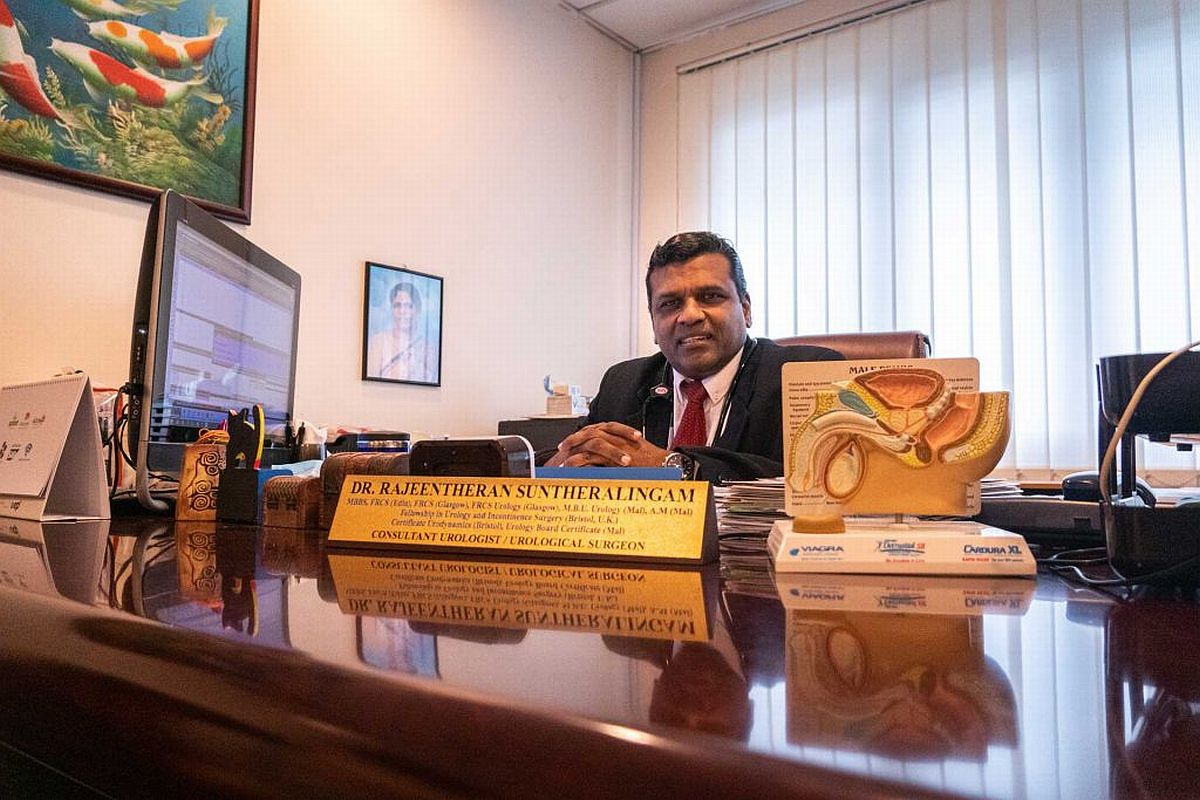
The author is a senior consultant urologist and urological surgeon at Damansara Specialist Hospital.
- This is the personal opinion of the writer or publication and does not necessarily represent the views of CodeBlue.


