

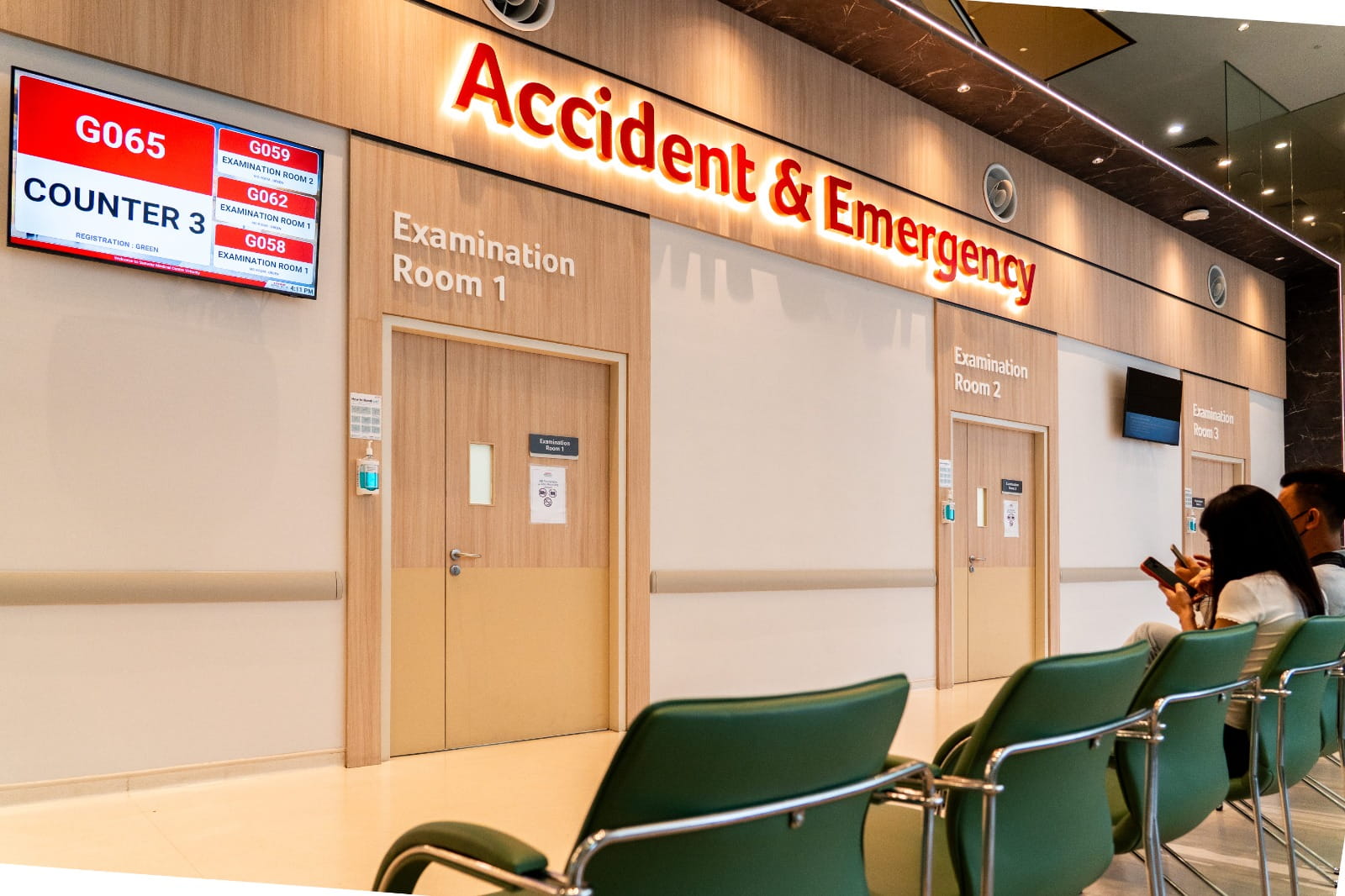
KUALA LUMPUR, July 2 — Sunway Medical Centre Velocity’s (SMCV) accident and emergency (A&E) department is equipped with various facilities and health care professionals in a multi-disciplinary team, including emergency physicians to ensure efficiency for patients in need of prompt medical assessment and treatment.
The private hospital’s A&E department has a point-of-care testing room, an MRI room, and X-ray rooms within the facility itself.
The availability of point-of-care testing in the A&E – as opposed to a centralised laboratory for the hospital outside the department – means that health care professionals can obtain rapid results to make immediate and informed decisions for emergency cases.
SMCV’s A&E department also has an isolation room that was used from the Covid-19 pandemic until now to hold patients with suspected infectious diseases like tuberculosis or influenza. The isolation room is a negative-pressure room with two doors to create a vacuum effect to contain infections.
Consultant emergency physician Dr Cyrus Lai Sin Nan shared that SMCV is seeing a rising number of emergency cases of not just mild disease, but also severely ill patients with stroke, bad chest pains, and severe infections among both the older population and younger people.
High blood pressure and diabetes are the two most common non-communicable diseases (NCDs) among young adults, said Dr Lai, who has seen late-stage cases with kidney or eye impairments, or severe hypertension, in people as young as those in their 30s.
“The numbers are very alarming,” Dr Lai told CodeBlue in a recent interview at SMCV.
He explained that emergency physicians, who are the first doctor a patient sees, often stabilise patients through resuscitation and provide symptom relief while awaiting a diagnosis.
“We make sure to address the most critical conditions, stabilise it, and pass it to the appropriate primary consultant,” said Dr Lai.
Fast Track: Stroke, Heart Attack, Trauma

Dr Lai said SMCV’s A&E department fast-tracks stroke, heart attack, and trauma cases through established pathways for these time-sensitive diseases. SMCV is also a stroke care hospital.
He noted that for stroke, an estimated 1.9 million neurons are destroyed every minute without treatment.
“Imaging and labs will be expedited because we want to treat the stroke within the golden hour window period, which is four-and-a-half hours,” said Dr Lai.
A 4.5-hour window is the recommended time for patients with ischaemic stroke to receive thrombolysis, or the use of clot-busting drugs to break up blood clots, from symptom onset.
“We need to do thrombolysis within four-and-a-half hours and thrombectomy (a procedure to remove clots from the brain) within 24 hours if the patient fulfils all the criteria. That’s why it’s very time-sensitive,” said Dr Lai.
He noted that sometimes stroke patients only arrive at the hospital three hours after symptom onset, although others may arrive sooner due to rising public awareness.
“We have to recognise stroke. Imaging and everything else have to be settled as soon as possible so that more treatment options can be offered to the patient.”
Under fast-tracking, patients entering triage will be pushed to the Red Zone upon recognition of stroke symptoms, with Code Stroke activated. A doctor will assess the case immediately. The patient’s blood-taking and imaging will be prioritised. A radiographer and neurologist are alerted simultaneously.
“The neurologist will be on standby, sometimes even before the patient is sent to undergo imaging tests. From there, based on history and imaging, the neurologist will determine whether the patient is suitable for thrombolysis or thrombectomy. After thrombolysis, the patient goes to the intensive care unit (ICU) for further treatment and monitoring,” said Dr Lai.
“Everything is very fast. Like I said, time is neurons.”
Dr Lai recommended that patients go to stroke care hospitals rather than non-stroke care hospitals, even if the latter are nearer, because patients would end up facing delays due to transfers from non-stroke care hospitals to stroke care hospitals.
The emergency physician recalled seeing a stroke case in a 60-year-old man who came to SMCV’s accident and emergency department with severe giddiness, which doctors initially thought was just an imbalance. But he displayed neurological signs of stroke, so the emergency team activated the stroke code and performed thrombectomy within the recommended time frame.
“After three days, the patient was able to walk and there were no neurological deficits or giddiness. These are the things we are very happy to see,” he said. “We want them to go back to their baseline health condition upon discharge.”
The same fast-tracking applies for heart attack cases, where patients with severe chest pains will be sent to the Red Zone and an ECG will be performed as soon as possible to diagnose the severity of the heart attack. Code STEMI will then be activated to alert a cardiologist and the catheterisation lab.
The cardiologist then determines if the patient should undergo primary stenting or also known as angioplasty procedure.
As for trauma cases, patients with severe polytrauma will be sent to the Red Zone, from which necessary imaging will be assessed and the relevant primary teams will be activated.
Dr Lai noted that trauma cases have a wide spectrum, with different bodily injuries needing different specialists, like a neurosurgeon for brain injury, a plastic surgeon for facial injury, or a general surgeon for injuries to the abdomen, and an orthopaedic surgeon for limb injuries.
SMCV’s A&E department conducts yearly disaster drills including preparation for mass trauma events, activated under Code Orange with clear standard operating procedures (SOPs).
“A&E is the first point of contact. So, the backup teams will all come to the A&E. Then we’ll expedite movements to the wards. The patients will have either of three outcomes: discharge, admit, or go to the operating theatre. Everyone knows their roles involving not just the medical team, but also non-medical teams like our customer service, corporate communication team or even the lab radiologist.”
Don’t Dismiss Small Injuries That Can Cause Complications

Dr Chang Kok Chun, SMCV’s consultant orthopaedic and trauma surgeon, stressed that all significant open injuries should be evaluated properly.
He gave the example of a 1cm stab wound on a finger without much bleeding with a hidden tendon cut that can result in permanent loss of finger function without surgical repair, as the finger won’t be able to bend.
“Some people may think it’s a small injury, but they don’t know that there’s actually something more serious happening inside,” Dr Chang told CodeBlue in an interview at SMCV.
“Firstly, the patient can get an infection and an infection of the tendon is serious. Secondly, if the patient delays treatment, the tendon’s cut end will be retracted, making subsequent surgery difficult. But if they go to the hospital immediately, it can be repaired and we can preserve your function.”
Injuries with joint swelling may also hide a serious ligament injury that should be treated at a hospital first.
“People should know that they need to get a proper assessment at a clinic or hospital before seeking other treatment options,” said Dr Chang.

Most of the trauma patients that SMCV sees are young adults involved in motor vehicle accidents, industrial accidents, or domestic accidents, as well as those with sports injuries (knee, ankle, or shoulder). The hospital also receives elderly patients with osteoporosis-related fractures (hip, wrist, or spine), as well as children with elbow and wrist fractures from play.
Dr Chang stressed that specialists are necessary in the A&E department to ensure prompt action for serious emergencies, citing examples like a pelvic fracture with massive internal bleeding or spine injuries with paralysis.
Although orthopaedic cases may sound less serious than heart attacks or strokes, Dr Chang said they’re just as important.
“Proper identification of orthopaedic injuries and timely treatment are important for maximal recovery, avoidance complication, and permanent disabilities,” he said.
“Orthopaedic fracture treatment has advanced over the decades, in which modern treatment results in better outcomes, avoids treatment-related complications of older methods, and ensures comfort during the journey to recovery.”
Timely intervention makes a significant difference. Emergency treatment is mandated for open fractures (fracture with open wound) to avoid bone infection or osteomyelitis, and non-union fracture (a broken bone that fails to heal).
“Chronic bone infection, once established, is difficult to eradicate, with recurrent pus discharge from the injury site that can last for years without resolution, despite long-term antibiotic treatment,” said Dr Chang.
“This daunting complication can only be avoided by early surgical treatment of open fractures, preferably within eight hours from injury.”
Hip fractures among the elderly also deserve special attention because early intervention prevents complications of bedridden in frail patients, like orthostatic pneumonia, bed sores, and deep vein thrombosis, with the resultant risk of life-threatening pulmonary embolism.
“It’s important to undergo surgery as soon as possible to enable subsequent mobilisation, not only to restore function, but to avoid complications and save lives.”
Dr Chang described orthopaedics as one of the key parts of SMCV’s health care services.
“We ensure that patients receive the right treatment plan, and they can take comfort in knowing that our accident and emergency department is available around the clock to treat various conditions.”
The public can contact SMCV’s emergency hotline at 03-9772 9111, while the hospital’s ambulance service can be contacted at +6010-266 7386.


