

The effects of escalating hostilities in the Middle East following the military strikes in Iran in February 2026 are already filtering into the systems we rely on every day.
While Malaysia is not directly involved, the indirect effects are both real and immediate, largely transmitted through fuel prices, trade disruptions, and broader economic channels.
In a highly interconnected global economy, supply chain disruptions, energy price volatility, and shipping bottlenecks rarely stay contained.
Across the Asia-Pacific region, countries are already responding, with the Philippines declaring a national energy emergency and others drawing down reserves to manage rising costs.
Overlaying all of this is the broader economic adjustment driven by higher oil prices. Brent crude has moved from around US$70 in late February to above US$100, with peaks near US$126. For a country that subsidises fuel, this has immediate fiscal implications. The monthly subsidy bill has risen sharply, prompting recalibration.
Beginning April 2026, the subsidised RON95 quota under the BUDI95 programme will be reduced from 300 litres to 200 litres per month. The subsidised price remains, but consumption beyond that threshold shifts to market rates, which are already significantly higher.
From a policy standpoint, this is a containment measure rather than a withdrawal, highlighting the need to balance household support with fiscal sustainability.
In Malaysia, the impact is being felt through the cost of living. Higher oil prices are feeding into transport, food, and electricity costs, placing added pressure on households, particularly those with limited financial buffers.
The government has responded with a series of measures, including rationalising subsidies and scaling back non-essential spending such as large-scale festive open houses.
Prime Minister Anwar Ibrahim has signalled the need for tighter fiscal measures early on, followed by a special Cabinet meeting to assess the situation, and subsequent adjustments to petrol subsidies.
While official messaging remains cautiously optimistic, the more important question is how these external shocks will translate into pressures within our health care system.
At its core, the escalating conflict presents a dual threat of heightened fiscal volatility driven by global oil prices and simultaneous disruption to medical and food supply chains.
Left unmanaged, these pressures will not be evenly felt, with B40 households, the urban poor, and migrant communities facing the greatest risk of being priced out of essential needs.
One immediate pathway is health care inflation. Rising oil prices do not just affect transport at the consumer level; the raise operational costs across the health care system, from logistics and supply distribution to electricity for running facilities.
Over time, these costs are absorbed into the cost of service delivery. In a system where public health care is heavily subsidised, higher operating costs increase fiscal strain and may limit how much capacity can be expanded.
For patients, this can mean longer waiting times, tighter access, or a gradual shift towards out-of-pocket spending.
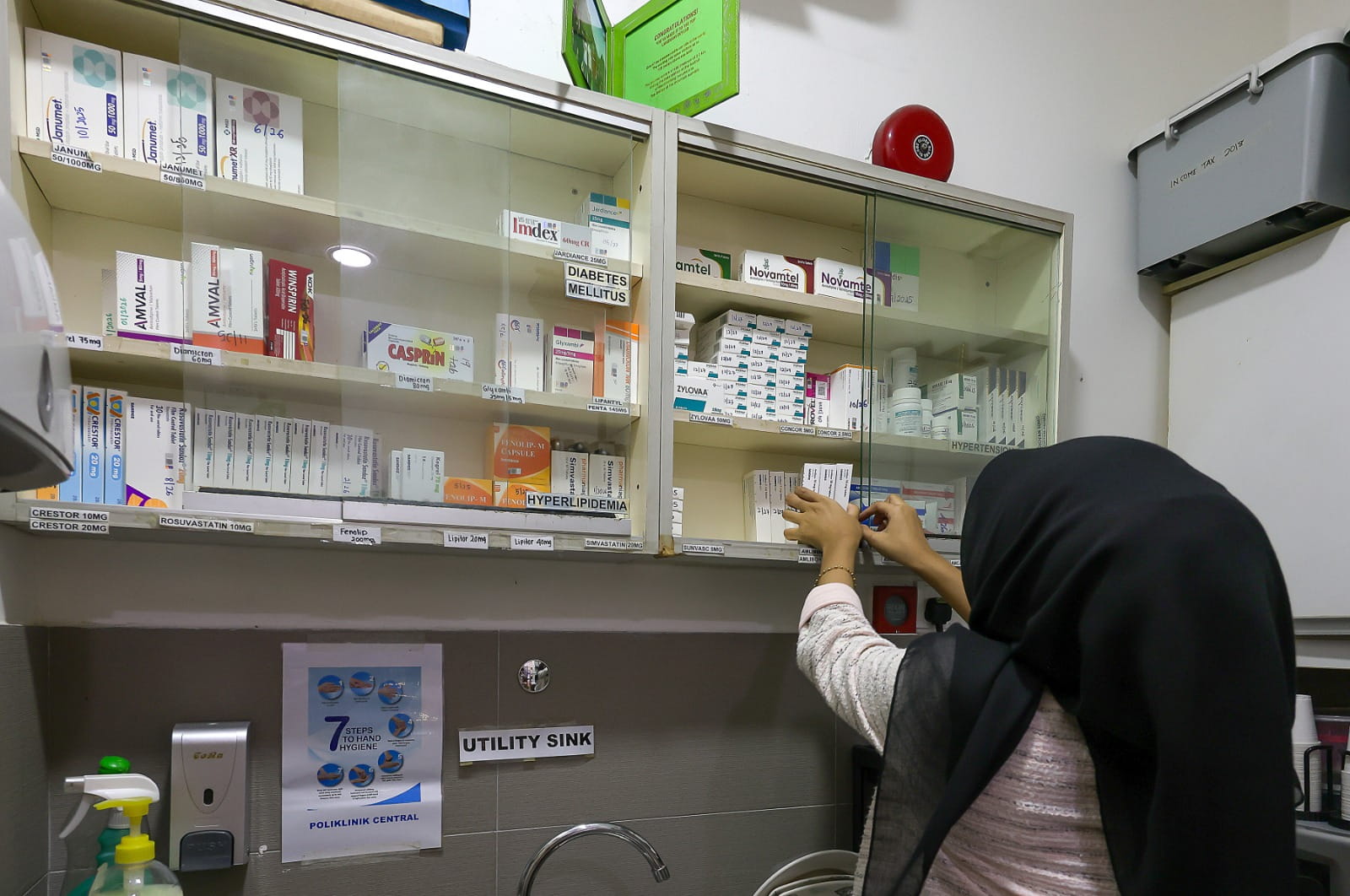
The second pathway is supply chain disruption, particularly for docines and critical equipment. Malaysia remains a net importer of pharmaceuticals, with imports reaching RM11.3 billion in 2023. Current stockpiles provide a buffer of roughly one to three months, but they are not indefinite.
Prolonged disruption to shipping routes, especially through the Strait of Hormuz, will push up the cost of active pharmaceutical ingredients and essential consumables. This may not result in immediate shortages, but it will increase procurement costs in an already stretched system.
Less visible, but potentially more acute, is the dependence on liquid helium. It is essential for MRI machines to function, yet global supply is highly concentrated.
Disruptions to production and export routes have already tightened availability to Asia. Hospitals cannot store helium indefinitely. Even under optimal conditions, it gradually evaporates, with a working window of about 45 days.
If supply constraints persist, facilities may eventually have to scale back MRI services. That would not make headlines immediately, but it would slow down diagnosis for conditions like cancer, where early detection matters.
The third pathway runs through nutrition and broader public health risks. Malaysia’s food system is closely tied to imported inputs, particularly fertilisers.
Around 60 per cent of mineral fertiliser needs are sourced from abroad, with the Middle East supplying key nitrogen-based products like urea.
At the same time, export restrictions from major suppliers such as China, which accounts for roughly a third of Malaysia’s fertiliser imports, have further tightened global supply.
The result is an upward pressure on fertiliser prices, which leads to increased production costs.
In Cameron Highlands, vegetable farmers are already reporting input cost hikes of 15 to 20 per cent for crops such as tomatoes and sawi. These figures tend to pass through quickly to retail prices. At the same time, the poultry sector is beginning to feel the strain.
Chicken and eggs remain the most accessible sources of protein, but production depends heavily on imported feed, particularly grain corn and soybean meal.
Rising energy and freight costs have pushed feed prices up, and because poultry production cycles are short, these cost increases are transmitted to consumers within weeks.
Rice, for now, remains relatively stable. Malaysia imported about 1.7 billion kilograms of rice in 2024, accounting for roughly 30% of total supply.
The Ministry of Agriculture and Food Security has indicated that current stocks are sufficient until at least mid-year. However, the global rice market is showing signs of strain.
India has seen significant exports volumes delayed, and although Malaysia sources primarily from Thailand and Vietnam, global price movements tend to align over time. Sustained pressure in the international market will eventually narrow the buffer we currently have, making it harder to shield domestic prices from external shocks.
In the short term, these pressures are likely to increase demand on subsidised public health care services as households seek more affordable care, while also intensifying calls for broader subsidy support.
Immediate stabilisation measures will need to go beyond across-the-board subsidies. More targeted realignment, specifically shifting from blanket fuel subsidies towards B40-focused support, can help free up fiscal space.
Channelled into a dedicated resilience mechanism, these resources could support the public health budget and cushion essential food prices via existing Sumbangan Asas Rahmah (Sara) initiatives.
Both public and private health care sectors are likely be affected by the rising costs. However, public-private collaboration can help ease congestion to the public health care facilities. For example, the current outsourcing of medical services to private health care providers.
The Hospital Services Programme (HSOP) has improved health care accessibility and quality by reducing patient load in public health care sector, shortening waiting times for specialised care, and enhancing overall service quality.
Malaysia has taken measures to strengthen pharmaceutical buffers through the introduction of the National Generic Medicine Framework as part of the Malaysian National Medicines Policy (MNMP).
This initiative aims to improve the affordability of medicines, ensure quality standards of active ingredients, and increase access to essential medicines. During these challenging times, local pharmaceutical companies can play a critical role in mitigating medical inflation and reducing dependence on international market monopolies.
In the medium term, sustained fiscal pressure may constrain the pace of health system reform if left unaddressed. This is where structural adjustments become necessary.
Advancing health care financing reform, including forms of national health insurance, can reduce reliance on annual fiscal allocations and improve system sustainability during economic shocks.
At the same time, building domestic capacity matters. Incentivising local production of critical medical supplies and agricultural inputs would reduce exposure to external volatility. Existing frameworks such as the National Action Plan for Health Security can be more actively leveraged to manage rising costs, secure supply chains, and coordinate cross-sector responses.
The objective extends beyond continuity to prevent widening gaps in access, particularly among populations already at higher socio-economic risks.
Overall, the system is likely to remain functional, but the distribution of impact will become more uneven. Access may tighten at the margins, and existing inequities may widen if left unaddressed.
Malaysia does have buffers, including energy revenues and existing subsidy frameworks, but these alone are not sufficient. What is needed is a more anticipatory approach that protects access to health care and nutrition while strengthening system resilience.
The conflict may be geographically distant, but its effects are already embedded in how our systems operate. The adjustments are gradual rather than abrupt, which makes it easier to overlook.
This is precisely why policy responses need to move early before these pressures become harder to reverse.
Dr Hoomashini is a medical officer in private health care, Dr Sean Thum is a policy officer at the Ministry of Communications, and Dr Tharani Loganathan is a public health medical specialist and a lecturer at the Department of Social and Preventive Medicine, Faculty of Medicine, University of Malaya.
- This is the personal opinion of the writer or publication and does not necessarily represent the views of CodeBlue.


