

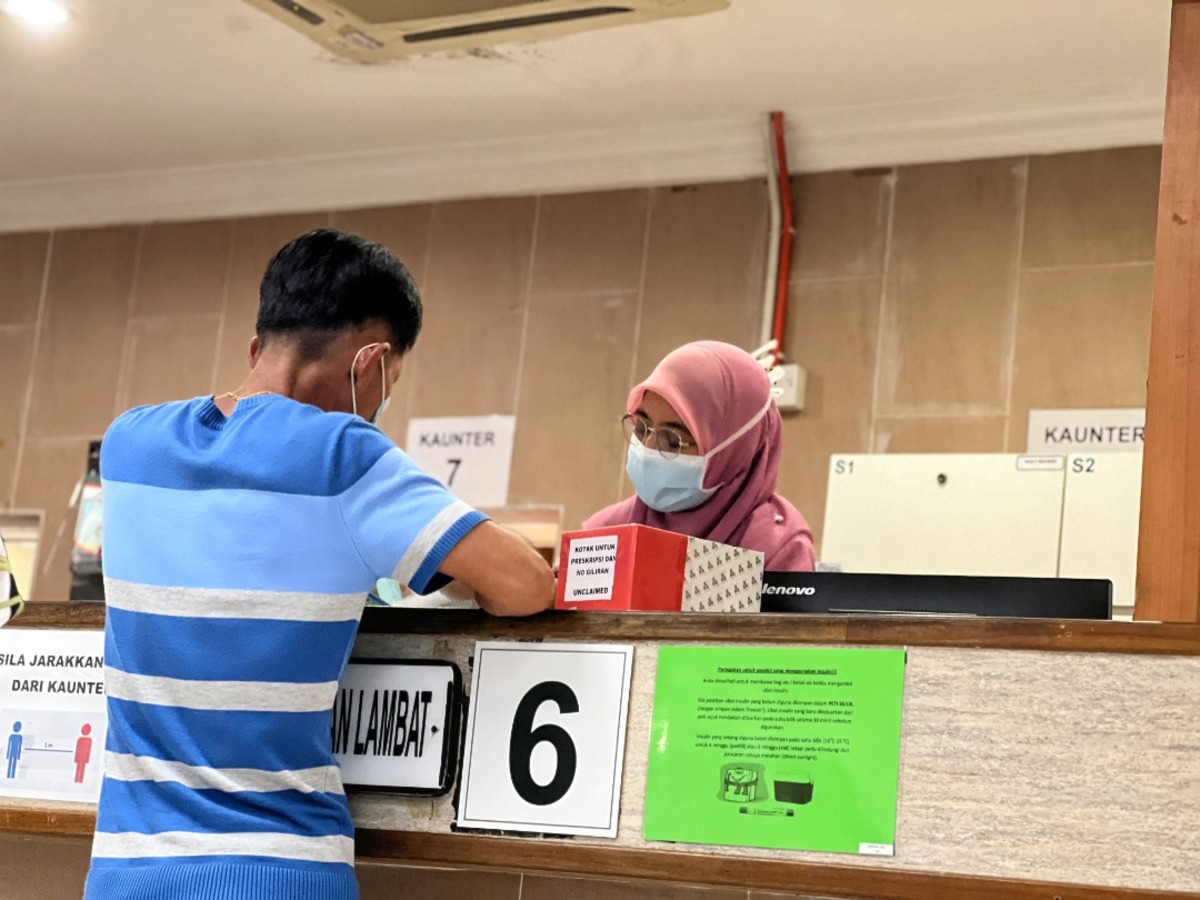
KUALA LUMPUR, March 24 — The Ministry of Health (MOH) yesterday assured Malaysians that the supply of medicines in the country is currently stable, amid the West Asia conflict.
MOH said its health care facilities maintain between one and three months of medicine stock levels, supported by additional buffer stock of up to two months at the concession company level for medicines supplied through logistics concessions.
“Based on current assessments, the short-term impact of the conflict in the Middle East is minimal,” said the MOH in a statement.
“Feedback from the local pharmaceutical industry indicates that domestic manufacturers have raw material stock of up to three months and finished products for around two months, while importers are also closely monitoring their respective supply chains.”
The MOH reported that as of March 22, it has not detected a rising trend in product registration holder (PRH) reports with the National Pharmaceutical Regulatory Division (NPRA) on medicine supply disruptions.
“MOH will continue to closely monitor developments in the Middle East conflict and is committed to taking proactive measures, including the establishment of a task force comprising pharmaceutical industry players and relevant stakeholders, to ensure continuous monitoring and the security of medicine supply, especially for medicines listed under the National Essential Medicines List (NEML) in Malaysia,” said the MOH.
Galen Centre for Health and Social Policy chief executive Azrul Mohd Khalib wrote in an op-ed last Thursday about the risks of the ongoing closure of the Strait of Hormuz, which has been blocked by Iran for over three weeks, to Malaysia’s medicine security.
He noted that Malaysia is a net importer of pharmaceuticals. Thirty-nine per cent of drugs listed on the NEML are not produced in Malaysia.
According to the Galen Centre, generic medicines, which operate on thin margins, are often the most exposed to supply shocks, such as during the Covid-19 pandemic.
CodeBlue previously reported the Malaysian Association of Pharmaceutical Suppliers (MAPS) and local pharmaceutical company Pharmaniaga Berhad as saying that Malaysia’s drug supply may be disrupted if the Persian Gulf conflict is prolonged, though there’s no immediate impact yet.
India, a major generics producer which relies on the Strait of Hormuz for petroleum-based inputs used in drug manufacturing, comprises more than 30 per cent of Malaysia’s imported drug supply.
Oil price movements, warned Pharmaniaga, can also affect drug production costs and supply over time.
Besides upstream risks for medicines like active pharmaceutical ingredients (APIs), petrochemical inputs, and packaging components, helium supply disruptions from the West Asia conflict will affect the operation of MRI scanners.
MOH is the first ministry to detail its preparedness amid the Iran conflict – medicine security – while the Agriculture and Food Security Ministry (KPKM) has yet to specify Malaysia’s food security situation, even as fertiliser supply disruptions have emerged as the key local and global concern.


