

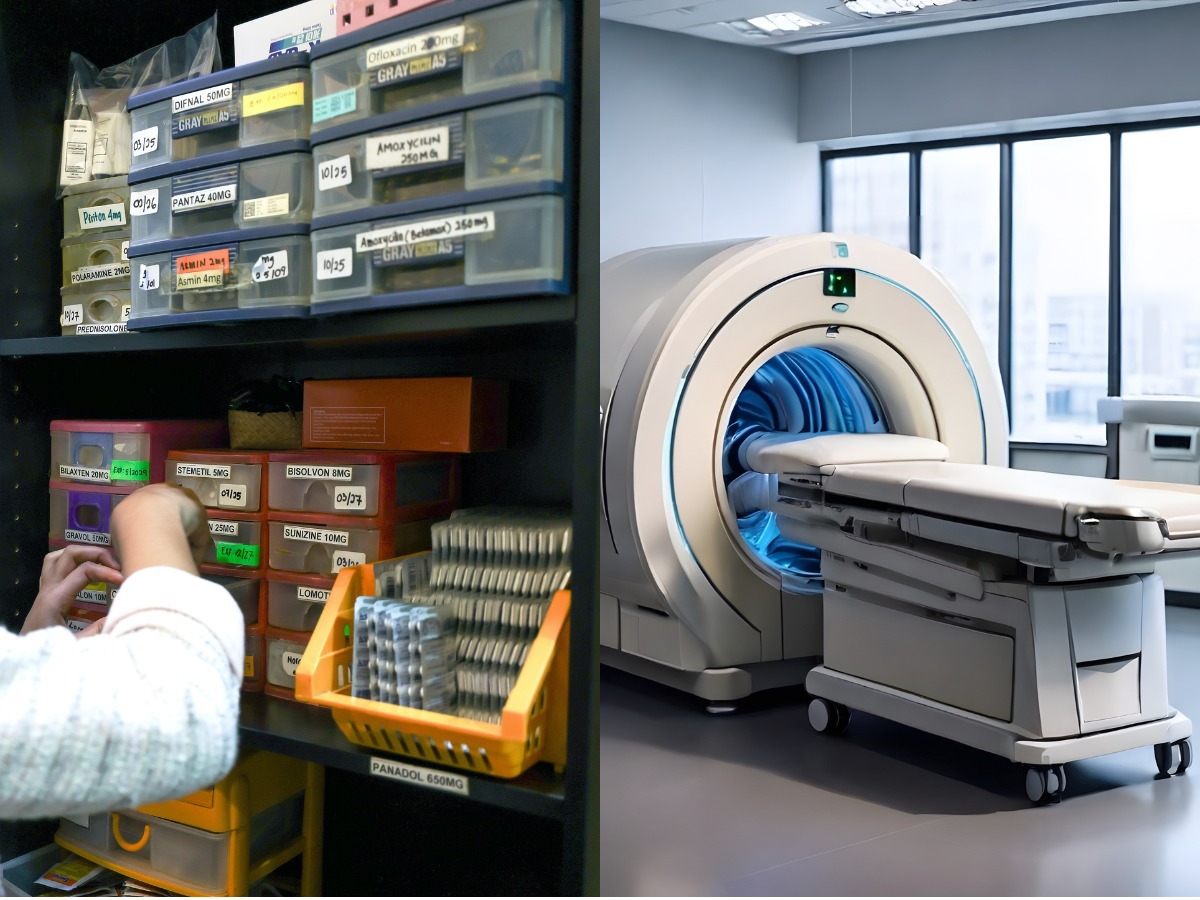
KUALA LUMPUR, March 19 — Malaysia’s pharmaceutical supply chain has so far been spared direct disruption from the conflict in Iran, but industry players say risks could emerge if the situation persists.
Suppliers say most shipments of medicines and medical devices into Malaysia do not pass through the Strait of Hormuz, limiting immediate exposure to supply shocks.
However, rising fuel costs, rerouted air shipments, and continued dependence on global manufacturing hubs may begin to strain the system if the conflict drags on. Malaysia imported RM8.22 billion worth of finished pharmaceutical products in 2025.
Lim Teng Chyuan, president of the Malaysian Association for Pharmaceutical Suppliers (MAPS), said the country’s sourcing network remains geographically diverse, reducing the likelihood of sudden disruptions. MAPS members focus mainly on finished pharmaceuticals.
“At our last count, MAPS members are representing suppliers from 40 countries for a total of 270 suppliers. Only the UAE is in the list that could be potentially affected with two suppliers. India, South Korea, Thailand and Germany are major supplier nations that we deal with.
“India alone is already 30 per cent of our suppliers by number of companies, and even higher as a share of products. So the Strait of Hormuz is unlikely to cause a major dent in our ability to supply, timelines, and reliability, since most of our supplies do not traverse the strait,” Lim told CodeBlue in a statement yesterday.
However, this assessment comes amid broader concerns about the global pharmaceutical system’s reliance on India, a major producer of generic medicines and a key supplier to Malaysia.
International reports have pointed to vulnerabilities in India’s pharmaceutical supply chain, particularly its dependence on the Strait of Hormuz for petroleum-based inputs used in drug manufacturing and for shipping finished products to the United States.
CNBC reported that nearly half of generic drug prescriptions in the US originate from India. Indian media have also warned that the West Asia conflict could raise India’s pharmaceutical production costs and disrupt exports, with estimates suggesting potential losses of up to US$500 million (RM1.96 billion) if supply chains are affected.
Under the Madani government, Malaysia has been increasingly pivoting to generic medications over originator drugs, with Prime Minister Anwar Ibrahim announcing last January that a change in drug procurement to prioritise generics saved the government nearly RM1 billion.
Lim acknowledged potential cost pressures from Malaysia’s reliance on Indian drugs, but said some of the impact could be cushioned as the US has temporarily eased sanctions to allow India to buy Russian oil during the Iran conflict.
“So fuel and petrochemicals’ impact would be blunted in this context,” he said.
Potential Cases Of Stock Shortage If Conflict Prolonged
Still, early signs of strain are emerging, particularly in logistics. Lim said cost pressures are already rising, especially from fuel and transport, which could affect both pharmaceutical products and medical devices.
“We are still learning if there would be any effect on the availability of containers to transport our shipments. As for air shipments, there are some minor impacts as the sky over the conflict zones have to be rerouted, since this extends beyond the Strait of Hormuz,” Lim said.
For now, existing inventories and contractual supply arrangements are helping to buffer the system. However, Lim cautioned that any disruption is likely to be delayed rather than immediate.
“We have yet to see the impact, but it is likely if the conflict is prolonged. As with all contracts, our members have to meet minimum order quantities, so many would have inventory. There may be some cases of stock shortage by companies due to the ordering cycle.”
Lim said MAPS members are continuing to work with suppliers to ensure sufficient stock levels, while flagging longer-term questions about supply resilience.
“We are constantly working with supply partners to shore up the nation’s drug sufficiency, and hope the government continues to support both self-sufficiency and diversification of supply sources, including from friendly nations that can meet our requirements of safety quality and efficacy,” he said.
“As for buffer stocks, some of our companies are already bound by contract to keep buffer stocks. The question is whether the requirement for a higher buffer will be imposed. Considerations should be given to financing of the buffer stocks and logistic expansions required to support this.”
Pharmaniaga Flags API, Cost Pressures Despite Stable Supply
Pharmaniaga Berhad says the country’s medicine supply remains stable for now, but it is preparing for potential disruptions across the global pharmaceutical supply chain.
“At this point, there has been no direct disruption to the availability of medicines supplied through the public health care system. The Group’s inventory position is stable and supported by adequate buffer stock levels to meet current demand across hospitals and health care facilities nationwide,” Pharmaniaga managing director Zulkifli Jafar told CodeBlue in a statement.
Malaysia’s largest government-linked pharmaceutical company, which primarily supplies the Ministry of Health (MOH), said the situation remains fluid, with some minor delivery adjustments observed, though these have not affected distribution.
Pharmaniaga is also monitoring upstream risks, including active pharmaceutical ingredients (APIs), petrochemical inputs, and oil price movements that can affect production costs and supply over time.
“Pharmaniaga continues to maintain close engagement with its network of international suppliers, including those operating within or connected to the Middle East region, in order to closely track any developments that may influence upstream inputs, such as APIs, petrochemical-derived materials, and packaging components used in pharmaceutical manufacturing,” Zulkifli said.
“At present, there is no indication that the situation will affect medicine availability in Malaysia. Any potential implications for government pharmaceutical expenditure would depend on wider policy considerations within the structured pricing framework governing the supply of medicines to the public health care sector.”
Aluminium supplies from the Middle East, which reportedly account for about 9 per cent of the world’s aluminium production capacity, have been disrupted by the West Asia conflict, though inventories are piling up in China due to surging prices. The lightweight metal is used for pharmaceutical blister packs.
In anticipation of possible disruptions, Pharmaniaga has established an internal taskforce to coordinate its response across supply chain, manufacturing, procurement, and logistics functions.
“The taskforce is evaluating contingency measures such as alternative sourcing strategies, optimisation of inventory buffers, and greater procurement flexibility to ensure continued stability of supply should the external environment evolve further,” Zulkifli said.
For now, the company described the situation as “currently manageable”, but warned that risks could escalate if the conflict begins to affect global pharmaceutical networks more broadly.
“At the same time, the circumstances serve as a timely reminder of the importance of strengthening Malaysia’s domestic pharmaceutical manufacturing ecosystem, especially in the production of essential and chronic disease medicines,” said Zulkifli.
Malaysian Organisation of Pharmaceutical Industries (MOPI) senior policy manager Sharvin A. Subramaniam similarly told Business Times in a statement yesterday that Malaysian pharmaceutical manufacturing is heavily dependent on API imports.
He noted that Malaysia can’t replace all imports with local production, including patented drugs, lower-volume generics that lack economies of scale, and complex biosimilars that Malaysia does not yet have the local capabilities to manufacture.
“Instead, we must focus on the holistic integration of our supply chains, which includes building targeted local API capacity where viable, alongside forging deep partnerships with global API leaders to ensure a consistent flow of raw materials. Second, we must focus on building local manufacturing capacity,” said Sharvin.
Risks To Medical Devices’ Operations, Consumables, Supplies, Packaging
Industry players say the concern is less about immediate shortages than about Malaysia’s underlying exposure to global supply shocks.
Nadiah Wan, chief executive of NineYards Ventures, said Malaysia’s health care supply chain remains heavily reliant on imports, leaving it vulnerable to disruptions beyond medicines to a wide range of medical products and inputs.
“Anything affecting the global supply chain will definitely affect us,” Nadiah told CodeBlue. “Our supply chain in health care is highly exposed to imports aside from simple consumables and drugs so anything affecting the global supply chain will definitely affect us.”
While no disruptions have been reported so far, she said cost pressures are likely to emerge over time, particularly in areas such as single-use medical supplies and packaging.
“Our (private hospitals in Malaysia) main supplier is Linde,” she said, referring to a major global supplier of medical and industrial gases used in hospital operations. “So far they haven’t said anything about disruptions. Inflation and supply chain like single-use packaging will definitely be impacted too, but when is the issue.”
Nadiah earlier pointed to less visible vulnerabilities in specialised medical inputs — including helium used in MRI scanners, laparoscopic tools, and heliox in respiratory care — raising questions about whether hospitals are prepared for potential supply shocks.
Helium is required to cool superconducting magnets in MRI scanners, without which the machines cannot operate.
Recent reports have also highlighted broader concerns over helium supply disruptions from the Iran war, with Reuters reporting that chipmakers in Malaysia are monitoring potential risks, underscoring the gas’ importance across high-technology and medical applications.
Similar pressures are emerging in petrochemical supply chains that underpin plastics used in medical products, with regional reports flagged by Thai Enquirer pointing to rising costs and tighter availability of plastic resins linked to disruptions in oil and petrochemical flows.
These materials are widely used in single-use devices, sterile packaging, and diagnostic components, suggesting that upstream constraints could feed into higher costs and potential delays across the health care system.
More broadly, Nadiah warned that the economic effects of the conflict could eventually weigh on health care financing.
Rising Costs May Strain Health Spending, Delay Reforms
Azrul Mohd Khalib, chief executive of the Galen Centre for Health and Social Policy, said higher fuel prices and currency volatility are likely to drive up health care costs over time, as the impact of the conflict extends beyond supply chains to government finances.
“Malaysia relies heavily on imported medicines, medical devices, active pharmaceutical ingredients, and other health care inputs, all of which are vulnerable to higher transport, logistics, and procurement costs when fuel prices rise,” Azrul told CodeBlue.
“The impact is not immediate, but it will likely be felt through more expensive logistics costs, procurement, and supply chain pressures, especially for chronic disease treatment and specialised care.”
At the same time, he warned that higher government spending on fuel subsidies could reduce fiscal space for health care.
“That is the trade-off,” Azrul said. “The more the government spends on broad, expensive fuel subsidies, the less fiscal space it has for health care, education, and long-term reforms.”
Under such pressure, Azrul said spending on newer or less visible health initiatives is often the first to be delayed.
“The first to be affected are usually new, non-core, or politically less visible items such as expanded funding for rare diseases, access to newer treatments, such as for psoriasis, improvements to health worker allowances and incentives, and proposed structural reforms.”
Azrul added that political considerations may further shape spending priorities, particularly in the lead-up to Malaysia’s 16th general election.
“In the run-up to an election, governments tend to favour highly visible measures like subsidies and cash transfers because they deliver immediate political value. But this can come at the expense of less visible, long-term reforms such as strengthening the health workforce, improving retention, and expanding treatment funding,” Azrul said.
“This is a dangerous trade-off because it weakens the health system over time.”
The government has moved to cushion the impact of rising global oil prices by maintaining the Budi95 targeted subsidy, keeping RON95 petrol at RM1.99 per litre despite the global conflict.
However, this has increased monthly fuel subsidy spending to about RM3.2 billion, with total costs projected to reach up to RM24 billion this year if elevated prices persist, raising concerns about fiscal space for other sectors, including health care.
Health regularly receives the second-biggest allocation in annual federal budgets after education, with the MOH getting RM46.5 billion under Budget 2026.


