

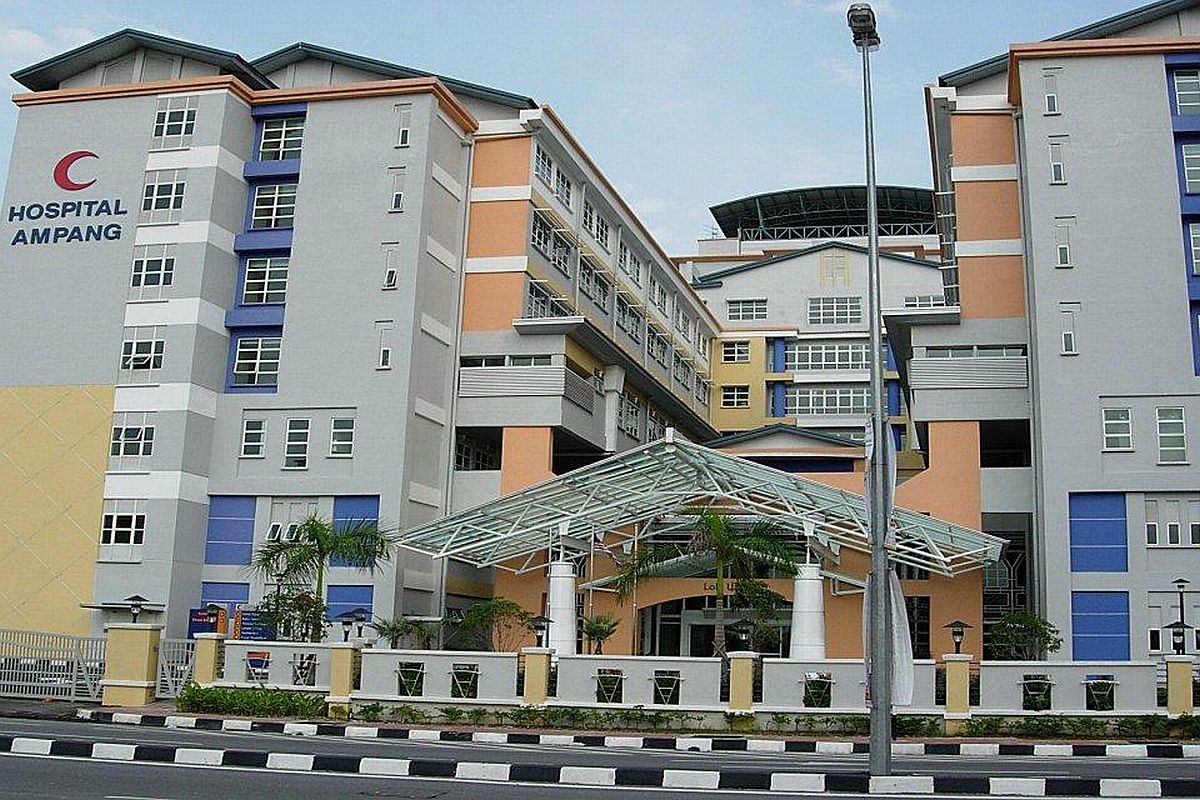
KUALA LUMPUR, April 24 — Ampang Hospital’s outdated eHIS system broke down for a whopping 33 hours over the past two days, marking its first major outage in the once flagship IT hospital.
A doctor said the IT system at the national referral centre for haematology was down last Wednesday at 9am and came back up at around 6pm yesterday, disrupting blood test results, drug prescriptions, patient admissions, and patient discharges over a 33-hour period.
“We had to do everything manually; everything was slower than usual,” Dr X told CodeBlue yesterday on condition of anonymity.
He said Ampang Hospital’s eHIS system has not been upgraded since its installation nearly two decades ago when the hospital began operations in 2007. Ampang Hospital was among the earliest hospitals in Malaysia to introduce a Total Hospital Information System (THIS) as a paperless and fully computerised tertiary centre.
“This issue has never happened before; it was the first time,” said Dr X, adding that the government hospital managed to recover patient records.
The massive IT system outage over the past two days was caused by a corrupt file that had seven core modules.
Dr X also said Ampang Hospital has insufficient laptops and that its computers run on Windows XP, an obsolete operating system for which Microsoft ended support 12 years ago in 2014.
“We’re still using Internet Explorer (IE),” added Dr X. The IE web browser officially ended support and was retired four years ago in 2022.
Another doctor at the Selangor public hospital said eHIS system failures occurred more than 10 times last year, with problems happening nearly every month towards the end of 2025.
“When the eHIS system is down, access to patient records is disrupted and patient care management is hindered,” Dr Y told CodeBlue.
Lagging or freezing of the eHIS system caused difficulty in entering blood test records that are essential in guiding clinicians on treatment decisions.
According to Dr Y, the IT department activates “BCS”, where patient records are written manually on paper, whenever the eHIS system is down.
“However, patient history, blood records, medication history, and X-ray records still need to be accessed through eHIS. So this disrupts patient management and slows down the treatment process,” he said.
Patients in specialist clinics have had their treatment postponed to another date whenever the eHIS system is down.
“This is because all past medical records, appointment purposes, and drug prescriptions must be processed through eHIS. Therefore, activating the BCS system does not help doctors and health care assistants at all to provide care.”
Besides the problematic IT system, Dr Y highlighted old computers, damaged keyboards, and non-functional ward-round trolleys at Ampang Hospital.
“The laptops provided for ward rounds frequently do not function,” he said, adding that the hospital’s laptops use Windows 7 as well, another obsolete operating system like Windows XP.
“In fact, there is not even one laptop available per patient cubicle. Health care staff have to compete for limited laptops or computers available at the counters.
“IT facilities that were supposed to reduce paper usage have instead led to wastage, as doctors have to print patient records to facilitate specialist ward rounds, due to the lack of sufficient laptops.”
The problems at Ampang Hospital reflect those at Selayang Hospital that was also once hailed as a model IT hospital, but now relies on manual processes.
Amid perennial issues at these former flagship IT hospitals with now outdated or even obsolete systems, Health Minister Dzulkefly Ahmad touted last January a “comprehensive digitalisation drive” in the Ministry of Health (MOH), including a proposed expansion of THIS to 16 hospitals.
CodeBlue, which has requested comments from Ampang Hospital, is providing anonymity to the two doctors quoted in this story because civil servants are prohibited from speaking to the press.
Both doctors called for a new IT system at Ampang Hospital. Dr X wanted upgrades like Sungai Buloh or Serdang hospitals.
”The problems go against the health minister’s desired digitalisation transformation,” said Dr Y. “We don’t want our patients to suffer adverse consequences as a result of system failures that can’t be fixed.”


