

A recent article published by CodeBlue titled “Distrust in Private Health Care Driving Patients to Government: NCSM” has sparked conversations about the state of health care in Malaysia.
While headlines often summarise complex issues into a single narrative, the reality on the ground paints a more nuanced picture and agreeably deserves a more considered discussion.
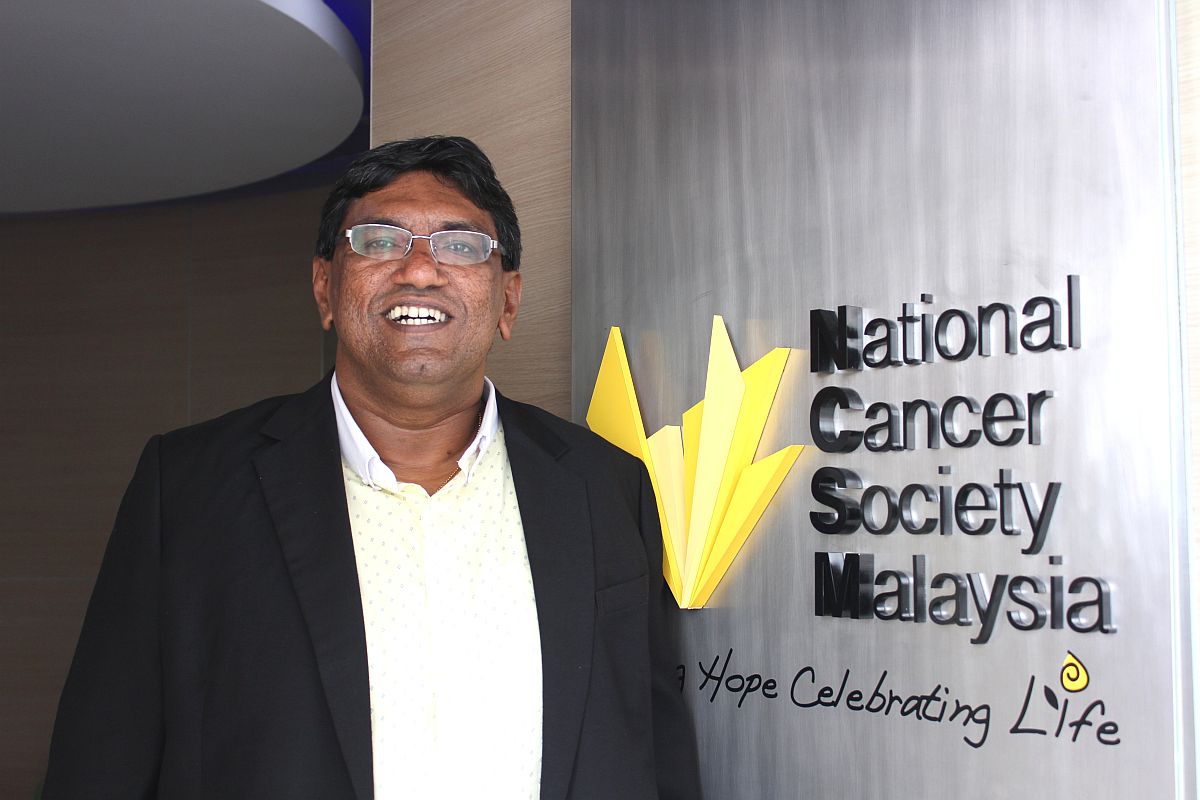
As managing director of the National Cancer Society of Malaysia (NCSM), I believe it is important to clarify that the remarks attributed to me were part of a broader dialogue about patient access, affordability, and the increasing pressures we witness patients face within our health care system.
My commentary was not intended as a criticism of private health care providers, nor do they reflect a lack of confidence in the quality of care delivered by private hospitals or private primary care professionals.
For almost a decade, I have been a constant and consistent advocate of integration and working together between the public and private health care sectors, as well as also of the key role of the private health care sector within the larger Malaysian health care system. (The tables below provide this evidence).


But unlike advocates who have been accused of NATO (No Action Talk Only), I have believed in action and again, my actions speak consistently of the work we have done and continue to do in driving integrative supportive actions of the entire health care system working together for patients.
Together with our partners in the NCSM-ETIQA Breast Early Screening and Detection Ecosystem through partnerships with many different private hospitals, we continue to provide thousands of mammograms for women from underprivileged backgrounds over many years.
Through partnerships with private hospitals and private primary care clinics all over the country, we worked together to save the lives of 300,000 Malaysians by providing them life-saving HPV vaccines through the Leaving No One Behind programme in partnership with MSD. This is an effort we are continuing now with the Leaving No One Behind 2.0 programme, working with multiple private health care partners nationwide.
In lung cancer, NCSM was responsible for developing and deploying what is the world’s first microinsurance for screening and detection of lung cancer together with MCIS, working entirely to bridge private primary care providers as well as private hospitals and build a sustainable solution and safety net to complement the public health care system.
Action, not merely words.
At NCSM, our mission in building a nationwide support system for cancer patients goes beyond awareness and screening. We have always prioritised highlighting the importance of the continuum of care which includes early detection, patient navigation, financial access, treatment access and survivorship access.
In advancing this vision, private hospitals have never been on the sidelines. Rather, they have been and continue to be actively integrated into our efforts to build a cohesive health care ecosystem, alongside other partners across Malaysia’s broader health care landscape.
Our collaborations with private health care providers have been evident across the 60 years of our service towards cancer patients in Malaysia. Matter of fact, these collaborations have been life-changing for many patients, as it is especially important in oncology, where time is often the most critical factor for anyone battling cancer.
However, it was equally important for me to have addressed the issue faced by the very dual system of private and public health care system that has built Malaysia’s health care system, which is under increasing strain.
As highlighted in a report commissioned by Prudential plc and developed by Economist Impact, the country benefits from a public sector that provides affordable, near- universal access across all levels of care, alongside a growing private sector that delivers services through extensive networks of clinics and hospitals.
The report points to a mismatch between infrastructure and patient load, compounded by workforce shortages and the uneven distribution of health care professionals.
While the private sector operates 72 per cent of outpatient facilities, its share of outpatient visits declined from 54 per cent in 2011 to 36 per cent in 2019. Meanwhile, public hospitals continue to carry the bulk of inpatient care, accounting for nearly three-quarters of admissions.
These trend not only reflects a system where patient flows are shaped not just by preference but also by affordability, access and the realities of navigating care. Across Malaysia, not only within the oncology system, but across the broader health care landscape, patients are increasingly faced with situations to make difficult decisions.
Factors such as rising medical costs, evolving insurance coverage and unplanned out- of-pocket expenses are influencing how and where the everyday Malaysian seek treatment.
Some begin care in the private sector, and later transition to public facilities to curb rising costs, while others delay treatment and resign to facing serious health consequences.
Encouragingly, the Economist Impact report also highlights practical opportunities to strengthen patient confidence. In the private sector, clearer pricing, upfront cost estimates, and simpler billing processes can empower patients to plan their care with greater certainty. These are constructive steps that can further enhance transparency and trust.
At the launch of this report, I spoke to highlight a ‘hidden hand’ who is eroding the trust within the private health care and private insurance landscape today- pseudoscience and ‘alternative medicine’ social media influencers who are peddling quick sure cures and expensive, unusable remedies.
In order to peddle their wares, they tout narratives which undermine the credibility and confidence in private health care systems and the private insurance system. This erosion of trust, being magnified in social media channels, is what I pointed out is an issue that the entire landscape needs to act on together.
I also highlighted that one of the unforeseen circumstances of this ‘phenomenon’ is that individuals are overwhelming public health systems as a result.
This is not the first time I highlighted a problem that no one wants to look at or even consider; nor will it be the last. I am quite used to being the unwanted or unlooked-for messenger.
At NCSM, our role is to advocate for patients while strengthening the ecosystem around them. This essentially means continuing to work closely with private hospitals, public institutions, policymakers, insurers and corporate partners to close gaps in access and affordability.
NCSM have long highlighted the challenges created by the divide between Malaysia’s public and private health care systems. In earlier advocacy efforts, we underscored how this structural separation can complicate patient journeys, particularly for those facing serious illnesses like cancer and called for more seamless integration between sectors.
Throughout my tenure, I have consistently championed for stronger public-private collaboration, not only as an ideal way to move forward but as a necessity. It is from this point that we raise concerns about the challenges patients face.
It is not to assign blame, but to call for collective action. That is why we must move beyond narrative that position public and private health care as being in opposition, as it only risks undermining the very collaboration that patients depend on.
The partnerships forged over the past 60 years will continue to shape a stronger path forward for patients, and we welcome more partners to join us in building the next 60 years together.
- This is the personal opinion of the writer or publication and does not necessarily represent the views of CodeBlue.


