

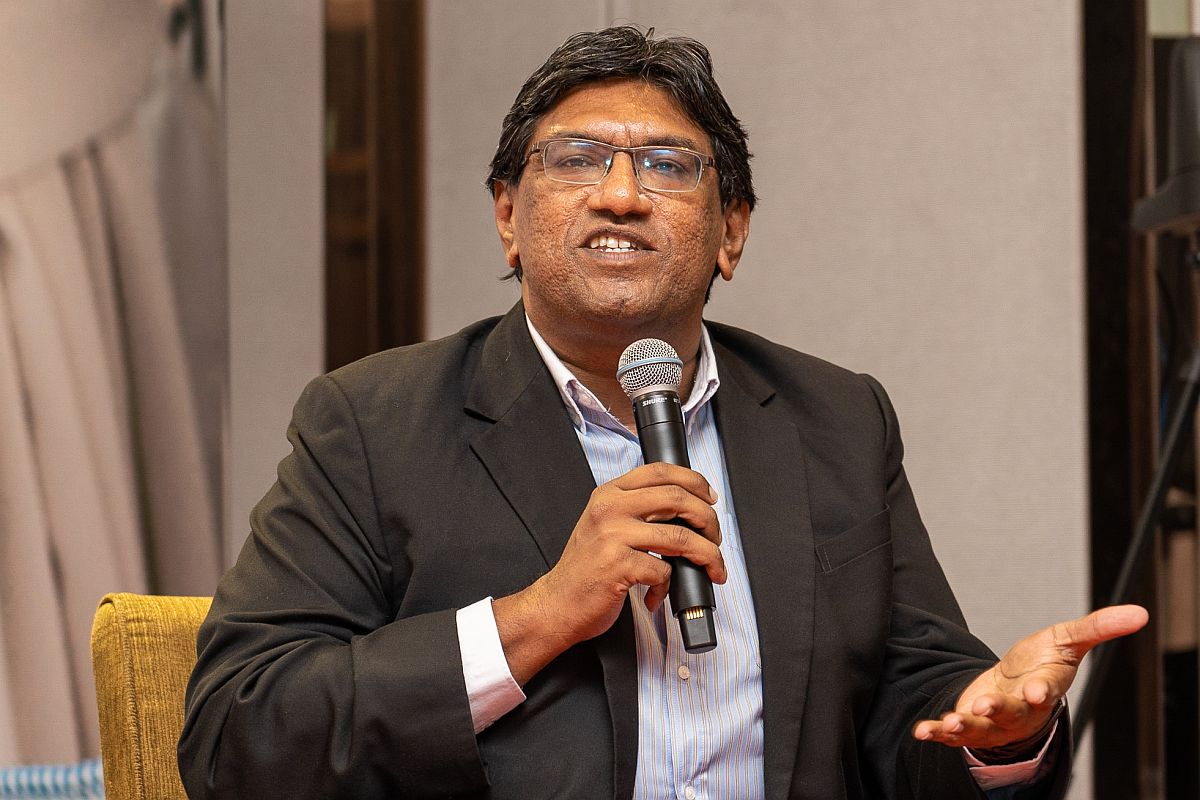
KUALA LUMPUR, April 16 — Eroding trust in private health care is driving patients to the public system and adding strain to government facilities, a cancer advocate said.
Assoc Prof Dr Murallitharan Munisamy, managing director of the National Cancer Society Malaysia (NCSM), said patients are increasingly questioning doctors’ recommendations and insurers’ practices, contributing to what he described as a rising sense of apprehension around private care.
“The problem increasingly is that when people see their doctors, there’s this apprehension of, ‘Is this guy trying to pay his monthly Ferrari bill with my bill?’” Dr Murallitharan said during a panel discussion at the launch of Prudential plc’s commissioned Economist Impact report, Patient Voices Malaysia: Making Healthcare Clearer and More Connected, here last March 31.
“So any and every recommendation for treatment or an additional investigation has now become a conversation with the patient, because the patient has significantly lost confidence in the neutrality of the physician,” Dr Murallitharan said.
He pointed to a common scenario where a routine order for an echocardiogram can prompt patients to question whether the test is truly needed or simply meant to increase billing.
“So this translates back to this idea of, ‘I really don’t know what to do,’ because now I don’t even believe the advice that’s been given to me. And this is largely because everything has now become very transactional,” Dr Murallitharan said.
He further argued that the same trust deficit is seen in insurance, where “financial planning” is often associated with agents selling insurance to meet their quotas.
“Unfortunately, it has gone down that track,” Dr Murallitharan said. “Things like financial planning, as is with prevention in medicine, actually require a return to confidence. And how this is going to come through is that we need neutral values.”
The Prudential report, based on a survey of 1,020 Malaysians, found that 94 per cent delayed seeking medical care in the past year, often because of work and family pressures as well as difficulty navigating the health system.
More than half of respondents, 54 per cent, said they did not know where to go for treatment when unwell. Another 53 per cent expressed concerns about affordability, even though many found actual costs to be lower than expected.
A further 53 per cent reported difficulty using digital tools to book or manage appointments, citing systems that are complex or poorly connected.
Dr Murallitharan said that as a result, patients seek “neutral ground” in the government or public sector, where there is still a high level of confidence, as these structures are not really “geared towards making money”.
“But the problem is, by going down this road, you are really overwhelming government agencies and government structures,” Dr Murallitharan said.
Data from the Health White Paper and research by Health Ministry officials point to a widening imbalance. Although private providers make up 72 per cent of outpatient facilities, their share of visits have dropped sharply, from 54 percent in 2011 to 36 percent in 2019. Public hospitals, in turn, now shoulder nearly three-quarters of inpatient admissions.
Arjan Toor, chief executive officer for health at Prudential plc, said the insurer is reworking how it communicates with customers, aiming to make its messaging simpler and more intuitive.
“One thing I would add, and it sounds really simple, but it’s actually very hard to do, is to make sure we communicate with our customers in a language they actually understand. This is something insurance companies typically don’t do very well,” Toor said.
“We have a tendency to make everything complicated, but consumers and patients are asking for simplicity – make it easy for me to understand. So we’re embarking on a journey to reflect on and revamp all our communications and interactions with customers in a way that is really easy and intuitive,” he added.
“The language you and I would use at a birthday party when talking about health, rather than insurance jargon – that’s another important element of what I think we should be able to do.”
Manisha Keyal, chief health officer at Prudential Malaysia, agreed on the need to make insurance easier to understand, particularly in clarifying what is and is not covered.
“We have a huge big policy document of exclusions, commissions, and what are the coverage, at what point in time. It’s very important that as we move forward, we also realise that our distributing partners, us, and consumers, have the right understanding of what they are buying – what is covered, what are the existing conditions.
“And we also need to perhaps then go back a little bit and understand the concept of insurance. Insurance is about covering for unprecedented risks, covering for unprecedented scenarios. It is not for day-to-day coverage, it is about looking for everything that is unprecedented, risks involved, etc.
“Now imagine also insurance as a family of risk pooling. All of us pool our money together to be able to go and pay for our old ages, for our chronic diseases, for people who have accidents.
“So it’s also equally important that we have a shared responsibility and accountability to be able to utilise this pool and to be a part of this pool. So we would clearly be in collaboration with our regulator and the government bodies to build what is for the nation and for what is for the people,” she said.


