

The word “assurance” refers to moving away from financial uncertainty toward building confidence and having a sense of financial stability. Most people can manage daily routine expenses, but a calamity like illness or a medical emergency can overwhelm even the most careful person.
Health assurance—whether through takaful or insurance—exists as a commercial enterprise to protect against these shocks. Its purpose is to capitalise on people’s insecurity and profit from offering peace of mind and financial security when health fails.
In the commercial model, this purpose has gradually been overshadowed by another objective: return on equity. Commercial health assurance providers are ultimately accountable to shareholders, not policyholders. Profitability, growth, and margins often take precedence over policyholder interest.
As a result, the health assurance ecosystem is drifting away from a member-centric approach. Healthcare consumption is rising faster than contributions, and neither companies nor policyholders have meaningful control over the cost drivers.
Policyholders pay a premium contribution, but neither are they incentivised nor able to manage hospital charges or medical inflation. When sick, that’s not their priority.
This raises a fundamental question. Should health assurance remain a purely commercial business or be considered a social responsibility? The United States’ experience is a good example of a failed health financing system managed by a business enterprise.
The American system is widely criticised for sky-high premiums, large deductibles, opaque pricing, and high administrative costs. Despite being one of the most expensive health care systems in the world, it does not guarantee universal or timely access to medical care for most of the population.
Profit generation and shareholder expectations have distorted the commercial-social priorities. Patients bear the burden of rising costs while insurers and providers compete for margins. If Malaysia does not act soon, we risk becoming like America—perhaps at a faster pace.
Bank Negara’s White Paper
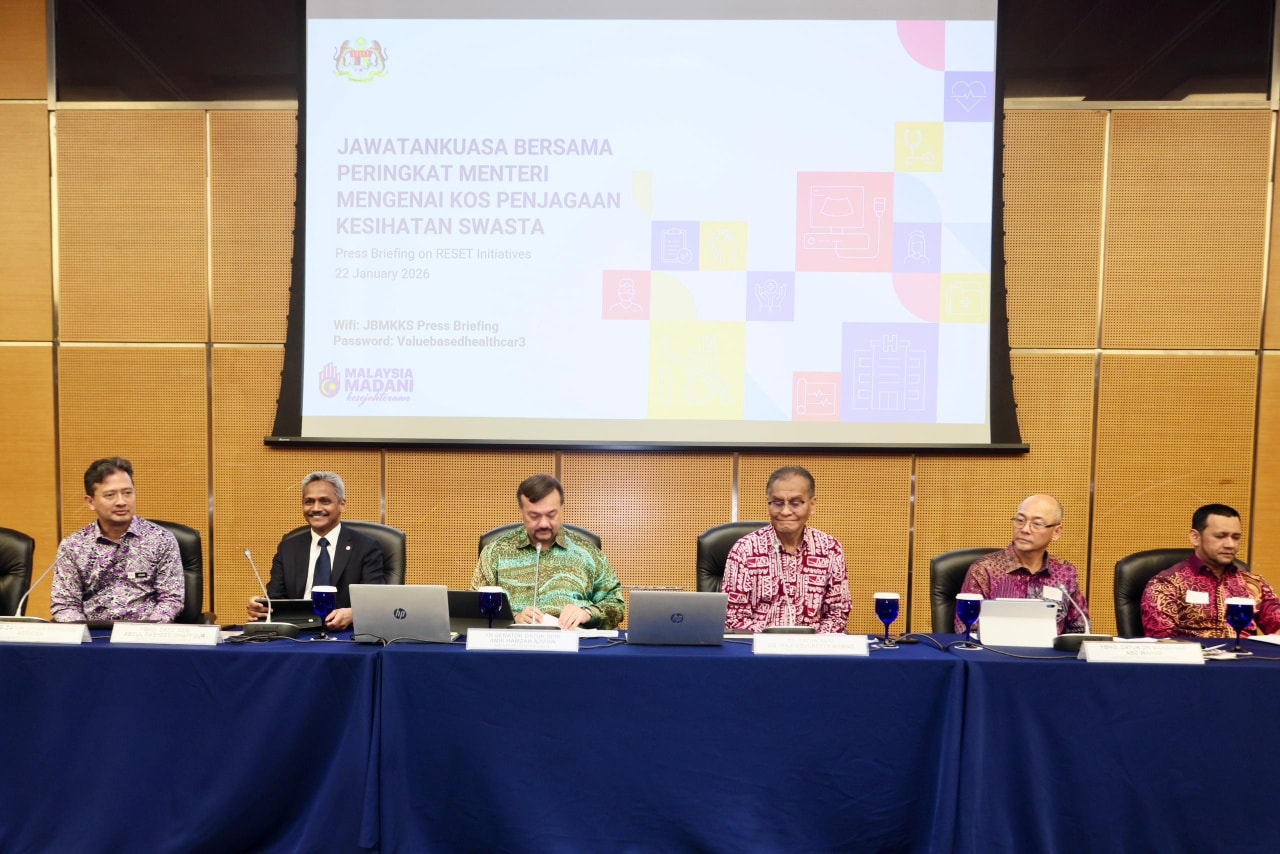
Bank Negara Malaysia’s (BNM) White Paper on the Base Medical and Health Insurance/Takaful (MHIT) plan, developed under the Reset strategy by the Ministry of Finance (MOF), Ministry of Health (MOH), and BNM, aims to address medical inflation and improve affordability.
It is a commendable initiative and demonstrates that regulators recognise the growing stress within the system.
However, the White Paper largely focuses on the insured and insurable population within a commercial framework. Its primary solutions focus on product redesign, pricing discipline, and market mechanisms to address insureds who have been criticising the high premium contribution.
What is missing from the paper is a clear and explicit commitment to the financial health of the entire population.
Shouldn’t the task force be concerned about the remaining 27 million to 28 million Malaysians who may not fit neatly into commercial products, but still need reliable, timely, and affordable care? Health security should not depend solely on one’s eligibility or willingness to purchase a commercial plan.
A national strategy should be directed to Universal Protection, not confine itself to insurable market segments. A short write-up should have been inserted in the White Paper to reflect the government’s commitment to address the needs of the 28 per cent of the population.
A reference to National Health Contribution, which appears in another paper titled “Health White Paper for Malaysia”, has been relegated to a footnote of the BNM White Paper. A national health care financing blueprint should not be relegated to a footnote. It deserves centre stage.
The responsibility for planning, setting up, and managing a National Health Fund or similar structure should be coordinated at the highest policy level—ideally under the Prime Minister’s Office—rather than left solely to the Ministry of Health.
The Health Ministry should focus on providing services and on developing the regulatory framework. It must be appreciated that health care financing is not just a sectoral issue; it is a national economic and social priority.
Target Market
The Base MHIT is designed primarily for middle-income individuals without existing coverage and for those seeking cheaper alternatives to rising premiums. Yet its structure—co-payments, deductibles, and benefit limits—may not be sufficiently attractive to encourage broad participation.
Lower-income groups may still find contributions unaffordable. Middle-income households may perceive the coverage as too restrictive when they need the care. Higher-income individuals can self-insure or purchase premium plans. The result is a narrow target market and uncertain uptake for the MHIT base plan.
If participation remains voluntary and limited, the risk pool will be small and unstable. Without a large base of contributors, contributions will remain high, undermining affordability and defeating the government initiative and objective. Transparency on enrolment data will be critical to evaluate whether the scheme truly achieves scale.
Benefit Design
The White Paper sends a very strong signal that the end of unlimited or excessively high lifetime benefits is near. This is a sensible move. Such features encourage overconsumption and inflate costs for everyone.
Benefits should be designed based on realistic health care needs and evidence-based cost estimates, with appropriate caps and limits. Cashless limits and reimbursement should be tiered.
Cashless should be restricted to acute emergency treatment or stabilisation. Stabilised acute events should be treated on a reimbursement basis.
Commercial providers should adopt this discipline across their regular products, not just within the Base MHIT. Standardised and rational benefit structures can reduce moral hazards, encourage responsible utilisation, and improve long-term sustainability.
Premium Stability And Pricing Controls
The proposal for BNM to determine contributions based on actuarial principles and target loss ratios is not new. Insurers and takaful operators already price products using similar methods, incorporating age, gender, underwriting, and claims experience. BNM will likely ask commercial players to provide actuarial input to help BNM decide on contribution rates.
Direct pricing controls by the regulator may create unintended consequences. Political pressure could limit necessary adjustments, forcing companies to hold higher reserves and straining their capital positions.
If pricing flexibility is restricted while capital requirements remain strict, many providers may refrain from offering baseline products altogether. This could concentrate risk among a few companies, thereby weakening competition.
Risk concentration is an unhealthy risk management practice. Regulation must strike a balance: protect consumers’ interests while allowing sufficient flexibility for financial sustainability.
It is surprising that the White Paper suggested regulatory control, but did not address the need to control hospital charges. Why?
Hospital Tiering
The two-tier co-payment structure based on hospital pricing is an innovative feature. Steering patients toward reasonably priced providers introduces some market discipline without imposing direct price controls.
But tiering will only work if it is widely adopted across all health products. If applied solely to the Base MHIT, hospitals may ignore it. If extended across mainstream products, however, it could meaningfully influence behaviour.
Insurers should publish transparent hospital lists and consider expanding the system to three tiers for greater differentiation.
Effective monitoring is equally important. An independent agency or third-party administrators (TPAs) could oversee compliance, pricing transparency, and service standards, and determine tiering.
MOH needs to enforce the declared pricing to ensure compliance with the tier. Assurers should not limit their options in addressing non-compliant hospitals.
Without enforcement, tiering structure risks become symbolic rather than impactful.
Beyond Commercial Logic
The White Paper emphasises that the Base MHIT is not a social insurance scheme. Yet this distinction may limit its effectiveness. Health assurance, by nature, requires broad risk sharing.
The larger and more inclusive the pool, the lower and more stable the contributions. A sustainable contribution system depends on four key elements:
- Population participation.
- Controlled and transparent health care costs.
- Efficient and AI-driven administration.
- Regulated profit for health providers.
These features align more closely with a social or quasi-social model than with a purely commercial one. Removing excessive commercial incentives does not mean eliminating private participation.
Instead, the government, government-linked companies (GLCs), and assurance companies could form a consortium with sliding ownership, shared responsibilities, and modest margins, focusing on service rather than profit maximisation.
A structured national enrolment and benefit management system is not technically complex. What it requires is political will and coordinated leadership.
Conclusion
Health assurance should not be treated as just another commercial financial product. It is a social safeguard that protects families at their most vulnerable moments.
When illness strikes, people seek care—not profit calculations. Over-commercialisation shifts the focus from patients to margins, from mutuality to segmentation.
The American experience shows that leaving health care financing to market forces alone leads to higher costs, reduced access, and declining public trust. Malaysia still has time to choose a different path.
The BNM White Paper and the Base MHIT are important first steps, but they remain largely confined within commercial boundaries and may serve only a limited segment of society and the assured population.
Lasting reform requires a broader vision with universal participation, pooled national risk, disciplined cost governance, and restrained profit motives.
Health care financing should be treated as public infrastructure—like education or roads—not as retail merchandise. Assurance must return to its original meaning: assuring people, not shareholders.
The real question is not whether Malaysia can afford to socialise health assurance. It is whether we can afford not to.
Dr Mohamed Rafick Khan is a trained physician with 12 years of experience in military medical services and over 22 years of experience in the assurance industry. He retired as the CEO of a multinational reinsurance company in 2019 and remains active as an independent international assurance industry consultant.
- This is the personal opinion of the writer or publication and does not necessarily represent the views of CodeBlue.


