

SUBANG JAYA, April 23 — Healthier food products in Malaysia may come at a modest price premium of about 20 per cent, but industry players say wider adoption will depend more on consumer trust, awareness, and availability than cost alone.
Products developed under the Biru-Putih-Hati initiative – part of a France-led effort linking agriculture, nutrition and public health – currently sell at a premium over conventional options, according to Mike Yeong, general manager of DD Fresh Meat Retail Shops.
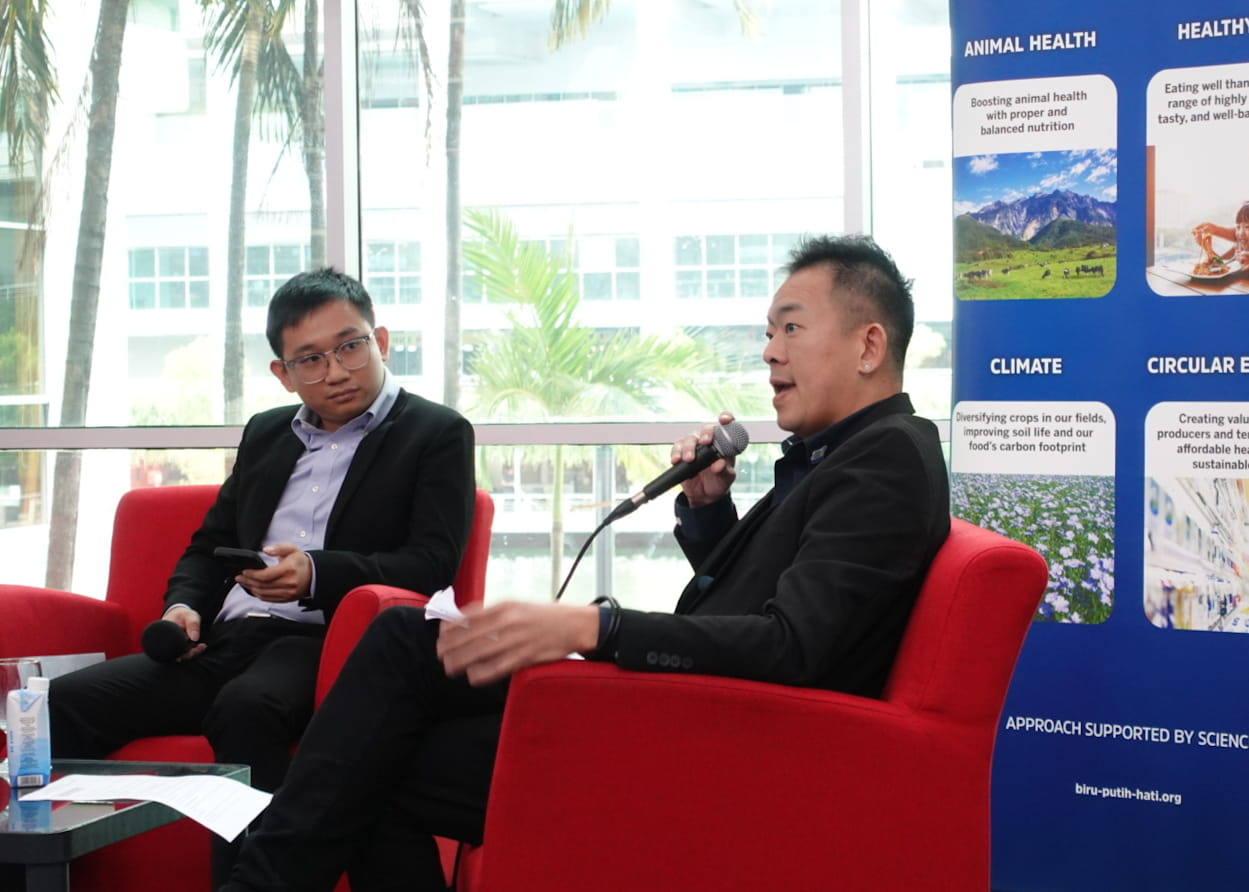
“Maybe the cost is slightly higher, but it reduces hidden costs and allows us to move away from pure price competition,” Yeong said during a panel discussion at the “One Health on the Malaysian Plate” conference, jointly organised by Biru-Putih-Hati, the French Embassy Trade Department in Malaysia and Taylor’s University Culinary Institute, on April 14.
“For now, compared with market products, the price gap is about 20 per cent. It’s within the gap, it’s not too much. But with reduced losses, we can achieve better differentiation.”
The Biru-Putih-Hati initiative, adapted from France’s Bleu-Blanc-Coeur programme, focuses on improving the nutritional quality of food by modifying animal feed – including the use of more omega-3–rich ingredients such as flaxseed – to influence both animal health and the nutrient profile of products such as meat, eggs and dairy.
Yeong, whose business supplies pork, said the higher upfront cost can be offset by efficiencies along the supply chain, as improved animal health and more consistent product quality help reduce wastage, such as spoilage or uneven output, and allow producers to compete on value rather than price alone.
However, he said wider adoption of such feed-based approaches linking livestock production to nutrition outcomes depends less on price than on whether consumers understand and trust the products. “The people need to trust and believe that the product is good for them,” Yeong said, adding that clear messaging and easy availability are key to driving uptake.
Currently, the Biru-Putih-Hati initiative focuses on eggs. Future plans include offering chicken meat and other food products.
Demand For Value-Added Eggs Grows, But Uptake Remains Limited

Hock Soon Poultry Farm Sdn Bhd business development manager Oscar Foo said the company, an egg producer, is moving into higher-value products in response to more value-conscious consumers, though demand has yet to reach mass scale.
“Malaysia is a developing country, so as the nation develops, consumers become more value-driven. Eggs are one of the products that can be value-added, which is why we pursued a differentiated product with Biru-Putih-Hati,” Foo said.
He said the company’s Biru-Putih-Hati eggs, which are enriched with omega-3 fatty acids and docosahexaenoic acid (DHA) – nutrients commonly associated with heart and brain function – are available at major retailers such as Lotus’s, Jaya Grocer and Segi Fresh.
While omega-3 and DHA-enriched eggs are already widely available in Malaysia, the Biru-Putih-Hati initiative focuses on changing the overall composition of animal feed – including increasing omega-3–rich inputs like flaxseed – to achieve a more balanced omega-6 to omega-3 ratio, rather than simply adding nutrients to enrich the final product.
Jérémie Renaud, international development manager at Bleu-Blanc-Coeur, said the “One Health” approach centres on adjusting the balance of fatty acids in animal feed. “What matters is the balance between omega-6 and omega-3,” he said.
Modern livestock diets, Renaud explained, rely heavily on crops such as corn and soybean, which tend to be high in omega-6 fatty acids, while sources richer in omega-3 – such as grass, flaxseed, and canola – are less commonly used.
Omega-6 and omega-3 are essential fats obtained through diet that play different roles in the body, making their balance important for health. Omega-6 is commonly found in ingredients like corn and soybean oil, while omega-3 is found in foods such as flaxseed and fish.
As a result, animal feed in countries like Malaysia can have a wide omega-6 to omega-3 ratio, ranging from about seven to 30, compared to a more balanced ratio of around five, he said. This imbalance, Renaud argued, is carried through the food chain, as meat, eggs and dairy products account for a significant share of fat intake in human diets.
Guillaume Jacques, international sales manager at Valorex, a French feed nutrition company that supplies linseed-based ingredients, said both humans and animals cannot produce these fatty acids on their own and must obtain them through diet.
“If you look at linseed compared to other sources of fat, it is very specific, with a high level of omega-3,” Jacques said, adding that many conventional feed ingredients remain “very unbalanced” in their fatty acid profile.
Food Service ‘Gatekeepers’ Shape Diets As Eating Out Rises
In Malaysia, scaling healthier food systems will require coordinated efforts across the supply chain, from farmers and producers to retailers and consumers.
Elise Mognard, an associate professor at Taylor’s University, pointed to findings from an “Eating Out” study she led showing that about 40 per cent of meals in Malaysia are consumed outside the home or through takeaway, giving food service operators significant influence over diets.
“What we intend to do with these surveys is to better understand what we call ‘gatekeeping’ – meaning who is opening the door to our plates. In food, we are rarely the sole decision-maker when it comes to what we eat,” Mognard said in her presentation.
To compare, in Singapore and Taiwan, more than 50 per cent of respondents report eating out, while in France, about 17 per cent say they eat out or purchase outside food. In France, 82 per cent report eating home-cooked meals.
Prof Dr Muhammad Shahrim Abdul Karim, an expert of food heritage and culture at Universiti Putra Malaysia, pointed to a shift away from traditional, minimally processed foods towards more industrial and convenience-based diets, alongside continued reliance on imported food.
“We are now eating everything from the factory,” Shahrim said, warning that the shift is contributing to worsening health outcomes.
Shift To Processed Diets Fuels Rising NCD Risk

Assoc Prof Dr Satvinder Kaur, a nutrition and wellness specialist at UCSI University Kuala Lumpur, said Malaysians’ dietary patterns are shifting in ways that contribute to rising non-communicable diseases (NCDs), as people rely more on processed and convenience foods.
“Yes, we are evolving. We are moving away from our traditional foods and depending more on – I don’t like to use the term ‘Westernised diet,’ because this is what we see generally – but rather a more processed diet, as much of what is produced in Asia today is not rooted in our culture or heritage,” she said.
Dr Satvinder, a nutritionist, said processing often lowers food quality, as highly processed foods contain more salt, sugar and less healthy fats to extend shelf life. As more people eat out or rely on takeaway, these patterns are becoming more pronounced.
Jean-François Ambrosio, country director of Business France at the Trade Commission of the Embassy of France in Malaysia, said poor nutrition causes 11 million deaths annually, surpassing tobacco, citing a study published in The Lancet.
“Too much sodium, too much sugar, not enough vegetables, not enough fresh food and not enough fibre,” Ambrosio said.
Malaysia, in particular, ranks high in diabetes and obesity, with nearly 55 per cent of adults overweight or obese, according to the National Health and Morbidity Survey (NHMS).
Dr Satvinder said education would be critical, particularly in schools and community settings, to build awareness and shape long-term dietary habits, describing it as “the backbone” of efforts to improve diets.
She added that stronger evidence and clearer information would also be needed to build consumer trust, including data on health outcomes as well as reassurance on taste and product quality.


