

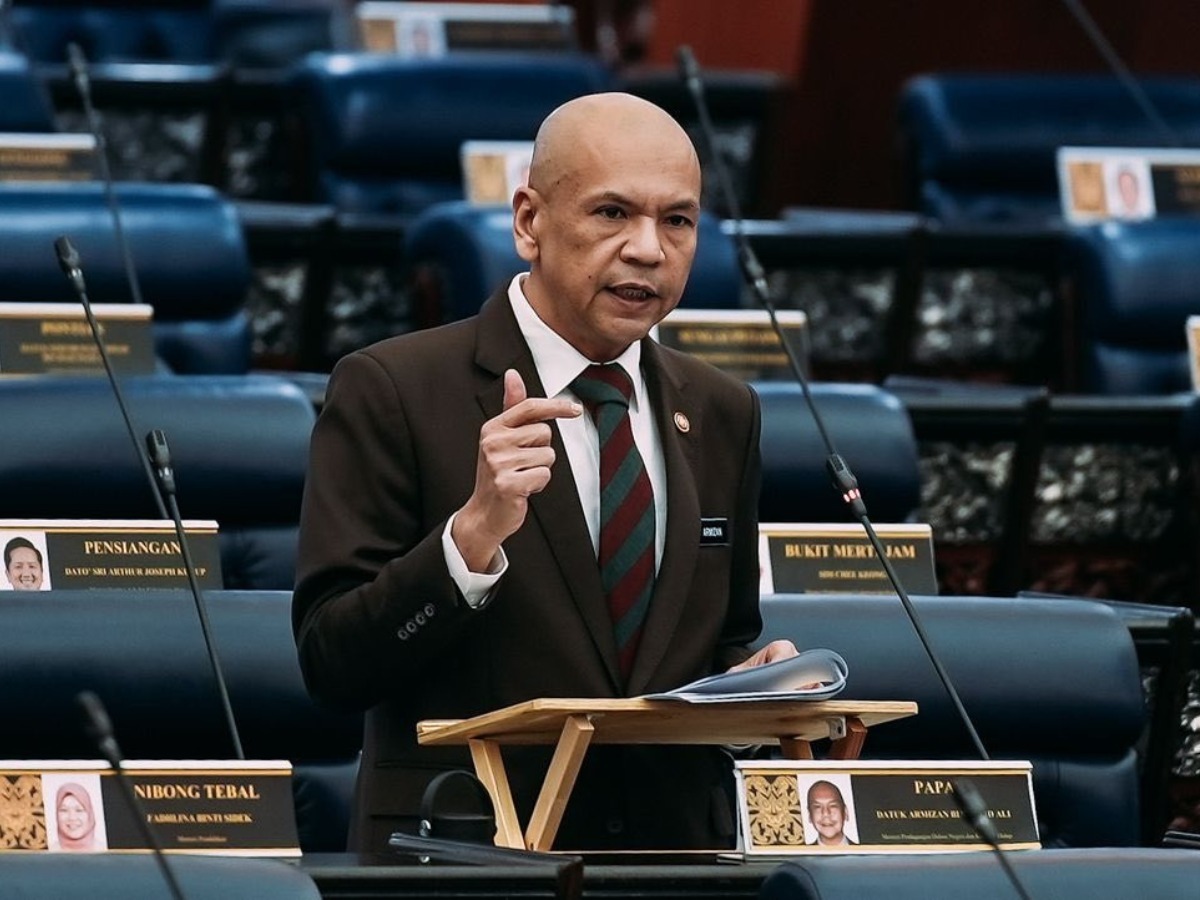
KUALA LUMPUR, Feb 10 — Domestic Trade and Cost of Living Minister Armizan Mohd Ali said savings from a potential abolition of sugar subsidies should be channelled back to his ministry.
Armizan, in his winding-up speech on the debate on the motion of thanks on the royal address in the Dewan Rakyat yesterday, said any decision on removing the sugar subsidy must be implemented in stages to avoid sudden inflationary pressure on consumers and food prices.
Responding to a supplementary question from Suhaizan Kayat (PH-Pulai), who is also chairman of the Parliamentary Special Select Committee on Health, Armizan said savings from the abolition of the sugar subsidy should remain with the Domestic Trade and Cost of Living Ministry (KPDN), or at least partly so that “it can be given to KPDN for other programmes related to the cost of living”.
Armizan added that while the government agrees sugar consumption should be curtailed, it must also consider the impact on consumers.
“We know we need to implement this in stages. We started targeted subsidies with big items; we do not want to do everything at once,” he said, citing diesel and petrol subsidy targeting as examples.
Armizan said KPDN is currently reviewing the direction of refined white sugar prices together with the Ministry of Finance (MOF). In the interim, he said the immediate step would be to reduce the incentive rate in the near term while awaiting a final policy direction, with an announcement to be made soon.
In his speech, Armizan said the temporary incentive for refined white sugar is under review by KPDN and MOF in line with the government’s intention to finalise a new price structure, adding that the process must be handled carefully to avoid sudden inflationary pressure on consumers.
He noted that the incentive is targeted and limited to 1kg and 2kg packets of refined white sugar, and does not apply to sugar used by large-scale food and beverage (F&B) industries. The government’s primary focus, he said, is to curb food price increases and support the sustainability of micro, small, and medium enterprises (MSMEs) in the F&B sector.
Armizan also said the incentive rate would be reviewed periodically to optimise fiscal spending and ensure efficient use of government allocations.
He attributed the need for the incentive to volatility in global raw sugar prices influenced by shipping logistics costs, fluctuations in world oil prices, and ethanol policies in major producing countries such as Brazil and India.
Out of Malaysia’s annual sugar production of about 1.3 million metric tonnes, roughly 700,000 metric tonnes used by the F&B industry does not receive any incentive, he said, describing this as evidence that the government does not support bulk sugar consumption by industry but instead seeks to balance prices for basic household use.
“The government remains committed to balancing the needs of all stakeholders and is always attentive to the national health agenda while at the same time needing to take into account stakeholder requirements to ensure that the supply of these scheduled controlled goods remains consistent.”
The Galen Centre for Health and Social Policy previously called for an abolition of the sugar subsidy that costs about RM500 million a year.
Galen Centre chief executive Azrul Mohd Khalib said in 2024 that Malaysia currently has one of the lowest controlled sugar prices in the world, pointing out that the direct consequence of cheap sugar is the continued and uncontrolled spread of diabetes in this country, causing other non-communicable diseases (NCDs) like chronic kidney disease and cardiovascular disease.
Last Sunday, Health Minister Dzulkefly Ahmad touted preventive care, saying that the cost of NCDs is estimated at about RM64 billion a year. According to a 2024 report by the World Health Organization (WHO) and the MOH, the RM64.2 billion annual economic burden of chronic disease comprises RM12.4 billion in public health care costs and RM51.8 billion in productivity losses.


