

KUALA LUMPUR, Dec 22 — Experts, as well as a patient and caregiver, have called for the inclusion of interstitial lung disease (ILD), a rare but serious respiratory condition, in Malaysia’s National Healthy Lung Initiative.
Public awareness of ILD – a large group of diseases that cause scarring, or fibrosis, of the lungs – lags far behind more commonly recognised lung diseases such as asthma, chronic obstructive pulmonary disease (COPD), and tuberculosis (TB).
“An inclusion would raise public and clinician awareness alongside asthma, COPD and TB; enable screening prompts and referral algorithms at primary care; anchor funding for diagnostics, rehab, and essential medicines; as well as formalise multidisciplinary team networks and regional ILD hubs,” Dr Noorul Afidza Muhammad, a consultant respiratory physician at Sultan Idris Shah Serdang Hospital, told CodeBlue.
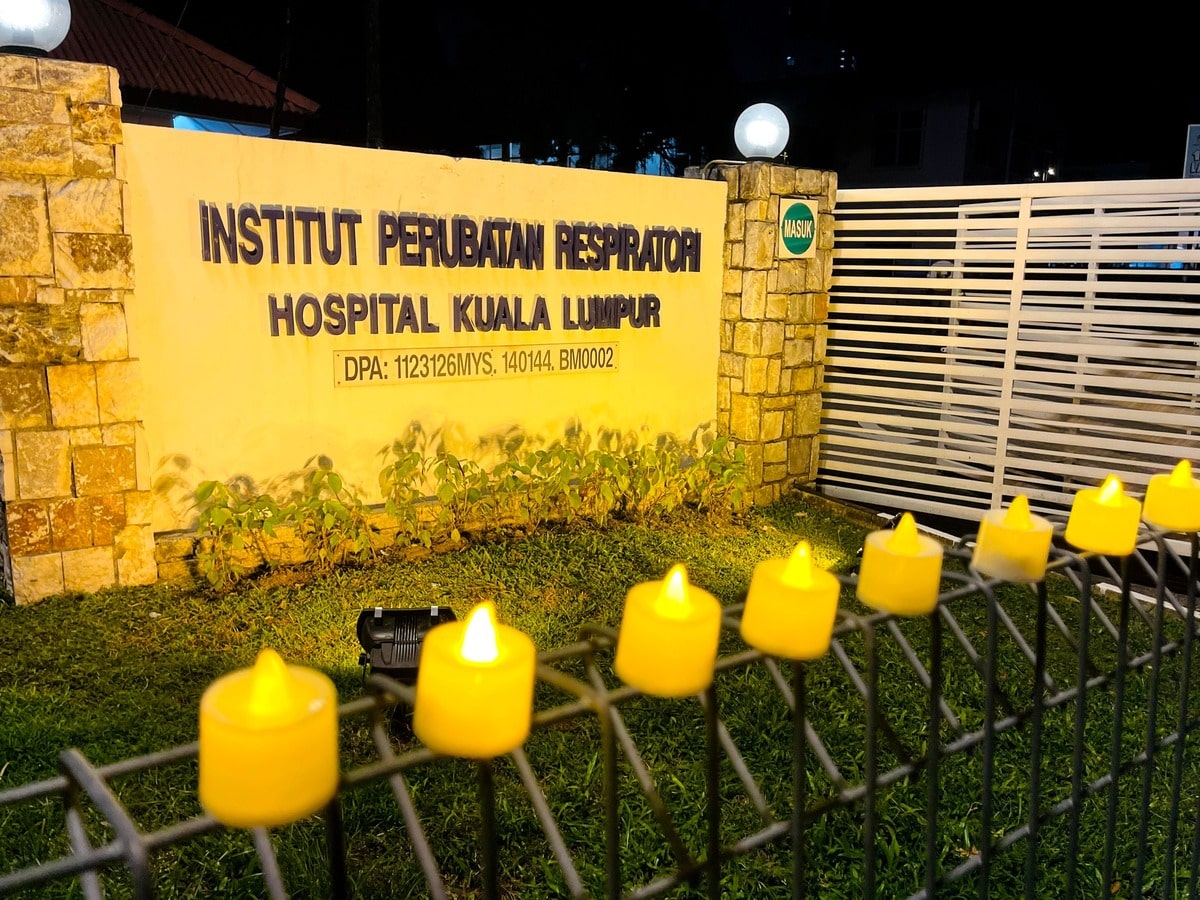
Dr Syazatul Syakirin Sirol Aflah, a consultant respiratory physician at the Institute of Respiratory Medicine (IPR) in Kuala Lumpur, also supported including ILD into the National Healthy Lung Initiative.
“Screening programmes, such as chest AI analysis and low-dose CT thorax for lung health, will also help detect ILD, particularly among individuals who share similar risk factors with lung cancer or COPD such as the elderly and smokers.
“Additionally, early detection can be improved among those working in high-risk industries prone to occupational lung diseases.”
Dr Mat Zuki Mat Jaeb – the head of Respiratory Subspecialty at the Ministry of Health (MOH) and consultant respiratory physician at Raja Perempuan Zainab II Hospital (HRPZ II) in Kota Bharu, Kelantan – said long-term efforts are underway to place ILD in the National Healthy Lung Initiative.
“At this moment, priority is given to four common and high-burden respiratory diseases – COPD, asthma, lung cancer and TB. Later on, occupational lung diseases and ILD will definitely be included in this programme as well.”
Dr Zuhanis Abdul Hamid, a clinical radiologist at Tawau Hospital in Sabah, also called for the inclusion of ILD into the National Healthy Lung Initiative to gather the means to combat the “debilitating disease” across all levels.
Social, Economic Burden Of ILD

ILD predominantly affects individuals in their most productive years, potentially leading to wide-reaching consequences for the economy. More than 80,000 people are estimated to be affected by ILD annually in Malaysia, according to the Galen Centre for Health and Social Policy.
“Direct costs are repeated admissions, high-resolution CT or diagnostics, clinic visits, oxygen therapy, and high-cost medicines with limited subsidy and funding. Indirect costs are productivity loss in 30 to 60-year-olds, job changes or exit from the workforce, caregiver time off work, and transport from rural areas. System costs include late presentations requiring more resource-intensive care and longer hospital stays,” said Dr Noorul Afidza.
“Many ILDs present between 30s to 60s, directly affecting Malaysia’s productive workforce and family caregivers. Breathlessness and fatigue can reduce work capacity, increase sick leave, and limit career progression.”
Other experts estimate a heavy economic burden of ILD in Malaysia, even as they acknowledge a lack of data.
“It is likely significant due to frequent hospitalisations, increased morbidity, and the need for long-term oxygen therapy,” said Dr Syazatul Syakirin.
Dr Mat Zuki said based on his own experience, “ILD causes significant economic burden – cost of treatment is a huge burden to MOH, as well as cost to patients.”
Dr Syazatul Syakirin spoke about the strain of the disease, not only on the patient but also on their caregivers.
“ILD reduces productivity by causing progressive morbidity, dependence on oxygen therapy, and frequent hospital visits—especially among those diagnosed at advanced stages or without early treatment. Patients often become dependent on caregivers, which can affect caregivers’ ability to work, leading to financial, emotional, and psychosocial strain on families,” she said.
Dr Zuhanis said ILD patients may need lifelong treatment support like oxygen, which can be expensive and very burdensome. “If the individual is the main breadwinner of the family, it will cascade into a bigger problem involving the whole family and community.”
Living With ILD: Patient’s Perspective

The daily reality of living with ILD is a journey marked by constant challenge and resilience. Syed Johari Syed Jamaludin – a 67-year-old man living with ILD in Kuala Lumpur – is currently hospitalised and dependent on oxygen therapy around the clock.
He receives treatment at IPR and Kuala Lumpur Hospital (HKL).
Syed Johari said ILD should be included in the National Healthy Lung Initiative to boost awareness about ILD.
“People are still not aware of ILD,” Syed Johari told CodeBlue in an interview. “If you talk about lungs, they will say asthma, they will say COPD. We need to be more aggressive on awareness.”
Syed Johari’s personal experiences highlight a significant gap not just in public knowledge about ILD, but also in health care infrastructure and policy response.
“I hope they increase the facilities here. The specialists here are working very hard to cope with whatever they have, poor things. The government should look into it.”
Syed Johari stressed the critical need for early diagnosis and specialist referral to prevent late-stage complications. “If a patient coughs, you know, they shouldn’t just go and buy cough drops. At the end of the day, it’s too late for the doctor to see the patient, resulting in their death.”
Caregiver: ‘Every Day Is Structured Around Breath’
Syed Johari’s wife and primary caregiver, 65-year-old Haslina Zainuddin, provided insight into the urgent need for better policies and facilities to protect both patients and their families.
“ILD should be included in Malaysia’s National Healthy Lung Initiative to help improve early diagnosis, ensure access to treatment, and enhance health care provider and caretaker awareness,” Haslina told CodeBlue in an interview.
“ILD demands increased attention because it is a progressive, late diagnosis, high-mortality rate that severely impacts quality of life and requires multidisciplinary management.”
As a caregiver, Haslina said ILD patients experience shortness of breath even at rest, while basic tasks like eating, bathing, and dressing can be exhausting.
She also needs to ensure nutrition and medication adherence, as poor appetite is frequent. Anxiety and depression can occur among both patient and caregiver, while caregivers can experience burnout upon seeing patient decline.
“Patients often have coughing and breathlessness at night; we lose sleep providing support,” said Haslina.
She explained what a typical day looks like for her: the day depends on the patient’s energy levels. They go for short walks or a drive around town.
If there’s a clinic visit, they plan logistics, like carrying oxygen cylinders or portable concentrators. Medication, water, and tissue paper are on hand.
Haslina also monitors her husband’s oxygen saturation (SpO₂) before bed, besides handling humidifiers, nebulisers, or nighttime oxygen adjustments.
“Before sleep, simple things — arranging pillows, positioning, adjusting the fan for patient comfort. I often have to sleep lightly and must be ready to respond if the patient coughs or gasps. I sleep beside the patient, waking multiple times to check oxygen tubing,” she said.
“Daily life as a caregiver to someone with ILD is a delicate balance of medical attention, emotional strength and physical support.
“Every day is structured around breath—protecting it, easing it, and cherishing it.”
Haslina proposed several concrete policies for ILD.
“Early diagnosis and specialist care should include establishing policy for early detection and referral of suspected ILD cases because late diagnosis means irreversible damage and higher caregiving demands,” said Haslina.
She also called for awareness campaigns for primary care doctors, subsidised access to high-resolution CT scans and pulmonary function tests, and the creation of ILD specialist clinics in major government hospitals.
Antifibrotic medications, oxygen therapy, and pulmonary rehabilitation should also be subsidised by the government or receive insurance coverage, as these are essential for maintaining quality of life but are costly and often not covered by insurance.
Haslina further called for ILD medications to be included in MOH’s essential drug lists, an oxygen subsidy scheme, as well as home oxygen, medication, and equipment support under the MOH.


