

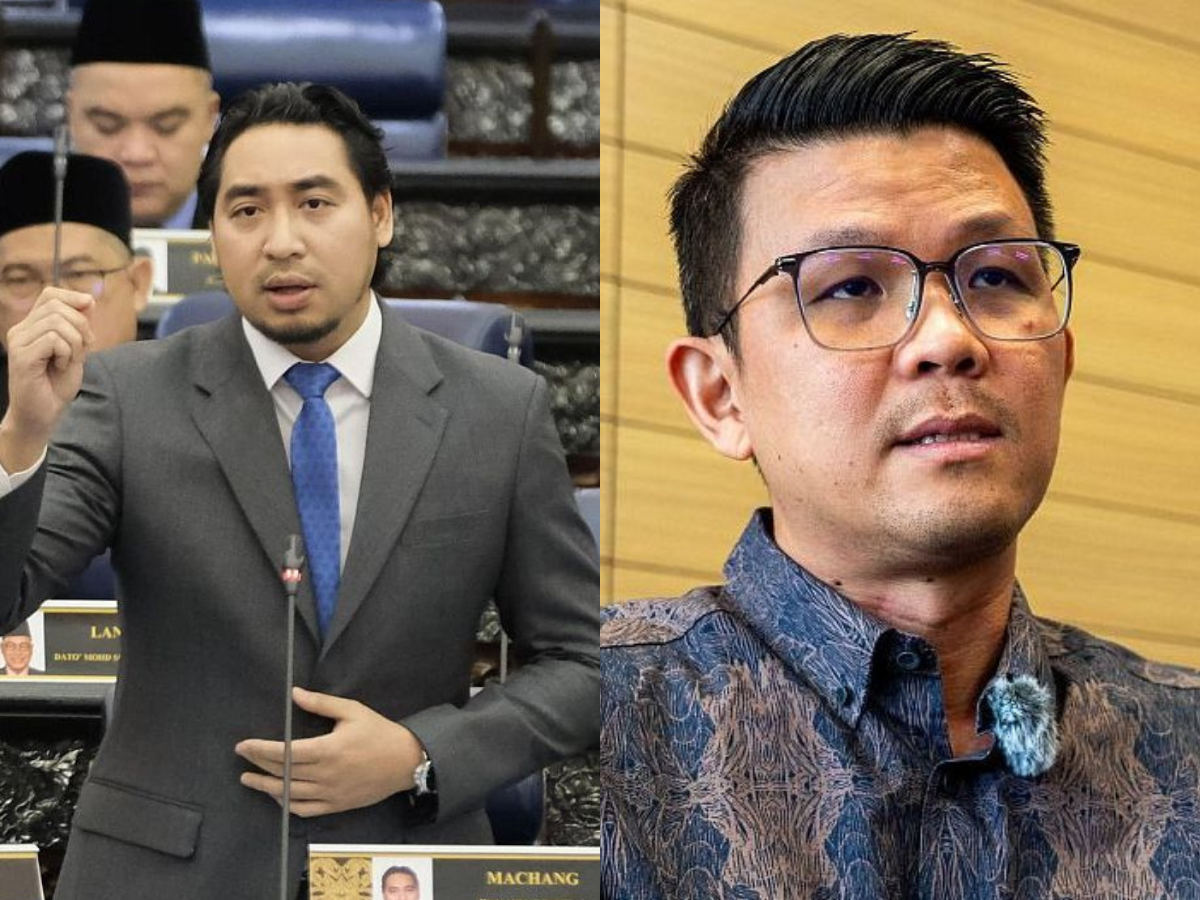
KUALA LUMPUR, Nov 27 — In a bipartisan response, lawmakers are raising alarm over the Malaysia-US Agreement on Reciprocal Trade (ART), saying the pact may weaken Malaysia’s oversight of food safety, biosecurity, and halal standards.
Machang MP Wan Ahmad Fayhsal Wan Ahmad Kamal, who sits on the Parliamentary Special Select Committee on International Relations and International Trade, called for the agreement to be scrapped and renegotiated “in totality”.
“From our standpoint, ART should be abandoned altogether and renegotiated with new terms,” Wan Fayhsal told CodeBlue. “We do not want to commit to anything that has not been thoroughly discussed by relevant stakeholders.”
The Opposition lawmaker from Perikatan Nasional (PN) accused the government of failing to exercise proper oversight before signing the pact. “We demand transparency, honesty,” Wan Fayhsal said.
“I support calls for a Royal Commission of Inquiry on the agreement. There is a lack of oversight and glaring weaknesses that have compromised our sovereignty and independence in safeguarding the security and safety of our food imports.”
Wan Fayhsal also criticised the government for publicly promoting the deal before later admitting weaknesses.
“In a recent public statement by Zafrul, the outgoing minister indicated the intention of the current government to renegotiate the terms, which is a foolish attempt after pumping the success of the agreement,” he said. “Nonetheless, we welcome the effort. We would like to see more meat or substance in the announcement.”
“But nothing much can be said. We will hold his word for accountability, especially when the next minister of trade comes in.”
Tengku Zafrul Abdul Aziz is expected to vacate his position as trade and industry minister on December 2, following the end of his term as senator.
On halal integrity, Wan Fayhsal said Malaysia must retain full authority over post-import verification, despite ART’s acceptance of US halal certifiers designated by Jakim.
“Within our borders, Jakim has to be given authority to conduct post-importation halal verification by randomly checking products and visiting source factories in the US,” he said.
The Bersatu MP also urged the government to pause implementation until full assessments are completed.
“We need to delay the implementation because I don’t think the government has made an impact assessment,” he said. “Unless there is greater clarity, the government must delay ART’s implementation.”
Government MP Wants Added Safeguards, ‘Living Agreement’ Approach
Gopeng MP Tan Kar Hing, a member of the Special Select Committee on Domestic Trade, Entrepreneurship, Cost of Living and Agriculture, said Malaysia should introduce explicit safeguards to protect the authority of its veterinary, inspection and halal agencies.
“Any trade agreement shouldn’t come at the cost of our regulatory sovereignty,” Tan told CodeBlue. “This affects public confidence in food safety and halal integrity.”
Tan, who previously told CodeBlue that the agriculture PSSC should convene a special hearing on ART, said Parliament must play a direct oversight role as the pact is implemented.
“The select committee should conduct hearings to scrutinise all clauses in the trade agreement, the implementation risks, and the mitigation plan,” he said.
Tan said Parliament must also assess whether Malaysia has the surveillance and oversight capacity required, especially since parts of the agreement could weaken these systems.
The Pakatan Harapan (PH) MP added that Malaysia may need more resources to enforce standards under ART. “Together we should also explore the increase of budget allocation to the Department of Veterinary Services (DVS), Jakim, border inspection mechanism to safeguard and close the capacity gaps.”
Unlike Wan Fayhsal’s call for a complete renegotiation, Tan said the agreement should be treated as a “living” pact open to selective revisions.
“I would call for selective renegotiation. We should take it as a living agreement, not a fixed agreement, as the MITI minister told us there are sufficient exit or termination clauses to ensure national interest above all,” said the PKR lawmaker.
The Ministry of Agriculture and Food Security declined to comment when contacted, referring all questions to the Ministry of Investment, Trade and Industry (MITI).
The Malaysian Veterinary Medical Association (Mavma) told CodeBlue in a strongly worded statement that “automatic recognition” of US food safety systems without adequate safeguards risked undermining Malaysia’s veterinary authority and consumer trust.
US Exporters See ART As A Major Market Opportunity
Supporters of ART among US-based exporter groups have welcomed the pact as opening substantial new trade opportunities.
The US Meat Export Federation (USMEF) projects that ART could unlock US$50-60 million in annual US beef exports to Malaysia, enough to give US producers an estimated 8 to 10 per cent of Malaysia’s beef import market.
Meanwhile, the USA Poultry & Egg Export Council (USAPEEC) said the agreement lifts Malaysia’s blanket HPAI import ban and replaces it with state- or county-level zoning. The council expressed hope that more American poultry and egg producers may seek halal certification to export to Malaysia.
The US Dairy Export Council (USDEC) said ART would place US dairy products on equal footing with imports from Australia and New Zealand, likely boosting sales. US dairy exports to Malaysia reached US$118 million last year.


