

KUALA LUMPUR, Nov 6 — Malaysia lacks a central agency to coordinate long-term care, leaving responsibilities fragmented across ministries as the country approaches a rapidly ageing population, industry stakeholders warn.
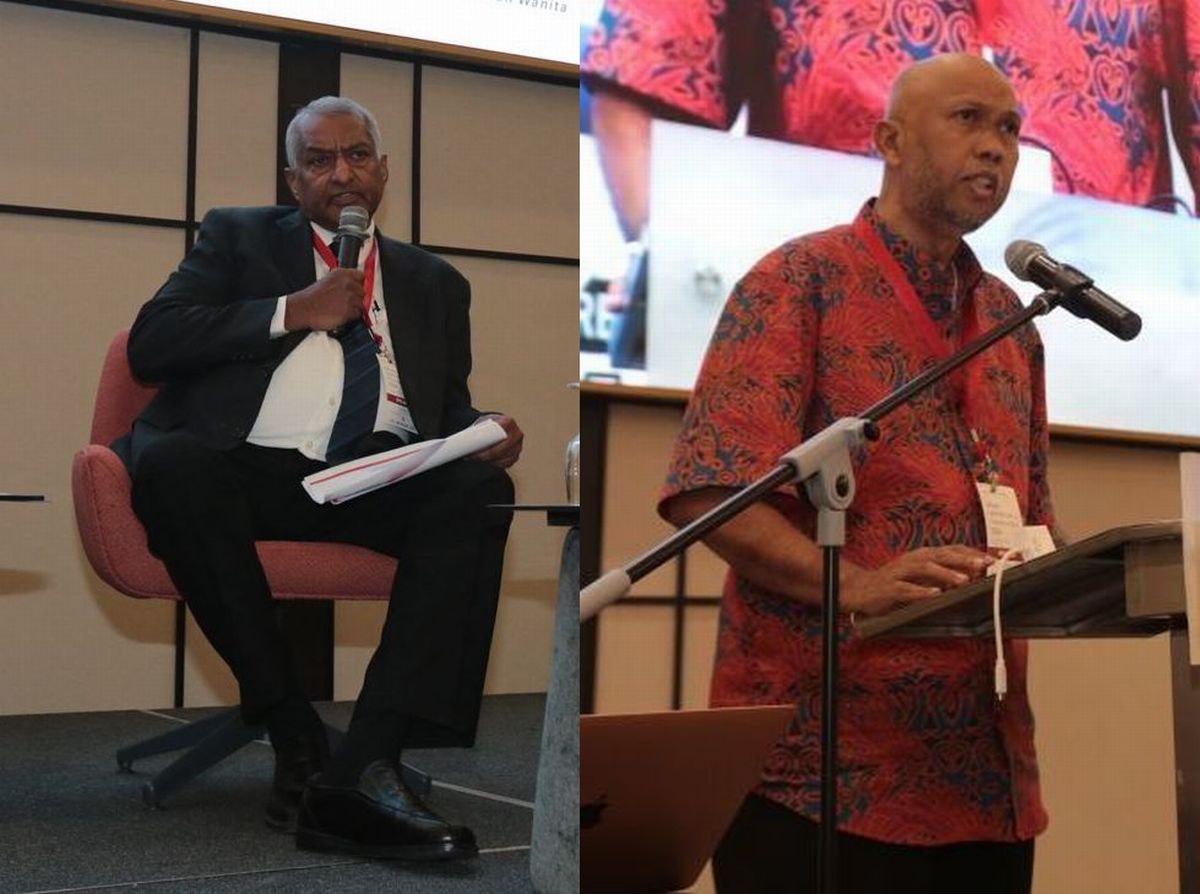
Jacob Thomas, head of the Private Healthcare Productivity Nexus under the Malaysia Productivity Corporation (MPC), called for a Cabinet-directed body to coordinate efforts across the ministries of health, finance, and women, family and community development, as well as private sector players.
He cited the Malaysia Healthcare Travel Council (MHTC) as an example of how a central agency could bring government and industry stakeholders together to develop a sector.
“With MHTC, things took off in a big way because everybody was listening to the one agency that was coordinating activities across the entire medical tourism continuum.
“Similarly, for aged care, there are many players, including the Ministry of Women, Family and Community Development (KPWKM), the Ministry of Finance (MOF), and the Ministry of Health (MOH). All of them must be coordinated. There has to be one body appointed by the top,” Jacob said at the National Long-Term Care Financing Dialogue 2026 on October 21.
Jacob warned that Malaysia was running out of time to prepare for an ageing population. People aged 60 and above are projected to make up 15 per cent of the population by 2036, making Malaysia an ageing nation. By 2048, the country is projected to become an aged nation, with those aged 65 and above accounting for 14 per cent of the population.
“This is a major issue that’s going to hit us. We’ve been talking about this for so long. People are ageing, we know, but 2030 we will be an aged nation. And are we prepared? No, we are not. Do we know what to do? We are not sure. We are all talking so much,” Jacob said.
Rashidi Yahaya, chairman of the Malaysia Caregivers Association (Kendana), also called for an “anchor” ministry to take responsibility for aged care.
“At the end of the day, there has to be an anchor ministry. Be it KPWKM, the Ministry of Human Resources, or the Social Security Organisation (Socso) for that matter. But one anchor ministry has to step forward and say we are looking into this and we will take care of this,” Rashidi said at the same dialogue.
“Of course, you will hear arguments like we don’t have enough resources. But before we put out that argument, we have to have one ministry to step up and say I will do this for the rakyat. And that’s more important than anything else.”
KPWKM’s Limited Clout Highlights Gaps In Aged Care Leadership
At a separate forum on ageing, KPWKM’s strategic policy and planning division senior director Asmar Asmadi acknowledged that responsibilities for aged care, including the introduction of long-term care insurance, remained fragmented across government ministries, with no clear lead agency.
He was responding to a question on whether the government would encourage or require insurance companies to offer coverage for people aged 60 and above.
Asmar described KPWKM as a relatively small ministry, classified as ‘Category C’. He said a policy directive to legislate insurance coverage for older people would need to come from the highest levels of government.
“I have personally spoken to the minister and secretary-general also, that if the government really wants to give attention to all [these issues], the status of KPWKM has to be the same as the Ministry of Defence, Ministry of Home Affairs, Ministry of Education.”
KPWKM is currently preparing an Older Persons Bill, which is expected to be tabled in Parliament in the first quarter of 2027.
An audience member described the situation as “scary”, questioning whether the government was serious about preparing the country for an ageing population.
“How can KPWKM be shouldering this economic burden?”
Rashidi, who chairs the National Long-Term Care Insurance Framework under the National Long-Term Care Committee, previously said that the government was studying a mandatory national long-term care insurance scheme, with a pilot potentially beginning with civil servants in 2027 and a national framework targeted for 2030.
Malaysia Weighs Tiered Long-Term Care Financing, Drawing On Japan’s Model
At the long-term care dialogue, Rashidi outlined a proposed financing framework that would provide different tiers of long-term care support, drawing on elements of Japan’s model. The framework has yet to be finalised.
His proposal centres on a universal social protection floor covering all Malaysians, supplemented by a contributory tier involving employers and employees. Private insurance would provide an additional layer of coverage, as Rashidi said insurance alone would not be sufficient.
Malaysia would also need a national assessment and claims mechanism to determine older people’s eligibility for support and the level of care they require. Rashidi said the country should pilot assessment criteria before deciding which benefits to provide.
The framework could draw on existing social protection mechanisms, including EPF contributions, rather than necessarily introducing a new tax or contribution scheme.
Japan offers an example of how long-term care can be financed and organised through a coordinated national system, with support tailored to individuals’ assessed needs.
Introduced in 2000, Japan’s long-term care insurance system is funded equally through taxes and insurance premiums, with contributions varying according to age and income. Coverage extends beyond institutional care to include professional assistance at home, rehabilitation, dementia care, home modifications and community-based services.
Mediva Inc CEO Kanoko Oishi said the Japanese system is built around three principles: preserving older people’s dignity, maintaining their independence, and enabling them to remain in familiar surroundings for as long as possible.
“For people with dementia, this includes adapting their home environments so they can continue doing activities they enjoy,” Kanoko said.
Older people are assigned different levels of care based on assessments of their needs, with support adjusted as their conditions improve or deteriorate. Japan’s system also emphasises preventing frailty and managing chronic diseases early, rather than waiting until older people require extensive assistance.
Having started developing its long-term care system more than two decades ago, Japan is still working to address challenges, including a shortage of care workers. Kanoko urged Malaysia not to delay its preparations. “Malaysia, this is the time for you to start,” she said.
Malaysia’s ageing population is also reflected in the number of people living beyond 100. Rashidi cited Department of Statistics figures showing that Malaysia had 4,287 centenarians as of June 2025, comprising 1,526 men and 2,761 women.
Japan, meanwhile, had 107,677 centenarians as of September 2026, including 13,379 men and 94,298 women, according to its health ministry.
WHO Calls For Better Integration Of Health And Social Care
The World Health Organization (WHO) has called for long-term care to integrate health and social services, with national benefit packages covering palliative and rehabilitative care, assistive devices, and mental health, and social support.
Debbie Muirhead, senior health economist, team lead and technical advisor for health systems and policy at WHO Malaysia, Brunei Darussalam and Singapore, highlighted social prescribing, which connects older people to community activities and networks to reduce loneliness and support healthy ageing at home.
Muirhead said Malaysia should strengthen links between health care services, local councils, and community groups, while ensuring informal caregivers, including family members and domestic workers, have access to affordable training and support.
“We need to ensure that the right type of support is at the right place, prioritising where people live next, their homes and communities according to their own individual needs,” she said.

