

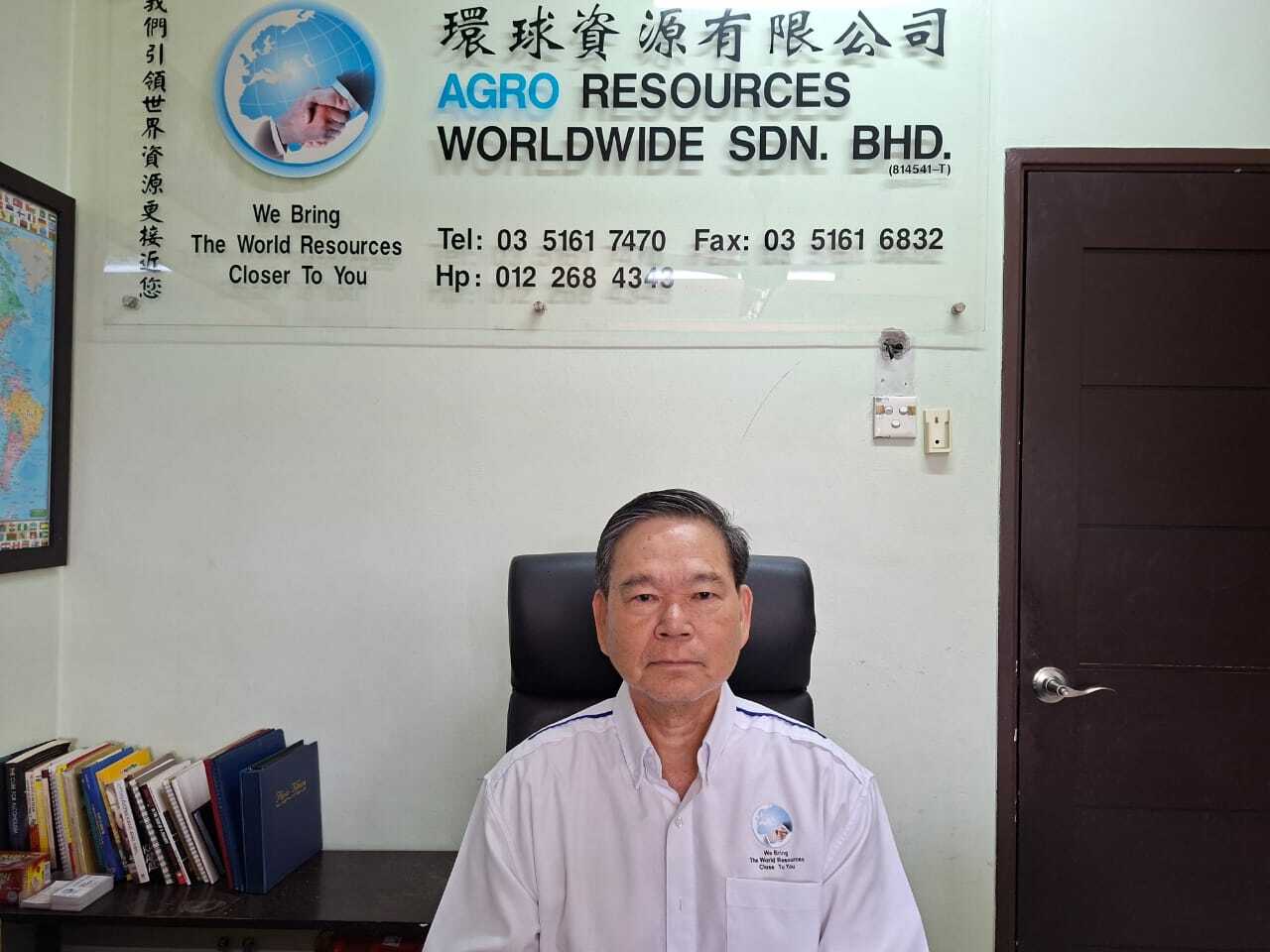
KUALA LUMPUR, March 18 — Strong global supply of feed commodities and forward purchasing by livestock producers are helping to buffer Malaysia’s food costs for now, despite recent increases in fuel prices and concerns over fertiliser disruptions linked to the Iran war, according to a commodities importer.
Chong Kam Weng, interim president of the Association of Commodities Importers for Animal Feed Malaysia (ACiAFM), said global prices of key feed ingredients such as corn and soybean meal have not increased significantly, even as crude oil prices have risen in recent weeks.
“Crude oil prices moved swiftly upward within these few weeks, which can have a big impact on corn and soybean meal cost of production. However, there is no significant price hike in commodities price as seen in CBOT market,” Chong told CodeBlue yesterday, referring to futures prices on the Chicago Board of Trade, a major marketplace where key agricultural commodities like corn and soybeans are traded and priced.
Chong said recent movements in oil prices are driven more by market speculation than underlying supply-demand fundamentals.
“The current war is believed to be ending soon, so oil price hike is just a fund manager game, not fundamental at all as demand has gone down a lot,” he said.
There have been no clear indications that the conflict will end in the near term. European countries, including the United Kingdom, Germany, and France, recently rejected the United States’ call to deploy warships to help protect commercial traffic in the Strait of Hormuz, with leaders emphasising they do not want to be drawn into a wider war.
Last Sunday, US president Donald Trump reportedly said he wasn’t ready to seek a deal to end the US-Israel offensive against Iran, while Iranian foreign minister Abbas Araghchi declared that “we are ready to defend ourselves for as long as it takes.”
Commodity markets have shown volatility in recent weeks amid shifting investor expectations.
Global supply of feed commodities also remains ample, Chong added, pointing to historically high stock levels and excess production in major exporting countries.
“The world ending stock of corn and soybean meal is high in history. In the US, many corn, bean and soybean meal have huge excess,” he said.
Brazil is expected to continue increasing production due to stable political and currency conditions, while Argentina faces some constraints due to currency depreciation affecting imports of fertiliser and agricultural inputs.
China, meanwhile, is reducing its reliance on imports by boosting domestic production amid food security concerns.
“China has strong confidence in Brazil’s supply, however China is not sitting to rely on imports. They have started to produce corn and beans themselves by accepting genetically modified organism (GMO) seeds,” Chong said.
Despite concerns that rising fertiliser prices, particularly urea, could push up feed costs, Chong said the impact has yet to materialise in global commodity markets.
“Most livestock producers have booked their corn and soybean meal requirements at least six months ahead, so they are not worried about the spot market price,” he said.
That buffer is helping to delay the transmission of higher costs to consumers. Chong said he does not expect immediate upward pressure on food prices, including poultry.
“Overall, I don’t see any potential for the chicken and eggs price to go up. I predict chicken prices will come down after Raya,” he said, adding that producers are currently benefiting from relatively low raw material costs.
While diesel prices have risen sharply, Chong said the overall impact on production costs remains limited because transport accounts for a relatively small share.
He said industrial diesel prices have more than doubled in recent weeks, rising from about RM2.95 per litre to RM6.15, although retail diesel prices remain lower due to government controls.
“Transport cost increase is not a big impact as it contributes only about 5 per cent of production cost, whereas commodities cost is about 70 per cent,” he said.
Chong said the dominant role of feed costs means that stable commodity prices are currently offsetting the impact of higher fuel costs across the supply chain.
The poultry sector remains the largest consumer of feed in Malaysia, accounting for the bulk of demand for imported corn and soybean meal.
“Chicken broilers consume the largest, about 150,000 metric tonnes of corn, layer farms about 40,000 metric tonnes, pig only 15,000 metric tonnes,” Chong said.
On pork imports, Chong, who is also chairman of the Persatuan Pengimport Produk Khinzir Malaysia (PPPKM), said supply is not a concern following the government’s approval of chilled and frozen pork imports from Thailand.
Earlier, poultry producers warned that rising global feed and fuel costs linked to the Middle East conflict could lead to higher chicken and egg prices and tighter supply in Malaysia, due to the country’s reliance on imported feed ingredients, such as corn and soybean meal.
Chong said the outlook will depend on whether fuel prices remain elevated and whether cost pressures begin to filter through to feed and other parts of the supply chain in the coming months.
Industry players are expected to continue monitoring the situation. ACiAFM is scheduled to convene a meeting on March 30 to discuss industry and policy matters, according to a notice to members.


