

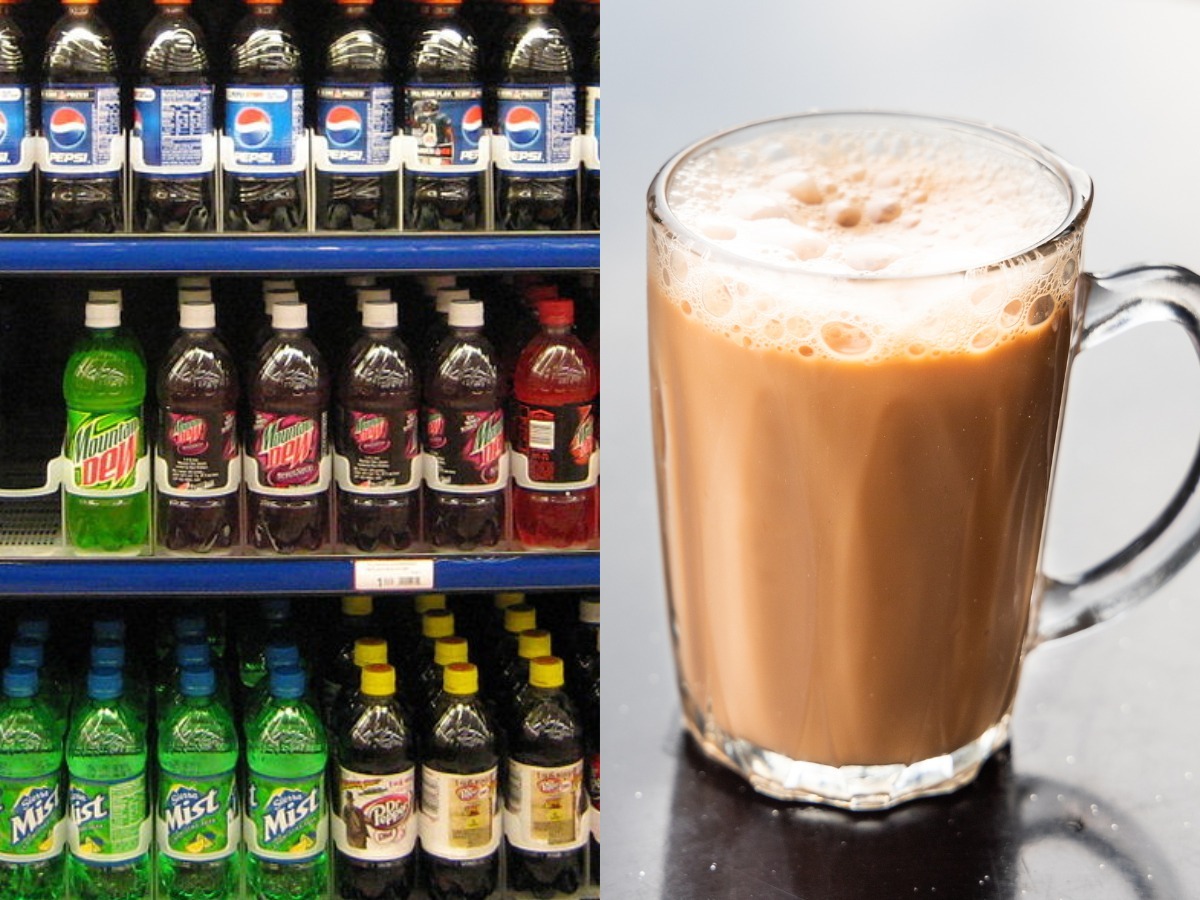
KUALA LUMPUR, March 18 — The Institute of Strategic and International Studies (ISIS) Malaysia has observed limited impact from the sugar-sweetened beverage (SSB) tax in reducing sugary drinks consumption.
An ISIS research note titled “How to win the war on sugar” by Fahad Ijlal Nizam, which was published last month, cited research that suggested a 10 per cent increase in SSB tax only reduced purchases by about 1.7 per cent.
Using pre-tax data, another study estimated that the 40 sen per litre levy would lower SSB volumes roughly 9.25 per cent, all else equal. The SSB tax was later increased to 50 sen per litre.
“Taken together, these point to modest reductions in taxed drink by volume, advocating a minor gain for overall sugar reduction,” said ISIS.
The think tank explained that the “weak price signalling” stemmed from the SSB volumetric tax system that generates uneven price increments across product sizes. Sugary beverages are taxed depending on their volume, with taxes shrinking in tandem with drink sizes.
“This inadvertently incentivises consumers to purchase smaller servings, which are more affordable and accessible, rather than reducing overall sugar consumption.”

ISIS also pointed out that even if consumption of taxed SSB declined, consumers and firms could shift towards untaxed sugar alternatives.
While manufacturers can reformulate, ensuring their products fall below the tax threshold, consumers can switch to freshly prepared beverages (for example, Milo, teh tarik, or air balang) or other untaxed sweetened items.
Malaysian adults consume 7.3 self-prepared SSBs a week, compared with 4.6 servings of ready-to-drink SSBs. Malaysia’s per capita sugar consumption remains the highest in Asean, even after the tax, at 57 kg of sugar in 2023, which is 27 per cent higher than Thailand (second highest) and about three times more than the Philippines.
National Health and Morbidity Survey (NHMS) 2024 data shows that half of all sugar consumed comes from beverages: freshly made drinks like Milo, teh tarik, and 3-in-1 coffee, as well as ready-to-drink or packaged beverages.
“In other words, Malaysians drink as much sugar as they eat.”

ISIS further attributed the limited impact of the SSB tax to Malaysia’s contradictory sugar subsidy and sales tax exemption. After Prime Minister Najib Razak’s administration abolished sugar subsidies in 2013, Prime Minister Anwar Ibrahim’s government reintroduced RM1/kg incentive payments to sugar manufacturers in November 2023.
The government spends an estimated RM500 million to RM600 million a year to sustain artificially low sugar prices, exceeding the RM358 million annual revenue generated from the SSB tax. Last year, the Ministry of Finance announced that refined sugar would remain tax-free under the revised sales and service tax (SST).
Finally, ISIS noted that the tax-free zone of 5g/100ml might render future tax rate revisions redundant, since companies have reformulated most of their products to fall below the prescribed threshold.
“This undermines the tax’s long-term leverage over industry behaviour and weakens its capacity to drive major reductions in sugar consumption. Hence, the threshold exemption acts as a potential policy loophole, limiting its relevance and impact over time.”
Transition To Absolute Sugar-Based Tax Structure

ISIS recommended restructuring the SSB tax from a volumetric to an absolute sugar tax system that taxes every gram of sugar in a product.
The think tank noted that even a modest rate of 2 sen per gram would ensure that all sizes of SSBs would meet the World Bank-recommended standard of a minimum 20 per cent increase in retail price. Higher volume drinks would also be taxed significantly more, discouraging bulk consumption.
Transitioning to an absolute sugar tax system would increase revenue. Consumption of ready-to-drink SSBs stands at roughly 1.9 billion litres a year.
“Using an elasticity of -0.173 and assuming all litres contain 4.8g/100ml (below the current threshold) – the estimated annual sugar tax under the 2 sen rate would be RM1.68 billion,” said ISIS.
This represents a five-fold increase over current returns of some RM358 million a year from the SSB tax. But if the current tax-free threshold remains, the figure would be significantly lower.
Therefore, ISIS recommended either lowering the exemption threshold to 4g/100ml or removing it entirely to ensure full coverage of the tax, mirroring South Africa’s SSB tax.
Expand SSB Tax To Condensed Milk

ISIS called for the scope of the SSB tax to be expanded to condensed milk to capture freshly made drinks in mamak restaurants that aren’t taxed and continue to benefit from the sugar subsidy.
“Therefore, widening the tax scope to include major sugar substitutes like condensed milk would not only strengthen the price signal across more products, but also discourage consumers from switching to cheaper unhealthier alternatives,” said ISIS.
“Broader taxation is essential if Malaysia is to curb its sugar intake and tackle the health costs.”
The think tank noted that Malaysia has among the highest prevalence of obesity (22 per cent) and diabetes (21 per cent) in Asean, as rates surged since 1990 when both chronic diseases were only prevalent around 5 per cent over three decades ago.
The total economic loss of four non-communicable diseases (NCDs) – cardiovascular disease, cancer, diabetes, and respiratory disease – are estimated at RM64.2 billion a year, including RM51.8 billion in productivity losses and RM12.4 billion in health care expenditure and disability payments, according to a 2024 report by the World Health Organization (WHO) and the Ministry of Health (MOH).
‘Backfiring’ Healthier Choice Logo Applied To Carbonated Drinks

ISIS criticised the MOH’s Healthier Choice Logo (HCL) policy, which was implemented nearly a decade ago in 2017, that applies an HCL sticker onto ready-to-drink beverages on the shelf as long as their sugar content doesn’t exceed 5g/100ml, the only criterion.
Since its implementation, a total of 638 drinks have attained HCL.
“HCL is backfiring as a behavioural nudge and promoting a distorted understanding of
health. This issue stems from its simplistic criterion of a single sugar threshold of 5g/100ml,
which saw mass reformulation to avoid the SSB tax. As a result, most drinks now fall below this threshold,” said ISIS.
“Carbonated drinks, such as F&N strawberry, A&W root beer, Pepsi, Mountain Dew, F&N Sarsi and Kickapoo, all still laden with preservatives, flavouring and artificial sweeteners but certified as ‘healthier’.”
The think tank said HCL’s binary nature prevented meaningful cross-product comparability, noting that the drinks mentioned above all carry an HCL logo while Coca-Cola regular does not, despite both being fast-food beverages.
“This creates a misleading impression that one is ‘healthier’ simply by virtue of the label. A similar issue arises when comparing two HCL-labelled drinks, does the label imply both are equally healthy or one is ‘healthier’ than the other?
“As a result, these ambiguities risk confusion, potentially limiting the effectiveness of the logo to promote healthier dietary choices.”
ISIS also said the MOH’s plan last October to implement Malaysia’s new nutri-grade system still relied purely on sugar content, failing to account for the wider nutritional value of a drink.
“For instance, it fails to capture the absence of beneficial nutrients, presence of artificial additives and nutritional void of these reformulated products.
“This is evident as HCL-approved drinks under Singapore’s nutri grade were labelled ‘B’ but the more rigorous European nutri-score algorithm, which considers nutrients beyond just sugar, calculated that these same beverages would earn a ‘D’.”


