

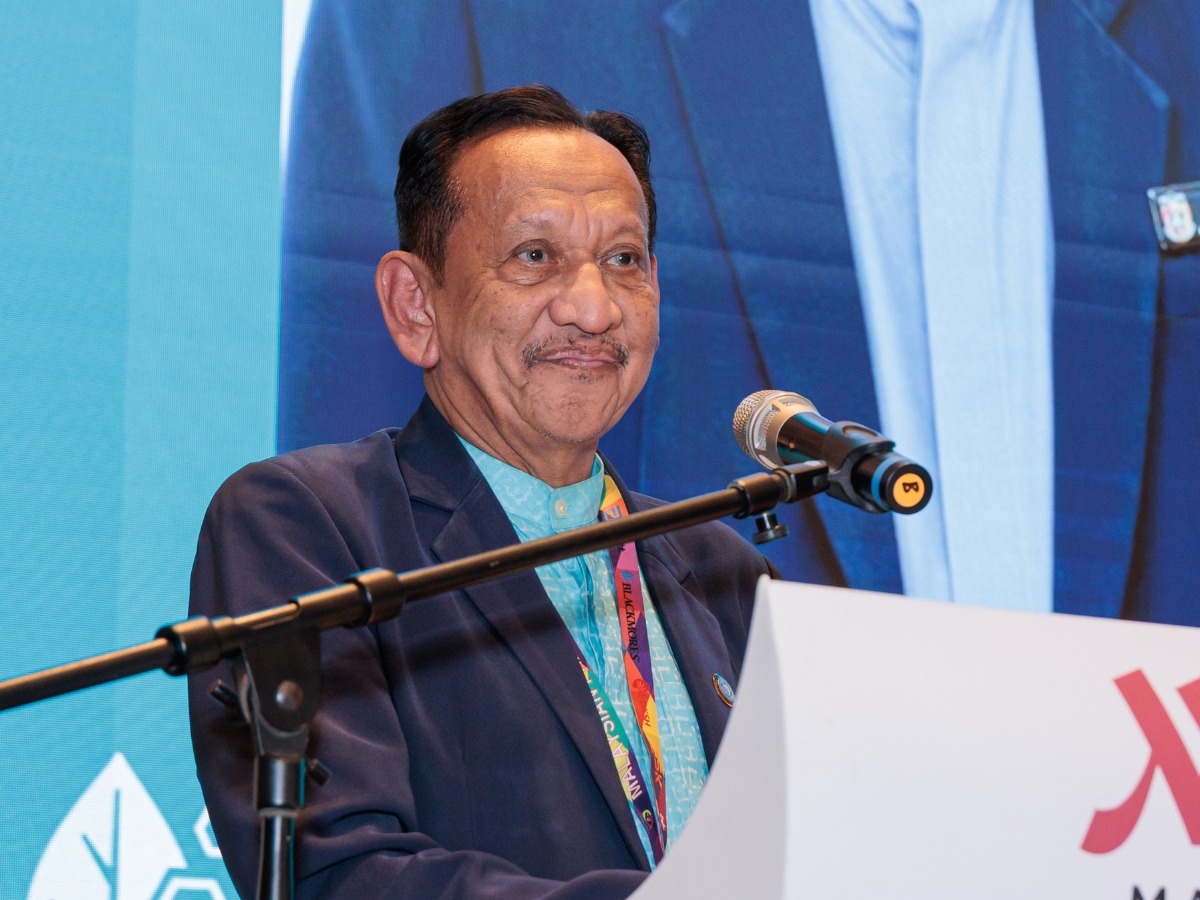
KUALA LUMPUR, Nov 10 — The Malaysian Pharmacists Society (MPS) has condemned the government’s move to exempt liquid nicotine from the Poisons List, despite remaining on the Poisons Board that approved the proposed exemption.
MPS president Prof Amrahi Buang shifted blame from the Poisons Board to the health minister, who remains responsible for amending the Poisons List after consulting with the independent statutory body under the Poisons Act 1952.
“The Poisons Board performs a statutory advisory function, but responsibility for the final regulatory decision rests with the health minister, acting in accordance with the law,” Amrahi said in a seven-page statement last Friday.
“Participation in statutory advisory processes does not alter MPS’s independent institutional position. MPS remains firmly opposed to exempting nicotine used in recreational vaping products from the Poisons Act.
“The government cannot tell Malaysians that it intends to end vaping while considering another exemption that could allow nicotine vapes to remain on the market. It must decide which direction it intends to take — and tell the public when it will act.”
Health Minister Dzulkefly Ahmad, who is currently stumping for Pakatan Harapan (PH) in the Melaka state election campaign, has yet to issue a statement to explain why he brought a proposal to the Poisons Board to exempt liquid and gel nicotine used in e-cigarettes and vape from the Poisons List. He previously pledged last September to ban vape by the middle of 2026.
CodeBlue recently reported that the Poisons Board – which operates via consensus decision-making and includes representatives from MPS and the Malaysian Medical Association (MMA) – endorsed the proposed nicotine exemption from the list of scheduled poisons.
During a stakeholder engagement session with anti-tobacco groups at the Ministry of Health’s (MOH) headquarters in Putrajaya last Friday, which was chaired by Health deputy director-general (public health) Dr Ismuni Bohari, CodeBlue understands that MOH officials confirmed that the Poisons Board had approved the proposed exemption of liquid nicotine from the Poisons List.
Like MPS, MMA has also refused to resign from the Poisons Board in protest of its decision, even as MMA president Dr Sivanaesan Letchumanan insists that the doctors’ association “strongly opposes” the proposed nicotine exemption and remains in favour of a nationwide vape ban.
MPS strongly recommended stricter nicotine controls, including pursuing its classification and regulation under the psychotropic substances framework of the Poisons Act, subject to appropriate scientific and legal assessment.
Such measures must preserve access to registered nicotine replacement therapies and medically appropriate smoking cessation treatment.
“MPS also urges the government to clarify how the Poisons Act 1952 (Act 366) and the Control of Smoking Products for Public Health Act 2024 (Act 852) will operate together, ensuring that regulatory arrangements are consistent, enforceable, and guided by public health objectives,” said Amrahi.
As a Group C poison, nicotine is restricted under Act 366 to dispensation by pharmacists or doctors.
Hence, the government’s move to exempt nicotine-containing vape liquids from the Poisons List – similar to tobacco that has long been exempt – is precisely intended to remove Act 366 control over liquid nicotine so that nicotine vapes can continue to be legally used by adults for recreational purposes under Act 852, and taxed.
“MPS reiterates its unequivocal support for a comprehensive nationwide ban on recreational vaping products, implemented in phases beginning with open-system devices,” said Amrahi.
“This must be accompanied by the reintroduction of a legally robust Generational Endgame (GEG) policy to protect future generations from tobacco and nicotine addiction. MPS also opposes the promotion and normalisation of commercially available nicotine-containing vaping products as a population-wide harm-reduction strategy.
“Although research has demonstrated that regulated nicotine e-cigarettes can help some adult smokers quit combustible cigarettes, such evidence must not be used to justify widespread commercialisation of addictive products, particularly where youth uptake and illicit substance misuse remain serious concerns.”
The pharmacists’ group further cited the proliferation of drug-laced vapes. In a parliamentary written reply dated last November 2, the Home Ministry reported 429 cases involving vape liquids suspected of containing synthetic drugs, resulting in 643 arrests between January and August 2026. Authorities also seized 121.47 kg and 302.43 litres of suspected drug-laced vape materials during the same period.
“In July 2026, the Ministry of Health estimated the annual health and economic burden associated with vape-related diseases at approximately RM369 million, compared with RM118.93 million in vape excise duty collected in 2025,” said Amrahi.
“Public health must never be measured simply by how much revenue a product generates. When we are dealing with addiction, particularly among children and adolescents, prevention must come first.”
Separately, the Malaysia E-Vaporizer and Alternative Tobacco Association (Mevta) has welcomed the Poisons Board’s endorsement of the proposed nicotine exemption, as the vape group backed stronger enforcement under Act 852 instead of a blanket ban of vape products.

