

An organisation, like a government, is made out of individuals.
If a particular organisation makes a collective decision that some of its members personally disagree with, those individuals must resign in protest, especially if they find that decision to be particularly egregious.
The Poisons Board’s recent decision to endorse Health Minister Dzulkefly Ahmad’s proposal to exempt liquid nicotine from the Poisons List triggered fierce backlash from the medical fraternity, with several non-governmental organisations (NGOs) issuing statements over the past few days after CodeBlue’s report.
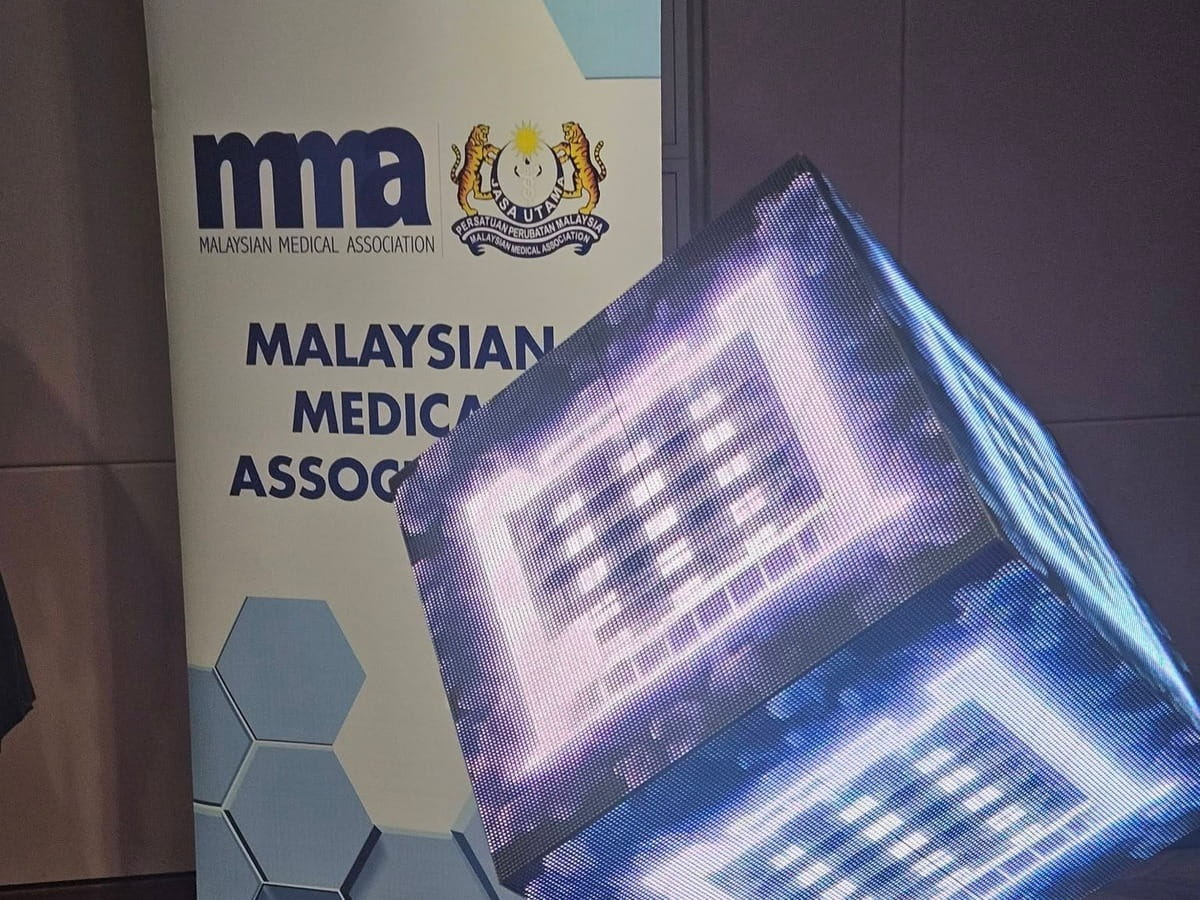
Surprisingly, the Malaysian Medical Association (MMA) joined the chorus of condemnation, even though the doctors’ group sits on the Poisons Board that made the very decision that it is now criticising. MMA’s representative on the Poisons Board is its past president, Dr R. Arasu.
In a statement last Tuesday, MMA president Dr Sivanaesan Letchumanan said his organisation “strongly opposes” an exemption of nicotine-containing vape liquids from the Poisons List.
He also called for a nationwide vape ban, declaring that “MMA’s position has been clear and consistent”.
Dr Sivanaesan told CodeBlue that MMA’s representative attended the Poisons Board meeting that discussed the proposed nicotine exemption, but declined to specify how Dr Arasu voted, citing statutory confidentiality obligations.
“MMA’s representation on the Poisons Board should not be interpreted as an endorsement of every decision or recommendation made by the Board,” said Dr Sivanaesan in response to CodeBlue’s question on whether MMA would resign from the Poisons Board in protest of its nicotine exemption decision.
“The Board serves an advisory role, while the ultimate responsibility for decisions on exemptions rests with the health minister.
“We believe it is important for the medical profession to continue having a voice in decisions affecting public health. Our continued representation in the Board allows us to advocate for public health protection through the appropriate channels.”
It’s incredibly unfair of MMA to criticise Dzulkefly for moving to legalise nicotine vape when it’s part of the statutory body that advised the health minister to do just so.
Aside from brief remarks to CodeBlue about the Poisons Board’s decision, the Malaysian Pharmacists Society (MPS), which also sits on the Board, has yet to issue a statement. The pharmacists’ group would be wise to refrain from saying anything about the issue, unless it’s an announcement of its resignation from the Board.
All 11 members of the Poisons Board are appointed by the health minister based on their office in various associations or government departments.
Secrecy is the antithesis of transparency.
Even if Poisons Board proceedings are classified under the Official Secrets Act (OSA) 1972 or if a secret ballot was held on the proposed nicotine exemption, the onus is on every member to publicly state how they voted for the sake of accountability.
I don’t think members are restricted under the OSA either from reporting to their respective organisations on how they voted as their representative. Again, they’re on the Poisons Board to represent their respective associations, not as random private citizens.
Regardless, the Poisons Board’s consensus decision-making, as opposed to a majority vote disclosed to the public, means that every member upholds the Board’s backing for regularisation of nicotine vape, irrespective of how they voted.
If any member objects to that decision, they must publicly resign in protest.
The Poisons Board’s endorsement of a proposed nicotine exemption wasn’t made by an amorphous body, but by specific individuals with a seat at the table who met to discuss the proposal, deliberated its pros and cons, and arrived at the decision they made.
Members cannot evade accountability by hiding behind the Poisons Board entity, just like how Dzulkefly cannot hide behind the Cabinet.
MMA lectures the health minister about transparency, but refrains from even naming its representative on the Poisons Board that decided to recommend the very opposite of a prohibition.
MMA and MPS, currently represented on the Poisons Board by Dr Arasu and Nour Hanah Othman respectively, are the two organisations that have ceded the moral high ground to demand a vape ban.
As long as MMA and MPS remain on the Poisons Board, whatever statements they make about banning or declaring a “war” on vape are akin to the pot calling the kettle black.
The other nine members of the Poisons Board, who are mostly representatives of other government departments and chambers of commerce, do not carry similar baggage because those organisations never expressed a public stance on tobacco or vape control policies.
Like other government departments, the Ministry of Health (MOH) doesn’t have a stance on tobacco or vape control per se, as civil servants simply “menurut perintah”, based on policies by the government of the day.
Regardless of verbal denials by Dzulkefly and his predecessor, Dr Zaliha Mustafa, the Madani administration has a clear pro-vape policy that prioritises tax revenue over public health.
Although Dzulkefly bears ultimate responsibility, since an order amending the Poisons List can only be gazetted by the health minister, the Poisons Board holds a statutory duty to advise him.
The Poisons Act 1952 (Act 366) requires the health minister to consult the Poisons Board before amending the Poisons List.
Such consultation, or the lack thereof, was the main reason why the High Court, in May, cancelled Dr Zaliha’s 2023 order exempting liquid and gel nicotine used in e-cigarettes and vape from the Poisons List.
The 2023 Poisons Board – which had different members from today, albeit the same associations and government departments – unanimously opposed a proposed exemption of liquid nicotine from the Poisons List because this would create a lacuna in the law as a tobacco and vape control bill hadn’t even been tabled in Parliament then.
Precisely because of the momentous High Court ruling, Dzulkefly is morally obliged to follow the 2026 Poisons Board’s advice, even though he isn’t legally bound to do so.
If a second health minister flouts the Poisons Board, this may open up the government of the day to further lawsuits.
It’s not like the Poisons Board isn’t independent, considering that it rejected a government proposal three years ago. But it chose to depart from its 2023 decision for unknown reasons.
The 2026 Poisons Board should just be honest if it endorsed the proposed exemption of liquid nicotine because its members preferred regulation, rather than prohibition, since the Control of Smoking Products for Public Health Act 2024 (Act 852) has already been in force since October 2024.
However, if that indeed was the stance by the Poisons Board, it would be more of a “policy” decision, as opposed to using scientific evidence on the harms of nicotine and vape.
What new data motivated experts in the Poisons Board to say that nicotine is no longer a poison?
Dzulkefly deserves public opprobrium for putting forth a nicotine exemption proposal to the Poisons Board, despite a previous pledge to ban vape (it’s a question of “if”, not “when”). He even called in 2023 (when he wasn’t a minister) for a reinstatement of liquid nicotine into the Poisons List.
However, as an expert institution, the Poisons Board bears equal, if not greater, responsibility to give correct advice to the health minister. How can a politician disregard a decision by experts with medical or pharmacy qualifications?
In contrast to MMA’s audacity in telling Dzulkefly to “accept responsibility for the consequences” of allowing vape products to remain on the market, I argue that primary responsibility falls on the Poisons Board, including MMA.
NGOs typically lack the ability to make policy. But in this case, MMA and MPS were in a unique position of power, as members of the Poisons Board, to do the right thing.
But when push came to shove, the associations failed to exercise real power that they possessed, beyond shouting into the wind with press statements. MMA insists on staying on the Poisons Board, while simultaneously condemning a decision that it was a part of.
To give Dzulkefly the benefit of the doubt, if the Poisons Board had rejected his proposal, maybe he’ll abandon plans to exempt liquid nicotine from the Poisons List.
At the very least, he could tell Cabinet that the Poisons Board said “no” and that Putrajaya shouldn’t risk another lawsuit by acting against the Board’s advice.
But now, there’s no excuse for Dzulkefly not to gazette a nicotine exemption order. The Poisons Board’s self-subjugation to the State removed a cover that the health minister could have used to withstand pressure from other parts of government or the industry to legalise nicotine vape.
Since MMA refuses to resign from the Poisons Board, it should stop its sanctimonious rebukes of the government in the issue of tobacco and vape control.
MMA has no moral standing to talk about nicotine products anymore. Just use “appropriate channels”. Other health NGOs without compromised reputations can speak about this public health issue instead.
That’s a small price to pay to hang on to power and positions.

Boo Su-Lyn is the co-founder and editor-in-chief of CodeBlue.
- This is the personal opinion of the writer or publication and does not necessarily represent the views of CodeBlue.


