

KUALA LUMPUR, Nov 4 — Employees who were hospitalised at least once incurred median annual medical bills more than 12 times higher than those who received outpatient treatment only, according to PMCare Sdn Bhd.
The median annual medical bill for hospitalised employees was RM18,548, compared with RM1,512 for outpatient-only patients, PMCare director of claims Dr Armijn Mahpha Fansuri said at the Industry Leadership Summit 2026 on October 28.
The comparison covered 35,534 employees, of whom 2,819, or eight per cent, had been hospitalised at least once. The remaining 32,715 employees, or 92 per cent, received outpatient treatment only.
Despite making up just eight per cent of employees, the hospitalised group accounted for 42 per cent of medical expenditure.
“If you have been treated as an outpatient only, your average is about RM1,500 a year. But a single admission will jump up your cost,” Dr Armijn said.
Medical expenditure also rose with the length of hospital stay. Employees hospitalised for at least 15 days incurred median annual medical bills of RM103,100, compared with RM38,700 for stays of eight to 14 days and RM22,100 for stays of four to seven days, PMCare said.
Employees With Multiple Chronic Conditions Rack Up Higher Diabetes-Related Medical Bills
PMCare’s analysis of diabetes-related claims found that employees with multiple chronic conditions accounted for a disproportionate share of medical expenditure.
In 2025, employees with diabetes, hypertension and high cholesterol made up 33 per cent of employees receiving diabetes treatment, but accounted for 54 per cent of their medical expenditure.
By comparison, employees with diabetes alone represented 36 per cent of the group but accounted for just 18 per cent of spending.
Employees with diabetes and hypertension made up 13 per cent of the group and 12 per cent of expenditure, while those with diabetes and high cholesterol represented 18 per cent of employees and 16 per cent of spending.
Two employee profiles illustrated the difference in medical bills associated with diabetes severity and co-existing chronic conditions.
An employee with mild diabetes treated with metformin alone, who had never been hospitalised, incurred median annual medical bills of RM215.
In contrast, an employee with diabetes, hypertension, and high cholesterol who required insulin treatment incurred median annual medical bills of RM13,268 – about 62 times higher.
Dr Armijn said employees with multiple chronic conditions could accumulate substantial medical costs through ongoing treatment, even without hospitalisation, potentially escaping employers’ attention as high claimants.
He illustrated this with a hypothetical 53-year-old manager named Joe, who had diabetes, hypertension, and high cholesterol. Although Joe was taking two types of medication and had never been hospitalised, his medical bills had accumulated to RM7,900 over two years.
“Joe can be somebody fairly cheap. Again, not on your radar. But once he gets admitted, he will be flagged,” Dr Armijn said.
PMCare’s broader analysis covered 371,789 employees who made medical claims between 2023 and 2025. Of these, 18,638 were identified as receiving diabetes treatment, based on a diabetes diagnosis and claims for diabetes medication. Dependants were excluded.
The analysis also found that medical bills increased with the intensity of diabetes treatment.
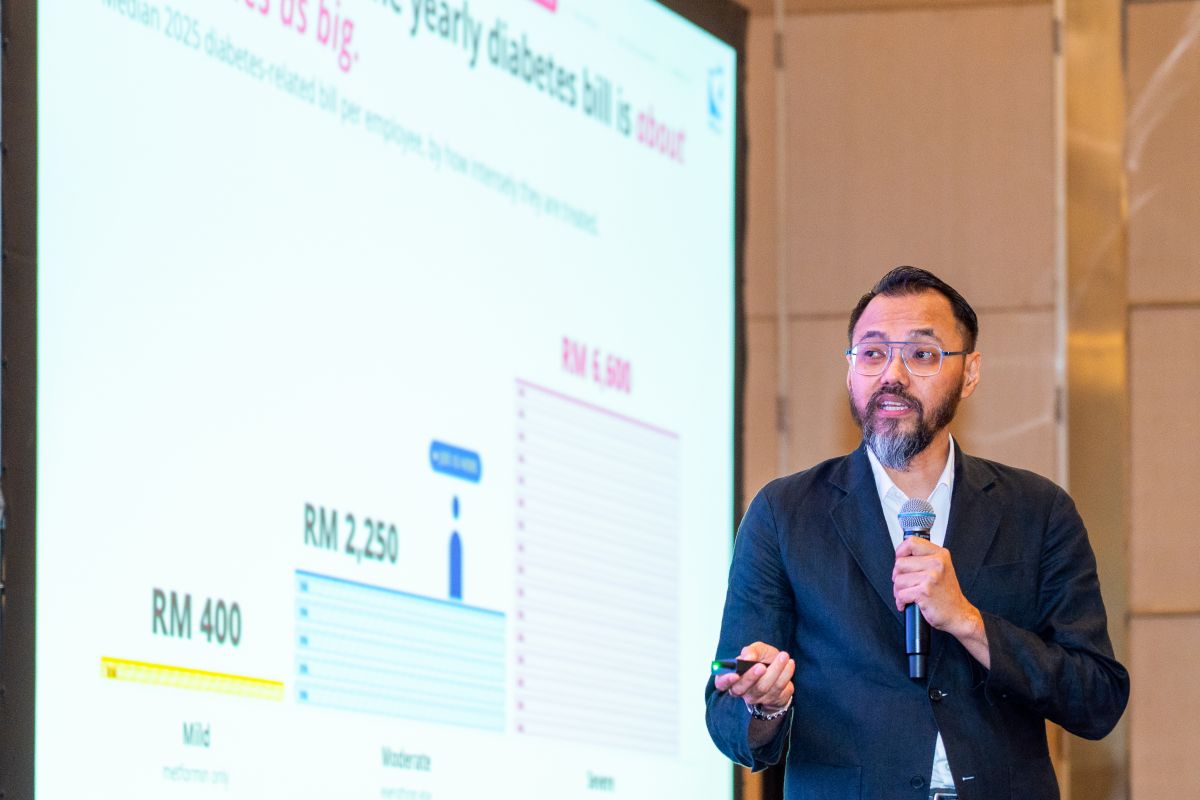
In 2025, employees with mild diabetes treated with metformin alone incurred median annual medical bills of RM400. The median increased to RM2,250 among those classified as having moderate diabetes, who required additional treatment beyond metformin, and RM6,600 among those with severe diabetes who received insulin treatment.
Diabetes Screening Must Go Beyond Detection To Track Disease Progression
Dr Armijn said employers should look beyond workplace wellness programmes that screen for diabetes and identify employees at risk of developing the disease, and focus more on monitoring existing patients for signs of disease progression.
“Once they are diabetic, I’m not aware of any wellness programmes that detect progression of diabetes,” he said.
PMCare is working with its panel providers to develop programmes to track disease progression and intervene before employees require more intensive treatment or hospitalisation.
The company is also developing a machine-learning-based predictive analytics model to help employers identify employees at risk of worsening chronic conditions and forecast their future medical expenditure.
The proposed dashboard would allow employers to classify employees by risk level, identify factors driving higher medical service utilisation and project health care costs over the next five years.
It would also model how employees’ health risks could change with or without intervention programmes.
PMCare App To Let Employees Compare Hospital Bills Before Seeking Treatment
Separately, PMCare is developing an upgraded mobile application that would allow employees to compare estimated hospital bills before deciding where to seek treatment.
The proposed feature would display estimated median bills and cost ranges for specific diagnoses at nearby panel hospitals, alongside information such as distance, hospital facilities and member ratings.
Employees would be able to compare hospitals before requesting a guarantee letter, which confirms coverage for hospital treatment under their employer’s medical benefits.
Dr Armijn said the initiative was intended to give employees greater visibility over potential treatment costs when choosing a hospital.
PMCare also plans to incorporate post-discharge feedback on hospital bills and patient experiences. The company is seeking to work with hospitals to collect information on actual clinical outcomes.

