

Apple cofounder Steve Jobs famously said, “It’s not the customer’s job to know what they want”.
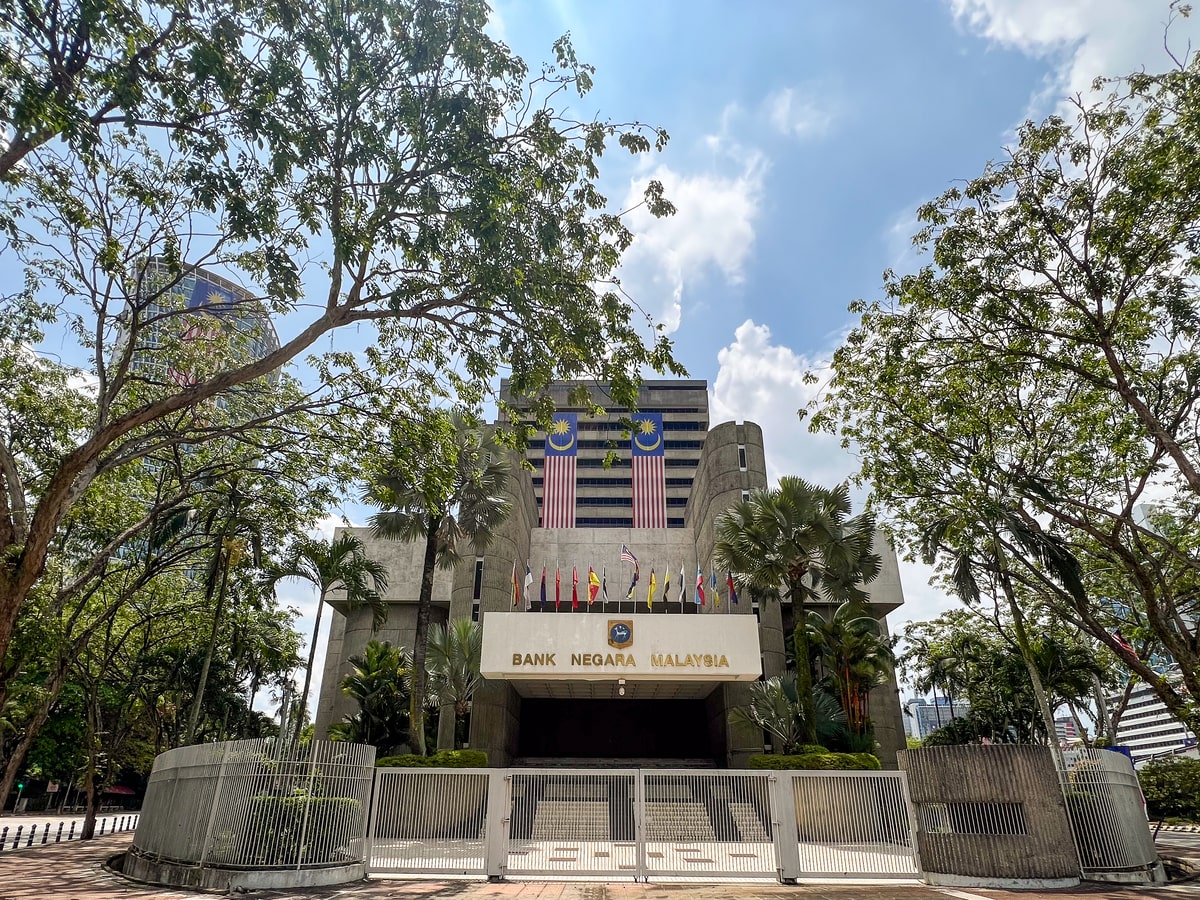
In the context of Malaysian health care, the government – Bank Negara Malaysia (BNM) in particular – seems to place the burden of tackling medical inflation primarily onto customers or consumers.
This is apparent with the Madani administration’s proposed base medical and health insurance/takaful (MHIT) product called MediAsas that was designed by BNM, the Ministry of Finance (MOF), and the Ministry of Health (MOH) under their joint Reset initiative to curb medical inflation.
Firstly, there is a glaring conflict of interest between BNM acting as regulator of the insurance industry and designing a medical plan meant for sale by private insurance and takaful operators (ITOs).
Recent advertorials – which were probably commissioned by the central bank or government to push back against criticism of MediAsas – make the conflict of interest even more jarring.
Even though BNM’s mandate is to protect the insurance industry, like central banks in other countries, creating and marketing a product meant for private profit shouldn’t fall under its remit.
BNM’s FAQ on the “pilot” version of MediAsas lists a slew of copayments beyond a standard RM500 deductible per disability for 59-year-olds and younger under the MediAsas Teras plan with an RM100,000 annual limit. Deductibles are twice as high for senior citizens at RM1,000 per disability, who get RM150,000 annual coverage.
MediAsas Fleksi with an RM300,000 annual limit comes with RM10,000 and RM15,000 deductible per annum for treatment at Preferred In-Network Providers and Out-of-Network Providers respectively.
MediAsas Fleksi deductibles aren’t even waived for emergency cases because a copayment (deductible and co-insurance/co-takaful) waiver for emergency treatment, outpatient cancer treatment, and treatment at government health care facilities only applies to MediAsas Teras, according to BNM’s FAQ.
MediAsas Teras and Fleksi may further impose up to 20 per cent co-insurance/co-takaful on the cost of specified cancer drugs, based on a Cancer Drug List, for both inpatient and outpatient care.
Imposing MediAsas Fleksi deductibles on emergency treatment and co-insurance/co-takaful on outpatient cancer drugs violates BNM’s requirements for the industry, as per a July 2024 statement, to waive copayments for emergency and outpatient cancer treatment.
When I saw the copayment for cancer drugs in BNM’s FAQ, my first thought was: “Why is the government being so mean to cancer patients?”
Malaysia’s NCD Crisis Forgotten Or Ignored
BNM deputy governor Aznan Abdul Aziz told Free Malaysia Today recently that MediAsas’ features are meant to discourage unnecessary health care use and over-prescription. This is akin to blaming customers, a familiar refrain in the insurance industry.
Behind (semi) closed doors in Parliament (Hansard was published a year later), the insurance industry whines to MPs about a rising trend of potentially “unnecessary” or “excessive” hospitalisations and treatment, even directly accusing patients of seeking admission just to claim from insurance.
But in public, insurers promote an RM1,000 cash reward for getting admitted to the hospital.
Since MOH is part of the Reset initiative, the officials designing MediAsas should be aware that Malaysia has a non-communicable disease (NCD) crisis and that Malaysians are increasingly getting (severe) chronic disease at a younger age, sometimes as young as their 30s.
Health Minister Dzulkefly Ahmad himself announced in August 2025 the country’s youngest heart attack case at 19 years old.
So why is the government acting as if Malaysians are seeking medical care just for fun and, by implication, driving up the cost of insurance and private health care?
It’s not the consumer’s job to tackle medical inflation. Placing this unfair expectation on us is like saying that smartphones can be cheaper if people stop using them and Nokia 3210 returns to the market.
We don’t decide when we fall sick and need treatment (to some extent, albeit practise a healthy lifestyle as best as we can). And if there are medical advances that improve lifespan, quality of life, or recovery time, why shouldn’t we have access to such therapies or technologies?
If BNM and ITOs want us to access only “basic” treatment like generic drugs or cheap medical equipment (even while ITOs advertise “the sky is the limit” to customers), both the private hospital and insurance industries in Malaysia should just shutter then.
The country should only have one health care system for everyone, rich or poor. At least MOH hospitals admit you for dengue fever, unlike MediAsas and other conventional medical plans that restrict treatment for the potentially fatal disease to outpatients.
Premium Repricing Has Nothing To Do With Annual Limits
Aznan claimed that million-ringgit annual limits would drive up the cost of insurance, as he insisted that an RM100,000 annual limit was sufficient to cover 99 per cent of treatment episodes across a range of common medical conditions in a year.
BNM’s White Paper cites 2024 data from the insurance industry that shows 99 per cent of individual medical claims paid fell below RM60,000.
RM1 million annual limits have been around for more than five years. Newer products have RM3 million annual coverage. An RM100,000 annual limit is 13 years out of date, according to an insurer.
The fact that the vast majority of claim payouts in 2024 were less than RM60,000 shows that people haven’t been trying to max out their RM1 million health insurance or even if someone tried to use their policy like a credit card, ITOs didn’t allow it.
Premium repricing has nothing to do with annual limits, but primarily the claims experience. If more and more Malaysians fall sick and enter the health care system two or even three decades before they’re expected to when they hit old age, the cost of insurance naturally goes up.
RM3 million or RM5 million annual limits are generally a marketing gimmick. ITOs know that most policyholders will only use a fraction of their policy or not at all, while paying premiums for years.
I myself haven’t used my policy, with an annual limit of less than RM1.4 million, even once in the five years that I’ve had it, except for extremely limited health screening/vaccination benefits (RM300 every two years).
So I resent anyone accusing me of wanting a medical card just to claim all the benefits, as if I were on a shopping spree, and contributing to medical inflation.
The industry has also been indoctrinating Malaysians for decades that medical insurance is meant to protect you from extraordinary events, i.e. the 1 per cent chance of getting cancer, heart attack, or stroke, not the 99 per cent that BNM keeps touting.
Great Eastern Life Assurance Malaysia Bhd CEO Koh Yaw Hui told a Public Accounts Committee (PAC) inquiry in February 2025 that he has personally signed cancer claims exceeding RM1 million per admission.
If BNM truly believes that an RM100,000 policy is sufficient for ordinary Malaysians, does its employee benefits package have the same annual limit? Recent anonymous employee reviews on Glassdoor about BNM’s health care and insurance report that the central bank takes care of its staff very well.
BNM reportedly provides employees with “one of the most comprehensive coverage”, “high cap”, and “insurance with lots of panels around Malaysia”, according to reviews since January 2024. According to the central bank’s 2025 annual report, it also provides staff access to health assessments and screenings, as well as influenza vaccination.
What’s good for the goose is good for the gander.
Guarantee Premiums To Prove Affordability Of MediAsas
I won’t belabour the point about how MediAsas’ 35 major exclusions – including pre-existing conditions, congenital conditions, and mental disorders – renders it standard health insurance that doesn’t protect the sick.
Nor is it competitive with other comparably priced products on the market for the young and healthy, due to its RM100,000 annual limit, tonnes of copayments, restricted hospital network, and basic benefits.
The reason why experts, insurance agents and – to some extent, the general public – are upset about MediAsas exclusions is because Madani sold us a “game-changer” by explicitly promising coverage of pre-existing conditions.
Neither BNM nor MOH, to date, have defined how people with “stable and well-managed” conditions can enrol for MediAsas. Define it for diabetes for a start.
A BNM video posted last Wednesday said the goal of MediAsas was to “help more Malaysians get medical insurance or takaful that they can continue to afford 10, 20, and even 30 years from now”.
With such a bold claim, MediAsas should guarantee specific premium rates for me at age 50, 60, 70, and 80 if I were to buy a policy upon its launch in early 2027.
Diagnosis-related groups (DRG), “broader risk pooling”, an interoperable electronic medical records (EMR) system, or medicine price displays are irrelevant “back-end” stuff to me as a consumer. Basically, I don’t care how you do it but just guarantee my premiums.
Ultimately, BNM displays a fundamental lack of understanding about consumer behaviour, which isn’t a surprise because it’s supposed to be a regulator, not a business. Even then, some of MediAsas’ copayment features contravene the central bank’s waiver requirements for ITOs.
Consumers like me dislike cost-sharing, restrictions on panel providers, coverage caps, and gatekeeping of care. I want a reasonably affordable medical card that gives me cashless access to a good hospital, with an annual limit of at least RM1.5 million and mostly unlimited benefits — without being arbitrarily denied at the time when I need it most because of a “pre-existing condition” that may have developed after I bought my policy.
What is BNM doing designing a product “for the masses” when it doesn’t even understand basic marketing principles like a unique selling proposition (USP) or product value? Covering pre-existing conditions would be a USP. Value isn’t about selling the cheapest product.
BNM is about to learn an important lesson: capitalism is a jungle where only the fittest survive.

Boo Su-Lyn is the co-founder and editor-in-chief of CodeBlue.
- This is the personal opinion of the writer or publication and does not necessarily represent the views of CodeBlue.


