

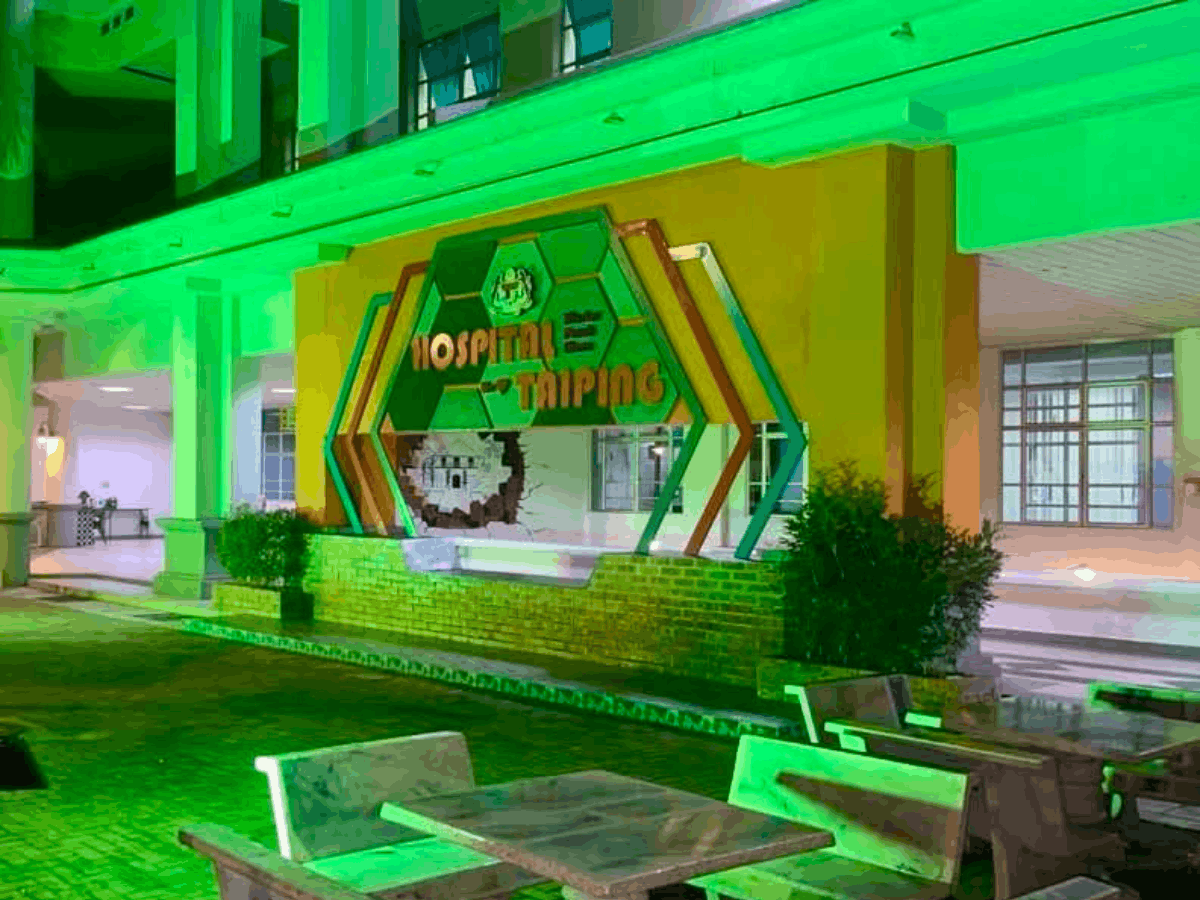
I am writing to CodeBlue out of sheer exhaustion and desperate concern for patient safety. Taiping Hospital is at a breaking point; medical officers (MOs) on the ground are running on fumes.
The chronic, severe shortage of house officers (HOs) has left us entirely without basic ward-level support. Instead of functioning as supervisory clinicians and managing complex cases, MOs are now forced to absorb the entirety of housemanship duties alongside specialised clinical responsibilities.
We are clerking every single admission from scratch, running our own blood tubes, tracing investigations, and executing floor-level plans, all while managing subspecialty loads.
To worsen the crisis, Taiping Hospital now anchors an expansive cluster hospital system, actively covering four district hospitals in addition to our own heavy internal workload.
Let me share what a standard on-call shift looks like now—specifically, my recent shift:
Zero Sleep, Full Clerking: With no housemen on the floor, I personally clerked, investigated, and managed every new admission. There is no triage buffer; if a patient enters the ward or emergency department, the MO handles the administrative and basic procedural burden from minute one. Plus, we have subspecialties: rheumatology, haematology, chest, infectious disease, geriatrics, and endocrinology.
Simultaneous Resuscitations: A colleague of mine recently had to manage two separate cardiopulmonary resuscitations (CPRs) occurring at the exact same time. Splitting clinical focus between two crashing patients without adequate hands is a terrifying safety hazard, not a badge of honour.
Non-Stop Referral Influx: Throughout my shift, the phone did not stop. We fielded and managed continuous external referrals from four district hospitals across our cluster, while simultaneously clearing the relentless backlog of acute patients being pushed up from our own emergency department. These are directly admitted too.
Passive Weekend: We do full ward rounds on weekends, full reviews of patients with stat bloods, and discharges. We are paid from 8am to 12pm, but we will always go home at 6pm plus. This is modern slavery.
We cannot maintain safe clinical oversight when we are expected to serve as junior clerks, resuscitation leaders, cluster triage officers, and subspecialty cover simultaneously. Human cognitive capacity has hard limits. Sleep deprivation and chronic overextension will inevitably lead to diagnostic delays, medical errors, and compromised patient outcomes.
The cluster hospital model looks structured on policy paper, but on the ground, it has simply multiplied the clinical burden on a severely depleted workforce without allocating personnel to sustain it.
We are not asking for reduced standards. We are asking for immediate human resources. The Ministry of Health must address the staffing maldistribution, urgently inject medical personnel into Taiping Hospital, and recognise that the current cluster system is running on the borrowed health and sanity of doctors who have nothing left to give.
The four districts we manage are overloading us because every major case is sent here. If Taiping has to manage Selama, Gerik, Kuala Kangsar, and Parit Buntar, our own internal load at Taiping is already too heavy.
Some of the hospitals have physicians, including emergency physicians, but they can’t manage because of inadequate equipment.
I think the clusters need to be revamped or upgraded so that Taiping has a lesser load. We are working like State but with District manpower.
The author is a medical officer at Taiping Hospital. CodeBlue is providing the author anonymity because civil servants are prohibited from writing to the press.
Editor’s note: When contacted for comment, Perak state health director Dr Feisul Idzwan Mustapha told CodeBlue he would “definitely look into the distribution of doctors and workload in Taiping Hospital and across the Northern Perak Cluster.”
- This is the personal opinion of the writer or publication and does not necessarily represent the views of CodeBlue.


