

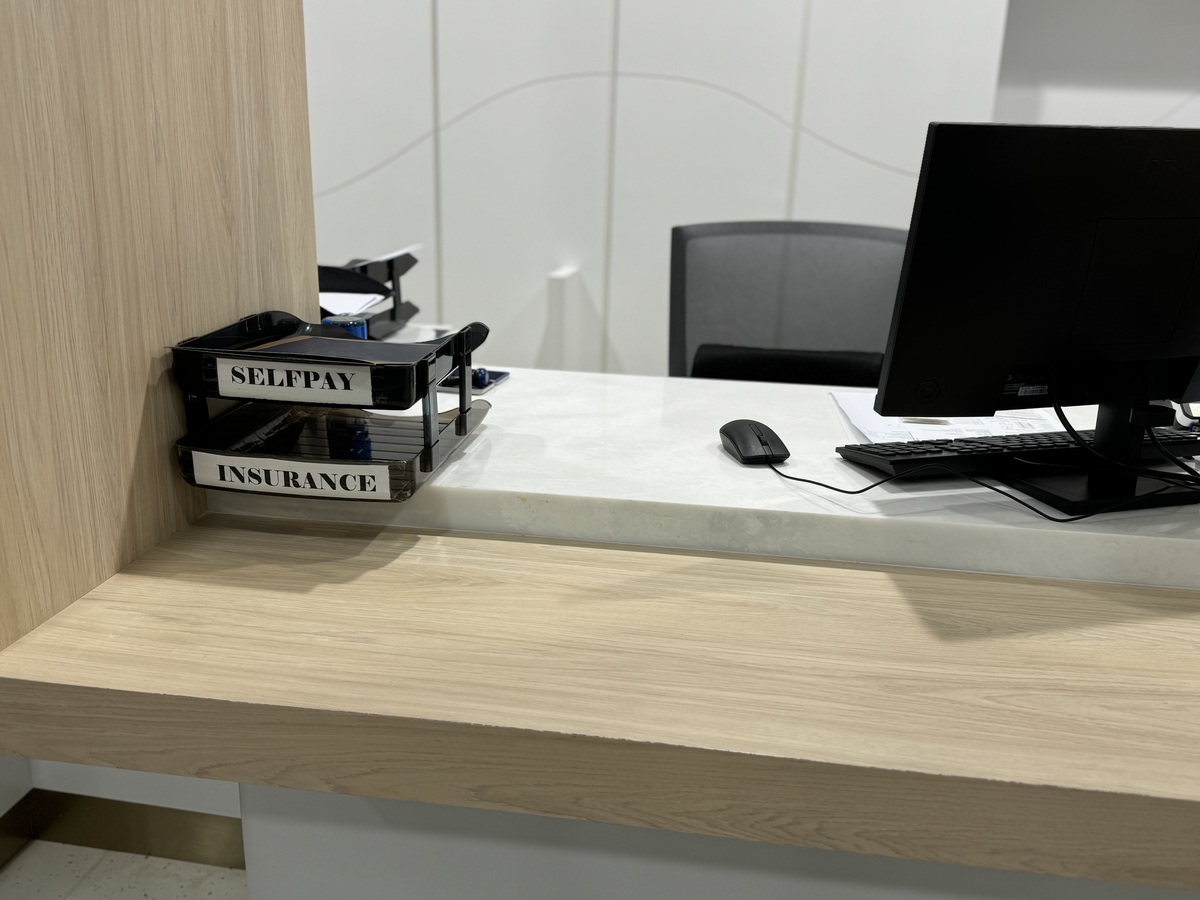
The Malaysian private health care financing crisis is, at its core, a pricing governance failure. Private hospitals operate with unchecked discretion over what they charge, whom they charge, and at what rate, with insured patients systematically billed at significantly higher rates than those paying in cash or by credit card.
The assurance industry possesses the data, the financial scale, and the analytical capability to challenge this power imbalance. It has, to date, chosen not to. The consequence of that inaction is now being transferred directly to policyholders in the form of higher premiums, wider deductibles, and compulsory co-payments.
This mechanism reduces claims but does not resolve the underlying pricing dysfunction that created the problem in the first place.
The Industry’s Self-Inflicted Limitation
The assurance industry’s failure is not one of capacity but of political will. Individual operators are each capable of analysing claims data, identifying hospital-level outliers, and understanding which providers are over-billing with impunity.
The problem is coordination. Each operator sits on its own data island, unwilling to share intelligence with competitors, and collectively paralysed by an overcautious reading of the Malaysian Competition Act 2010 that, with proper legal structuring, should not prohibit information sharing on provider pricing behaviour.
Australia, Germany, and South Korea have all demonstrated that payer consortia can operate within competition law frameworks when the purpose is to counterbalance provider monopoly power rather than to fix premiums among payers.
A Legally Structured Assurance Industry Data Consortium
The most direct solution is the establishment of a jointly governed, legally ring-fenced claims data consortium, modelled on the Insurance Reference Services model operating in the United Kingdom and the analogous structures used in Germany’s statutory health insurer associations.
This consortium would aggregate anonymised claims data from all participating operators, produce standardised benchmark costs per procedure and per DRG episode, and publish outlier data by hospital, without operator-level attribution that would trigger competition concerns.
Bank Negara Malaysia would serve as the independent supervisory authority, ensuring the mechanism is used for market transparency rather than market coordination. This resolves the Competition Act anxiety by design rather than by avoidance.
Mandatory Hospital Price Transparency
In 2021, the United States implemented its Transparency in Coverage Rule, requiring hospitals to publish machine-readable standard charges, including payer-negotiated rates for all services.
Malaysia should implement a directly similar requirement under the Private Healthcare Facilities and Services Act, compelling every licensed private hospital to publish its full fee schedule, distinguishing between its cash rate and its panel assurance rate for every procedure.
Patients and operators would then be able to see, for the first time, the precise premium charged to the insured population relative to the general public. The pricing arbitrage that currently funds hospital revenue growth at policyholders’ expense would be visible and politically indefensible.
Reference Pricing With A Hard Ceiling
Singapore’s MediShield Life framework establishes explicit claim limits and reference prices for each procedure category, beyond which insurers do not pay, and patients bear the balance.
This structure directly incentivises patients to choose providers operating within the reference price band, creating market pressure on hospitals to remain competitive without requiring individual operator negotiation.
Malaysia should establish a Ministry of Health-administered reference price schedule, updated annually using actual market claims data supplied by the assurance industry consortium. DRG provides the episode-bundling architecture for this, but reference pricing provides the ceiling mechanism that DRG alone does not.
Assurance-Funded Centre For Hospital Cost Intelligence
South Korea’s Health Insurance Review and Assessment Service is a state-funded body that reviews every hospital claim submitted to the national health insurance system for appropriateness, accuracy, and compliance with approved fee schedules.
Malaysia’s equivalent need not be state-funded; it could be industry-funded, jointly governed by the assurance industry and the Ministry of Health, with independent clinical and financial expertise.
Its mandate would be to audit high-frequency high-cost providers, publish variation reports, and refer persistent outliers for regulatory action. This converts the data advantage the assurance industry already holds into a structural enforcement mechanism.
Conclusion
In our honest view, deductibles and co-payments transfer the cost to patients. They do not fix pricing. The assurance industry’s current strategy, managing claims through demand-side suppression, is a short-term revenue protection measure dressed as reform.
The long-term solution is supply-side price accountability: transparent hospital charges, collective data intelligence, legally structured payer coordination, and an independent enforcement function with real authority. The tools exist.
The global precedents are clear. What remains missing is the industry’s willingness to use its considerable financial and analytical strength in the interests of the policyholders it was built to protect.
Dr Mohamed Rafick Khan is a trained physician with 12 years of experience in military medical services and over 22 years of experience in the assurance industry. He retired as the CEO of a multinational reinsurance company in 2019 and remains active as an independent international assurance industry consultant.
- This is the personal opinion of the writer or publication and does not necessarily represent the views of CodeBlue.


