

KUCHING, Oct 13 — Sarawak should consider targeted screening for nasopharyngeal carcinoma (NPC) among its highest-risk communities, particularly Bidayuh men aged 40 and above.
The East Malaysian state continues to record some of the world’s highest NPC rates despite decades of research into the disease.
At an NPC symposium focused on Sarawak, clinicians, epidemiologists, researchers, and patient advocates said the challenge was no longer simply understanding the science behind NPC, but translating available evidence into practical, affordable, and community-based screening and treatment programmes.
The Bidayuh community in Sarawak has been reported to carry one of the highest NPC burdens globally, with recent data cited at the symposium showing an incidence rate of 81 per 100,000 among the Bidayuh ethnic group.
This is very high compared to Malaysia’s national NPC incidence rate of 3.1 per 100,000 population from 2017 to 2021, as reported by the National Cancer Institute (IKN).
Earlier registry data also showed particularly high NPC incidence among Bidayuh men, with males disproportionately affected across Sarawak.
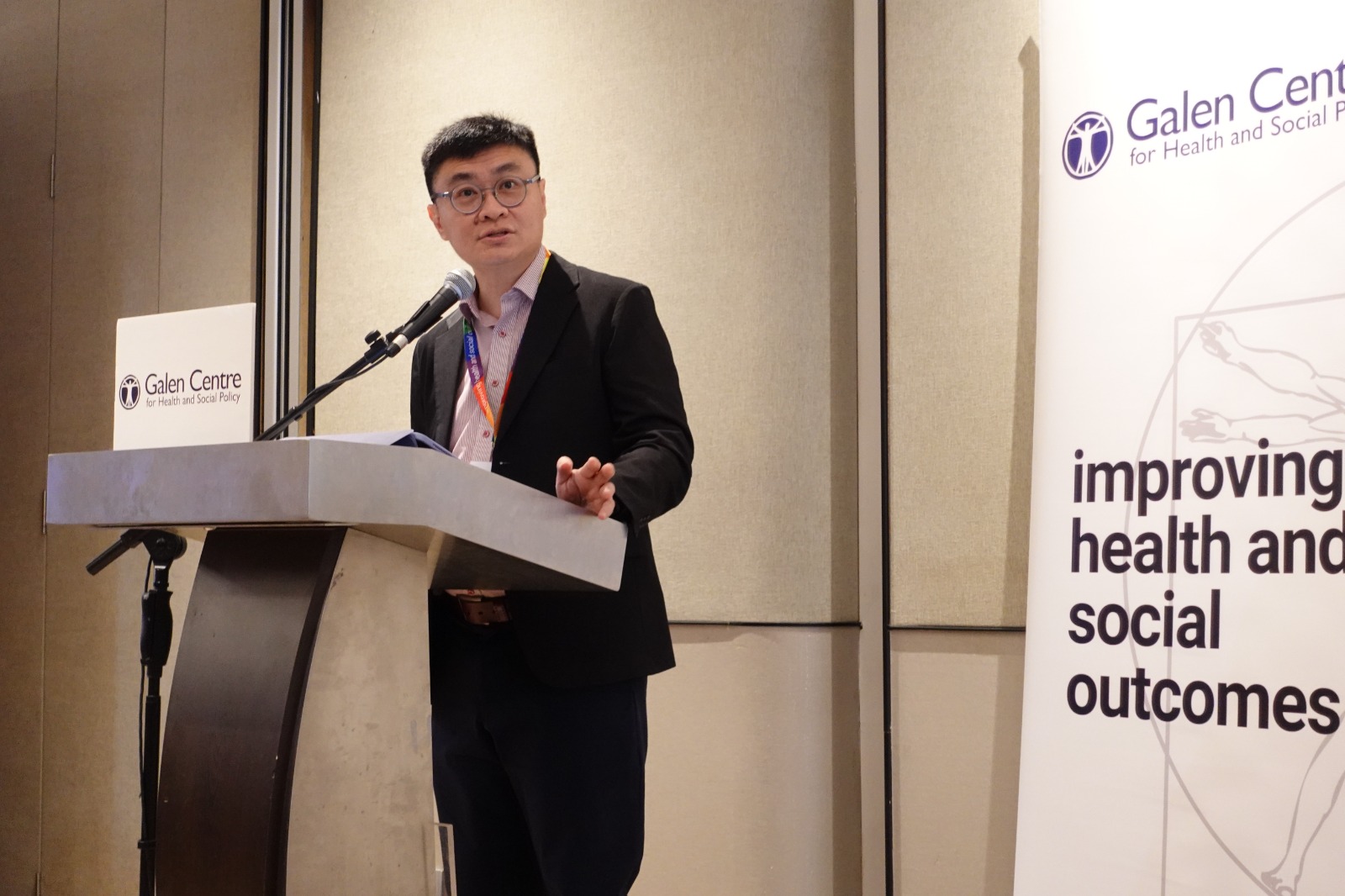
“Unfortunately, we are infamous for NPC,” said Dr Voon Pei Jye, consultant medical oncologist at Sarawak General Hospital, at the symposium organised by the Galen Centre for Health and Social Policy and supported by BeOne Medicines on May 9.
“It’s almost like a ‘Sarawak cancer’, although the number one cancer here is breast cancer.”
NPC Linked To Virus, Genetics, And Diet

Former Sarawak state health director Prof Dr Andrew Kiyu, now a professor of public health at Universiti Malaysia Sarawak (Unimas), said NPC is strongly linked to the Epstein-Barr virus (EBV), a common virus that infects most people worldwide.
EBV may cause infectious mononucleosis, or glandular fever, in some people, but most infected individuals do not develop serious illness, let alone NPC.
“So the virus alone could not explain that pattern,” Dr Kiyu said.
He said research over the 1980s and 1990s showed that genetic susceptibility also plays a role, helping explain why only some people develop NPC despite widespread EBV infection.
Studies found that certain inherited immune system genes were linked to higher NPC risk, with family clusters suggesting that susceptibility can run in families.
“It was whether our immune system, shaped by our genetic inheritance, was equipped to control it,” Dr Kiyu said. “So the virus is still important, but more importantly how the body reacts to that virus and how it develops cancer is determined by our genes.”
This interaction between EBV and inherited susceptibility helps explain why NPC occurs disproportionately in certain populations, including southern Chinese communities, some Southeast Asian indigenous groups, Inuit and other Arctic populations, and certain North African populations.
In Sarawak, the burden is highest among the Bidayuh, although NPC also affects other ethnic groups.
Environmental exposures may further increase risk. These include smoking and certain preserved foods such as Chinese-style salted fish, particularly when consumed frequently from childhood.
Chinese-style salted fish has been found to contain nitrosamines, chemicals that may form during preservation and can increase cancer risk. The International Agency for Research on Cancer (IARC) classifies Chinese-style salted fish as carcinogenic to humans.
Dr Kiyu explained that nitrosamines may form during preservation, particularly when fish is salted or fermented under certain conditions, and are believed to act together with EBV and other risk factors in increasing NPC risk.
“But that’s not the whole story, so we can continue to eat salted fish, but not too much because it can cause high blood pressure as well,” Dr Kiyu said.
The broader point, he said, is that NPC cannot be explained by a single cause. While EBV infection is central to the disease, genetic susceptibility, diet, environmental exposures, and other factors likely interact to produce the unusually high rates seen in certain populations.
Decades Of Research, But Patients Still Present Late

Despite 50 years of scientific research and treatment advances, many NPC patients in Sarawak still present late, often at stage three or four, because early symptoms can be mistaken for common conditions, Dr Kiyu said.
“So most patients present late, at stage three or four, when the tumour is already very big,” he said. “It becomes what we call fungating, because it looks like a fungus, with bleeding and so on.”
He said NPC may first appear as symptoms that seem minor, such as a blocked nostril, nosebleeds, or poor hearing in one ear. “By the time the lump appears and is noticed, it’s already quite big,” Dr Kiyu said.
Late presentation worsens outcomes, as early-stage NPC is often treatable with modern radiotherapy, while advanced disease usually requires more intensive chemotherapy and radiotherapy, with greater side effects and poorer outcomes.
Although newer treatments, including immunotherapy, are emerging for advanced NPC, early diagnosis remains the best way to reduce reliance on expensive late-stage therapies.
For Sarawak, where access to specialist cancer care is already constrained by geography and infrastructure, late diagnosis places additional pressure on patients, families, hospitals, and public financing.
Targeted Screening, Not Universal Screening
Dr Kiyu said EBV DNA testing has improved detection of NPC before symptoms appear, but remains costly, with estimates cited at the symposium exceeding RM1,000 per test. Older serology tests are cheaper, generally below RM100 to a few hundred ringgit depending on the setting, but have lower positive predictive value.
This makes targeted screening more practical than population-wide screening, with researchers and clinicians suggesting that Sarawak focus first on groups with the highest known risk, particularly Bidayuh men above 40 years old.
Such a programme could be piloted with state government funding, potentially in collaboration with the Ministry of Health (MOH), Unimas, local health authorities, and community organisations.
A public health specialist who intervened during the panel discussion said serology-based NPC screening has been studied extensively, but is still not generally recommended for community screening because of its low positive predictive value.
This means many people who test positive may not actually have NPC, leading to unnecessary ENT referrals and placing additional burden on the health care system.
EBV DNA testing is more specific, the specialist said, but remains costly, making cost-effectiveness critical.
A planned UNIMAS-linked study is exploring whether screening could be narrowed to Bidayuh men aged 40 and above, after a separate analysis found general population screening was not cost-effective, while targeted screening among the Bidayuh population showed some cost-effectiveness.
Sarawak Needs Its Own NPC Response

Society for Cancer Advocacy and Awareness Kuching (SCAN) president Chris Cheng said community engagement must account for how people respond to cancer, not just whether screening is available.
He cited a SCAN outreach programme in Serian where organisers initially promoted “free cancer screening”, only to be told by Sarawak health officials that the wording itself could frighten people away.
“We made one mistake. We said free cancer screening,” Cheng said. “One of the JKNS people that were working said people fear cancer screening. If I get cancer, then how? It’s better that I don’t screen, better I become an ostrich with my head in the sand.”
Cheng said survivor stories are also important in showing communities that cancer can be treated, but NPC survivor voices remain limited.
“Sharing is one of the things that SCAN does, it’s very important,” he said. “But even today inside this room, I think there’s only one NPC survivor, a 13-year survivor. So that’s my point, actually there’s not enough voices from the NPC survivors themselves.”
He added that health literacy remains a major barrier in both rural and urban communities, where people may rely on social media or artificial intelligence tools instead of doctors.
For Sarawak, this means an NPC response cannot rely on generic cancer awareness campaigns alone, Cheng said. Screening messages must be locally tailored, delivered in ways people trust, and backed by services that can follow up quickly when someone tests positive.
A targeted programme for Bidayuh men aged 40 and above could test whether EBV DNA screening can work in Sarawak’s real conditions, where cost, fear of cancer, distance, low health literacy, and limited survivor voices may still keep people from coming forward.
For Sarawak, the test is whether an NPC response can be built around the communities that have carried the burden for decades.


