

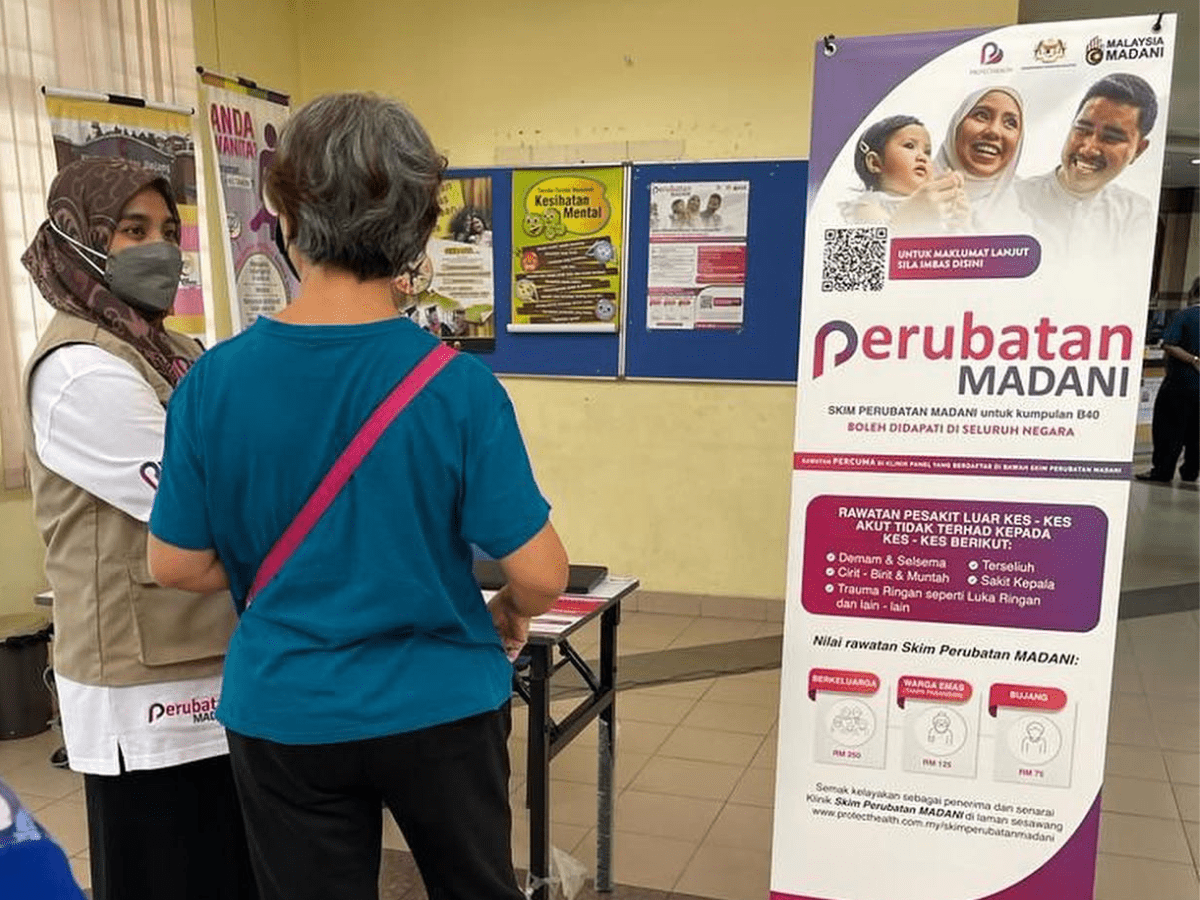
KUALA LUMPUR, Oct 9 — The government has eliminated the Madani Medical Scheme (SPM) under Budget 2027, as no allocation was listed in the Ministry of Health’s (MOH) 2027 Estimated Federal Expenditure.
The popular programme, which subsidises treatment for acute minor illnesses at private general practitioner (GP) clinics for lower-income Malaysians, previously saw its funding halved to RM50 million in Budget 2026 from RM100 million the previous year.
SPM’s funding cut last year and abolition in 2027 occurred even though Health Minister Dzulkefly Ahmad previously described the programme, which is run by ProtectHealth Corporation, as a “very popular” programme with nearly depleted funding in 2024.
SPM, which was piloted in June 2023 by Dzulkefly’s predecessor, Dr Zaliha Mustafa, covers outpatient treatment for acute cases at GP clinics like fever, diarrhoea, vomiting, slips, headaches, and mild trauma. The programme excludes routine non-communicable disease (NCD) follow-up treatment.
Other programmes under the MOH saw no increase in funding under Budget 2027.
ProtectHealth’s Peka B40 health screening programme, which also provides medical equipment assistance and cancer treatment incentives, retained RM80 million, while the Malaysia Healthcare Travel Council (MHTC) received RM20 million and the National Centre for Excellence in Mental Health (NCEMH) RM21.6 million.
Prime Minister Anwar Ibrahim, who is also finance minister, however announced during the tabling of Budget 2027 in the Dewan Rakyat today an increase in the allocation for outsourcing public hospital patients to RM200 million.
ProtectHealth said in a statement today that the RM200 million allocation supported its Hospital Services Outsourcing Programme (HSOP), which outsources public patients to participating private hospitals for certain treatments and services, would cut waiting times in public hospitals.
Funding for medical treatment for federal government pensioners remained at RM679.1 million under Budget 2027, while hospital support services received RM148 million, the same as in the 2026 budget. Allocations for MOH contract staff under special programmes stayed at RM2.43 billion.
Development expenditure was virtually unchanged at RM6.75 billion, just RM5 million above the original 2026 allocation. Operating expenditure accounted for almost all the increase in MOH’s overall budget of RM47.7 billion, rising by about RM1.18 billion to RM40.95 billion.
A large share of the additional operating expenditure went towards running new health facilities.
Funding for this purpose jumped from RM50 million in 2026 to RM753.6 million in 2027, including RM703.6 million for emoluments. The allocation for medical supplies also increased sharply by RM350 million to RM4.75 billion.
Despite the additional funding for facilities and supplies, Anwar didn’t announce any broad health workforce retention package when tabling Budget 2027 in Parliament.
The measures announced included raising the Air Health Service Incentive Payment allowance from RM30 to RM100 following last month’s fatal Flying Doctor Service helicopter (FDS) crash, and doubling the post-basic incentive payment for paramedics and nurses from RM100 to RM200 a month.
No comparable new remuneration measure for doctors was announced, although Anwar also declared an end to the contract doctor system next year.
MOH’s emoluments allocation increased by RM449 million, or 1.8 per cent, to RM25.29 billion from RM24.84 billion, but the budget documents did not specify how much of the increase would go towards improving existing health workers’ remuneration.
Development funding was mixed. Allocations for equipment and vehicles increased from RM717.5 million in the revised 2026 estimates to RM968.7 million, while funding for upgrading and repairs rose from RM367 million to RM429.5 million.
In contrast, allocations for hospital facilities fell from RM878.1 million to RM823.7 million, while funding for new hospitals declined from RM624.1 million to RM462 million.

