

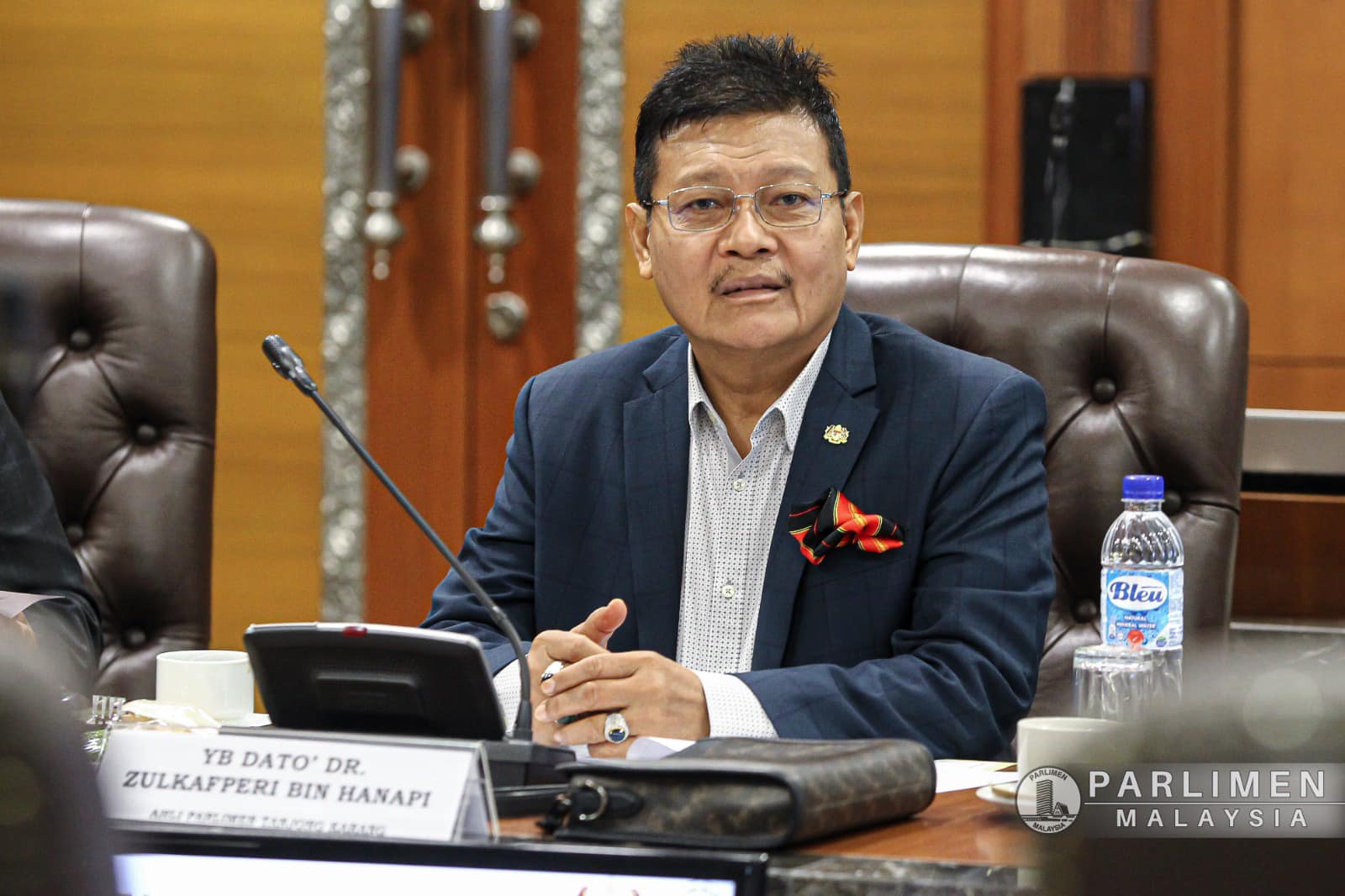
KUALA LUMPUR, August 19 — Tanjong Karang MP Dr Zulkafperi Hanapi has called for MediAsas to be dropped due to its exclusions of pre-existing conditions and insufficient protection for the unhealthy and elderly.
The ex-Bersatu lawmaker, who supports Prime Minister Anwar Ibrahim, noted that the proposed base medical and health insurance/takaful (MHIT) product designed by Bank Negara Malaysia (BNM), the Ministry of Finance (MOF), and the Ministry of Health (MOH) was initially aimed at helping uninsured individuals and those who can’t afford soaring health insurance premiums due to medical inflation.
“But today, many activists and the general public are complaining that the government isn’t walking the talk (‘cakap tak serupa bikin’),” Dr Zulkafperi said in a video posted on TikTok last Sunday.
“MediAsas is clearly very disappointing. It’s totally not the game-changer that was initially touted at the early stage.”
He highlighted MediAsas’ 35 major exclusions – including pre-existing conditions, mental disorders, and congenital conditions – that were listed in BNM’s July 29 FAQ on a “pilot” version of the government-designed medical plan.
“So what’s the difference between MediAsas and the many existing medical insurance products already available on the market?”
The Tanjong Karang MP said MediAsas would end up only covering young and healthy people, just like conventional medical plans.
However, he pointed out that even young adults wouldn’t be attracted to the “extremely uncompetitive” MediAsas because of its low RM100,000 annual limit, compared to other health insurance products on the market with RM1 million, RM2 million, or even RM5 million annual limits of coverage.
“For young people, there’s no wow factor with [MediAsas],” said Dr Zulkafperi.
BNM deputy governor Aznan Abdul Aziz recently insisted that RM100,000 would cover 99 per cent of treatment episodes across a range of common medical conditions in a year, based on 2024 insurance industry data, claiming that million-ringgit annual limits would drive up premiums.
But in the same breath, Aznan attributed the cost growth of medical insurance primarily to rising utilisation. This means that either more people are claiming from insurance or individuals are making more frequent claims, which has nothing to do with million-ringgit annual limits if most claims paid out by ITOs only amount to less than RM60,000 a year.
“The reality is that those who can’t afford medical insurance are abandoned just like that and the sick don’t get help, whereas the healthy aren’t attracted. So how does it [MediAsas] help the ordinary citizen?” questioned Dr Zulkafperi.
“In conclusion, MediAsas does not at all move towards providing universal health coverage.”
Although the government claims that MediAsas will be more affordable and sustainable over time than standard health insurance, due to cost-control mechanisms like a diagnosis-related groups (DRG) payment system, BNM’s FAQ stated that MediAsas premiums/contributions will increase with age and aren’t guaranteed.
The central bank granted insurance and takaful operators (ITOs) the right to revise MediAsas premiums/contributions – or undertake repricing in line with medical costs, the claims experience, and regulatory requirements – simply by giving policyholders a 30-day notice prior to their policy/certificate anniversary date, like typical private health insurance.
“I think they should scrap MediAsas as it doesn’t support universal health coverage (UHC) and totally deviates from their original intention to cushion high medical inflation,” Dr Zulkafperi told CodeBlue, when asked if the project should be cancelled in the event that Putrajaya cannot get a concession from the industry to cover pre-existing conditions.
Health financing expert Prof Emeritus Dr Syed Mohamed Aljunid Syed Junid has also called for the cancellation of MediAsas, saying its exclusions could leave millions of Malaysians with chronic disease disqualified from coverage.
The health economics professor asked how MediAsas would enforce its seven-year moratorium before a “no look-back” provision kicks in to protect policyholders from disputes over their medical history.
Bukit Gasing state assemblyman Rajiv Rishyakaran from the DAP previously told CodeBlue that he didn’t find MediAsas to be a “game-changer”, describing the government-designed product as “standard health insurance”.
Although a finance news site claimed that BNM has already piloted MediAsas in the Klang Valley, ahead of a planned January 2027 nationwide rollout, a few insurance agents told CodeBlue that MediAsas still isn’t available for the public.
The official websites of six ITOs participating in MediAsas – AIA Bhd, Allianz Life Insurance Malaysia Bhd, Great Eastern Life Assurance (Malaysia) Bhd, Etiqa Family Takaful Bhd, Prudential BSN Takaful Bhd, and Syarikat Takaful Malaysia Keluarga Bhd – do not currently feature MediAsas in their medical insurance product offerings.
A Great Eastern webpage on MediAsas, described as a “private health care initiative” introduced under a “national health care initiative”, merely provides a Contact Us form, without any other documents like a product brochure or product disclosure sheet. MediAsas isn’t featured on Great Eastern’s main health insurance page.
MP Moots Mandatory National Health Insurance Instead
Dr Zulkafperi, who has been promoting national health insurance since he was elected to Parliament, suggested that the government introduce a mandatory NHI scheme (NHIS) instead to reform Malaysia’s health financing.
A mandatory NHIS must be financed from contributions from all Malaysian citizens, as well as foreigners and expatriates living in Malaysia.
Employers and employees should share NHI premiums, like Social Security Organisation (Socso) contributions, with Dr Zulkafperi saying that the percentage of NHIS contributions can be decided later on.
Premiums for the bottom 40 per cent (B40) of the population should receive 100 per cent subsidies or be completely paid for by the government. As for premiums for children and retirees, the Tanjong Karang MP suggested family packages.
“All rakyat will be covered by NHIS. All rakyat can get medical services from government and private hospitals, as well as government clinics and private clinics or general practitioners (GPs). Universal health coverage is easily achievable,” Dr Zulkafperi told CodeBlue.
“For the rakyat, they can get efficient and fast services, no more waiting for seven to 10 hours just to see a doctor; up-to-date facilities; fast blood test results; and a good clinic environment with doctors, nurses, and paramedics; as well as available parking.”
NHIS will enable the ministry to focus its budget on primary care and reduce congestion in public health care facilities.
“MOH will be able to increase their development expenditure (DE) to 50 or 60 per cent for upgrading all their facilities. Currently, MOH allocates only 20 to 30 per cent for DE, while 60 to 70 per cent is used up by operational expenditure (OE),” said Dr Zulkafperi.
He cited Indonesia as a good example of NHIS that covered about 95 per cent of its population within 10 years. “The World Health Organization (WHO) has recognised them as having already achieved UHC.”
The independent MP explained that NHIS can top up MOH’s annual RM45 billion allocation from the government by another estimated RM30 billion. “Meaning, MOH should have more than RM70 billion, which is more than enough to maintain MOH.”
An NHIS can also help fund salary increments or financial remuneration like retention bonuses for health care workers in public service, amid the rising attrition of doctors and nurses from the MOH. “With RM70 billion, lots of things can be done.”


