

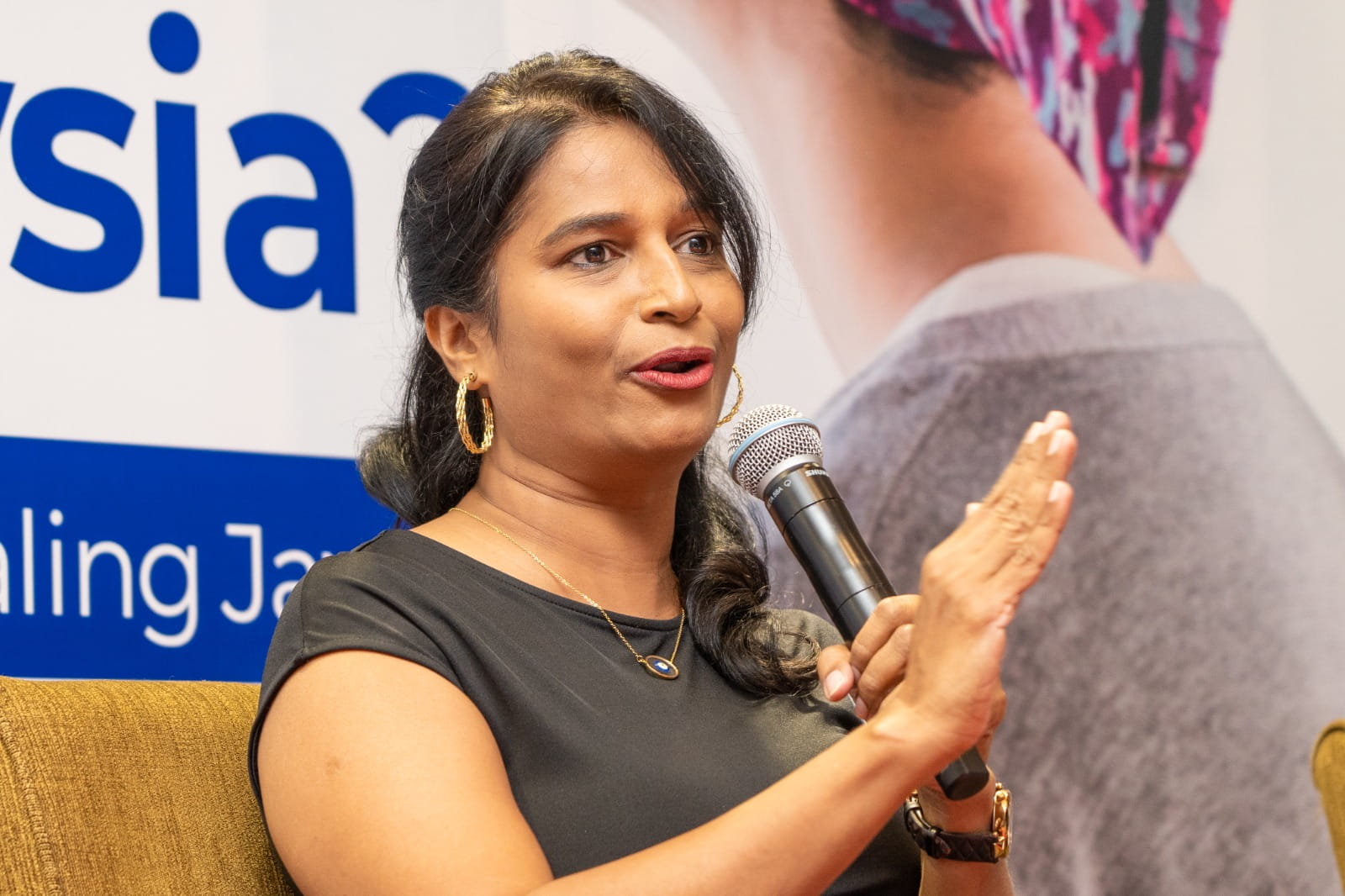
KUALA LUMPUR, August 28 — Prof Dr Nirmala Bhoo-Pathy, a professor of clinical epidemiology at Universiti Malaya, has been appointed a member of the World Health Organization (WHO) Science Council.
Dr Nirmala, who is also a public health physician at Universiti Malaya Medical Centre, is the only Malaysian among the WHO Science Council’s new membership of 21 leading scientists and experts from across disciplines, regions, and generations.
These include specialists in public health, epidemiology, biomedical research, health systems, ageing, engineering, precision medicine, and emerging technologies.
“The pace of scientific discovery is accelerating at an extraordinary rate, from artificial intelligence and biotechnology to advances such as gene editing, synthetic biology and robotics, to new approaches for disease prevention, diagnosis and care,” said WHO director-general Tedros Adhanom Ghebreyesus in a statement yesterday.
“WHO is strengthening its ability to look ahead, identify transformative developments, and ensure that the benefits of scientific progress are translated into better health for people everywhere.”
The WHO Science Council will continue to serve as WHO’s principal external advisory body on high-priority scientific issues, emerging technologies, and breakthrough innovations with the potential to transform health outcomes worldwide.
The global health body highlighted Dr Nirmala’s work as a cancer systems scientist to understand and reshape the systems that determine who benefits from progress in cancer care.
The WHO noted that as a regional scientific lead of the Asean Costs in Oncology (Action) study, Dr Nirmala studied the financial, quality-of-life, and survival consequences of cancer in close to 10,000 patients across eight Asean countries.
“Her research brings together epidemiology, policy, and implementation to advance patient-centred cancer care, spanning financial protection, access, survivorship, and workforce,” said the WHO.
When asked what she hoped to achieve in the WHO Science Council, Dr Nirmala highlighted the health workforce as the “human infrastructure for scientific progress” as an area she hoped to contribute to.
“As science and technology advance, the workforce must keep pace, and health systems need to invest in people while anticipating the roles, capabilities, and models of care that will be required,” Dr Nirmala told CodeBlue.
“This is especially important as populations age, multimorbidity becomes more common, and care needs to become more integrated and people-centred.
“Scientific progress should not be viewed only in terms of what becomes technically possible, but also whether health systems have the human capacity to translate those advances into meaningful benefits for patients and populations.”
She noted that the world spends considerable effort anticipating the future of science. “Are we equally anticipating the people, skills, and ways of working needed to make that science meaningful for patients and populations?”
Previously, Prof Dr Adeeba Kamarulzaman, a professor of infectious diseases who was also with Universiti Malaya then, was appointed to the WHO Science Council in 2021.


