

On my way to an evening on-call as a psychiatry registrar, I stood at a train station feeling a familiar sense of dread.
I have been doing psychiatry on-calls for almost seven years across two countries and two continents. I still get scared before every single one.
In an attempt to distract myself, I began scrolling through Facebook and came across a video of a Malaysian family celebrating their daughter’s acceptance into medical school.
I watched it once, then again, with a smile on my face.
There was something infectious about their happiness; her family’s pride was palpable. She was standing at the very beginning of a journey that had started for me back in 2011.
Later, without consciously intending to, I found myself wondering what that journey would look like for her.
Mine was not easy. It saw my father’s illness and eventual passing. It saw my career path shift from a dental degree at a Malaysian public university to a medical degree. I was first a dental student, then a medical student, and eventually a doctor.
Along the way, I encountered countless people. There were times when kindness felt few and far between.
Life as a junior Indian female dental student was hard, at least at the public university where I found myself, where I encountered a culture of ragging among juniors and seniors.
It was supposedly meant to break the ice between them, though I never found the approach remotely congenial. Certain unpleasant encounters remain vivid even now. I do not know if things have since changed.
Yet the people who were kind sustained me. They were the ones who chose not to make someone feel small simply because they had the power to do so. The people who offered grace without knowing how desperately it was needed.
Sometimes those moments arrived when I was most vulnerable.
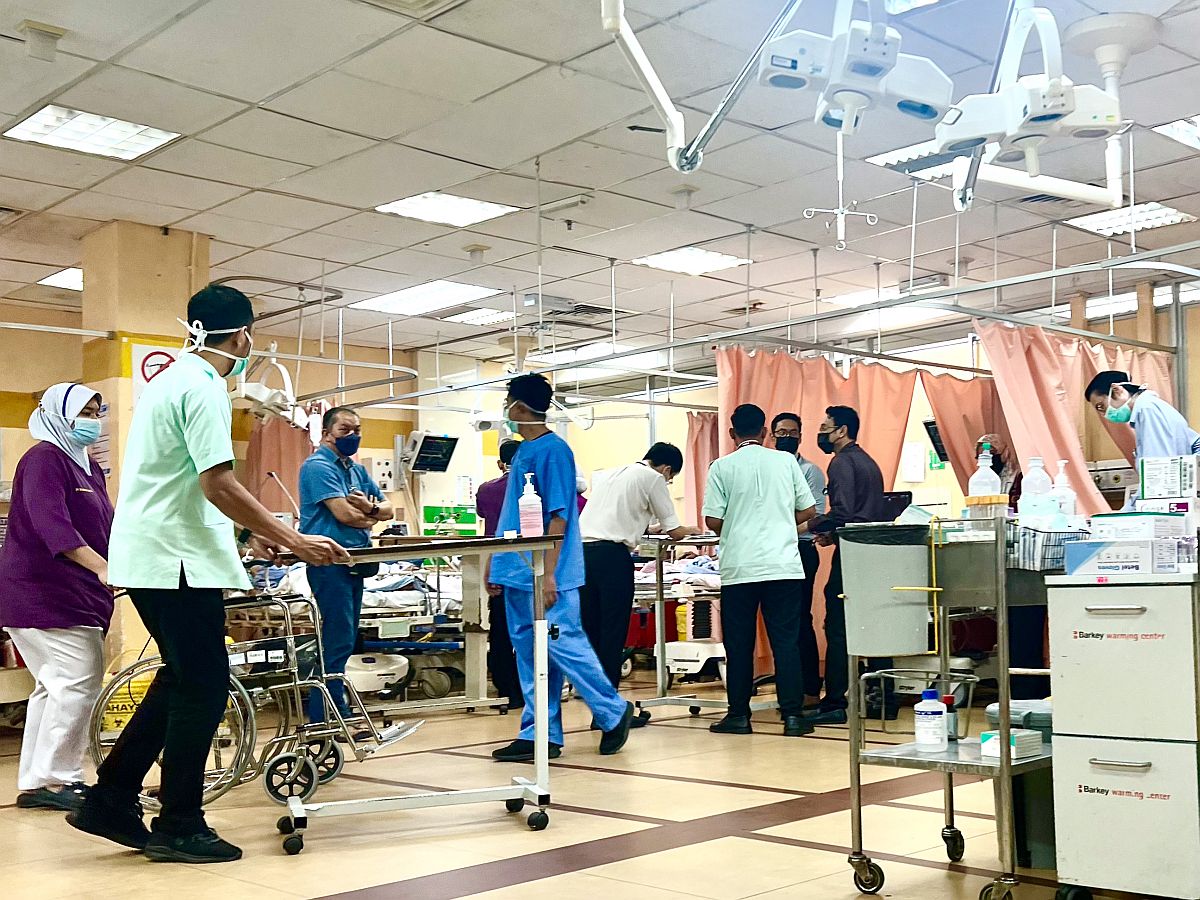
I remember my very first on-call as a medical officer. In Malaysia, doctors work 24-hour on-calls and then continue into the following working day. I was new and acutely aware of how much I had yet to learn.
A patient presented to the emergency department in the early hours of the morning with what I believed were extrapyramidal side effects.
Before calling me, the emergency doctor had administered intramuscular haloperidol, believing the patient was psychotic.
She was considerably more senior than I was. In fact, she remembered me as the hapless house officer who had rotated through various departments over the previous two years.
When I suggested the patient was experiencing extrapyramidal symptoms, she disagreed firmly. The patient was psychotic, she insisted, and her management was correct.
I was terrified. I was frightened that I had failed the patient, that something serious might happen to him, or that I had missed an obvious diagnosis and the senior doctor was right. And I worried that if things went wrong, I would bear the blame.
So I called the psychiatry specialist on call. He confirmed that I was right.
But he did far more than validate my clinical judgment. He calmed me down. He talked me through the next steps and advised me to ask the emergency department to reassess and observe the patient rather than simply discharging him after treating the side effects.
His support did not end when he put down the phone. The next day, he stood up for me. He raised the incident with our head of department and ensured the matter was formally addressed with the emergency team.
More than six years later, I still remember that.
Perhaps that is why, as I watched that family celebrate, I found myself hoping something very specific for the young woman at the centre of it.
I hope she remains kind throughout her journey. When she is a fifth-year medical student, I hope she remembers what it felt like to be new.
When knowledge compounds with experience as a practising doctor, I hope expertise and seniority never become excuses for unkindness.
When she eventually acquires authority within the medical hierarchy, whether as a medical officer, registrar, specialist, or consultant, I hope she remains someone others feel safe approaching.
I hope she becomes the medical officer a house officer can ask a question without hesitation. The registrar who does not humiliate. The consultant whose name on the rota brings relief rather than dread.
And before she becomes any of those people, while she is still finding her footing along this arduous road, I hope others with authority will afford her that same grace.
When she does not know, I hope someone teaches her without making her feel small or ridiculed. When she makes a mistake, I hope she is corrected gently instead of with derisive anger.
When she is struggling, I hope someone notices. And when she is frightened on call, I hope there is someone she is not afraid to call.
Medicine has a subtle way of shifting our place in the hierarchy almost without us noticing. We start knowing very little. Knowledge accumulates, experience follows, sometimes painfully, and the people who once felt impossibly senior slowly become our peers.
Then, one day, someone calls us. We have become the senior.
With that transition comes power: the power to teach or humiliate, to reassure or ridicule, to make asking for help easier or to ensure a junior never asks again.
I hope that when her turn comes, she remembers what it felt like to stand on the other side of that dynamic.
I hope the same for everyone starting their medical training this September.
I have experienced both casual unkindness and spontaneous kindness in this field. I know how much unkindness can take away from someone and how much kindness can give.
I also know that understanding the value of kindness has not made me unfailingly kind. There have been shifts when tiredness and frustration have made me short with juniors. Remembering what it felt like to stand where they stand is something I, too, need to keep practising.
Perhaps that is why, standing at a train station thousands of miles from where my journey began, waiting for another on-call and watching a young woman celebrate the start of hers with her family, I held a quiet wish for a stranger I will likely never meet.
I hope medicine is kind to her. And when it is her turn to hold power, I hope she passes that kindness forward.
The author is a psychiatrist.
- This is the personal opinion of the writer or publication and does not necessarily represent the views of CodeBlue.


