

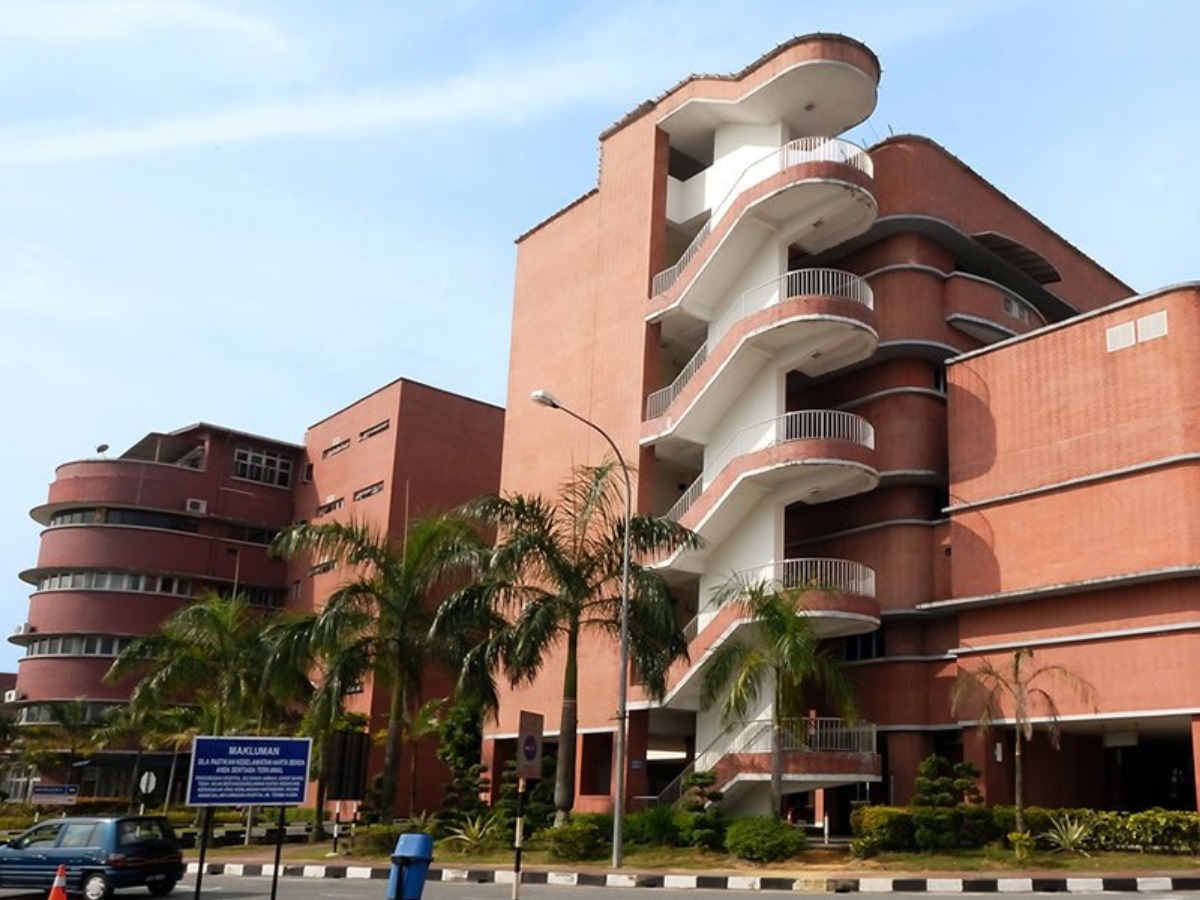
We, the staff of Hospital Sultanah Aminah Johor Bahru (HSAJB), wish to formally express our concerns regarding longstanding administrative failures at hospital, state, and national levels that have adversely affected health care workers and patient care.
HSAJB is experiencing serious staff shortages. In addition, there are no beds available to treat patients. Staff at every level are carrying out excessive on-call duties or double shifts to cope with the ever-increasing workload.
To date, HSAJB, the Johor state health department (JKN), and the Ministry of Health’s (MOH) Medical Development Division have not imposed any limit on on-call duties or double shifts to ensure that workloads are commensurate with the safe delivery of services.
This is a shortcoming on the part of management, resulting in staff being left to work without limits. If this happened only occasionally during emergencies, we could cope. However, after Covid-19, this has become our daily routine.
HSAJB is the sole public hospital with a cathlab covering a four million population size. All heart attacks, from Tangkak to Johor Bahru, are referred to us.
Without beds, we cannot take over patients for timely treatment. Patient are dying where they are. How can we specialists live with this on our conscience?
Several clinical departments do not have sufficient staffing positions.
Unfortunately, staffing positions have not been updated in the 30 years since the establishment of these departments. Official correspondence requesting additional staffing positions has been submitted several times through the proper channels.
What is the Public Service Department (JPA) policy stating “No new staffing positions for old facilities”? Please provide the circular that states such a policy. A policy like this leaves no room for older facilities to expand or improve their services.
Staffing positions have not been updated for 30 years. This matter has been raised at all meetings, including facility-level meetings and state-level meetings.
HSAJB’s clinical workload has become excessive.
In some departments, as staffing positions haven’t increased, each officer is carrying the workload of three other positions that have never been updated. How long must staff continue bearing the workload of three people?
It should be noted that the emergency department and all wards at HSAJB have no available beds. Every day, patients have to be diverted to other facilities in Johor Bahru, which are also experiencing shortages of beds and staff.
This has been happening since October 2025. Every day, patients are diverted from HSAJB’s emergency department.
We would like to remind the top management of MOH and JPA that Johor has the lowest staffing occupancy in the Ministry of Health Malaysia.
This does not even take into account staffing positions that have not been updated according to current workloads. Therefore, the MOH’s top management and JPA should conduct a new assessment and understand the seriousness of this workforce shortage.
Just because all staff are working excessive on-call duties and extra shifts does not mean they are not suffering from burnout. This will increase treatment errors and compromise the proper delivery of services to patients.
Will HSAJB hospital management, JKN Johor, MOH, and JPA take direct responsibility for all errors and shortcomings caused by exhausted staff working under severe human resource shortages?
Applications for essential clinical assets have been officially submitted through the MPIS website since 2022 by certain departments. These applications were accompanied by justification letters based on departmental statistics, supporting justifications, and explanations of the negative impact if the assets were not approved.
However, the hospital director and Johor state health director didn’t provide feedback when these applications were rejected.
Ultimately, the absence of such assets results in deaths, delays in treatment, patients having to stay longer in hospital wards, and consequently, the continued shortage of beds to treat subsequent patients.
Failure to approve these assets is one of the main reasons treatment is now delayed and hospital beds are constantly full.
We hope such directors will be retrained regarding the limits of their authority and held fully accountable whenever there are deficiencies or complaints from patients. Yet these same directors simply redirect complaints back to clinical specialists.
For assets that were written off in 2014, applications for replacement were submitted continuously from 2022 until 2026, but no new assets have been provided.
MOH’s top management is sidelining Johor by doing nothing to upgrade Sultanah Aminah Hospital.
Even the decanting project only came about because of the 2016 fire tragedy. It has taken 10 years to repair, but it’s still not completed.
Specialist clinics do not even have seating for specialists when seeing patients. Patients are examined in the corridors between consultation rooms.
Why do all other states have an Ambulatory Care Centre, while not a single hospital in Johor, particularly the state’s referral hospital (HSAJB), has one?
Recently, Sabah received approval for a state Heart Centre even though Queen Elizabeth II Hospital already has a heart centre. But there is no heart centre in Malaysia’s Southern Zone.
Why is Johor being neglected while only Sabah and Sarawak are highlighted? Do the people of Johor not pay taxes? Or are Johor residents expected to receive lower-quality treatment without adequate budgets, assets, or new facilities?
The Sarawak Heart Centre has three angiography machines and will also supply machines to Sibu Hospital and Miri Hospital, while Bintulu Hospital has plans for cardiac angiography machines, serving a population of 2,528,400 in Sarawak.
The Heart Centre at Queen Elizabeth II Hospital has two angiography machines, while Tawau Hospital will receive new machines, besides the new heart centre in Kota Kinabalu serving 3,852,700 people, including Labuan.
Meanwhile, Johor, with a population of 4,201,300, only has two angiography machines at HSAJB.
This is why the people of Johor feel sidelined. Despite Johor’s large population, no approval has been given for new angiography machines. All requested assets were rejected by the hospital director and the state health director at their own discretion without any justification. Moreover, MOH’s Medical Development Division simply remains passive and is not proactive in responding to the statistics before them.
For the past 10 months, all clinical staff have been working tirelessly to cope with an overwhelming number of patients.
In 2025, the MOH increased the number of hospital management staff. All hospitals were given additional Deputy Director positions, which were approved quickly and filled within a few months.
However, requests for additional clinical staffing positions have not been approved or provided. This falls under the responsibility of the MOH’s Medical Development Division.
From a clinical perspective, everyone is performing excessive on-call duties and double shifts, whereas non-clinical staff only work normal office hours.
We hope that MOH’s top management, together with JPA, can improve the situation and safeguard the welfare of all MOH staff, especially clinical personnel who are working around the clock.
The author is a specialist doctor working at HSAJB. CodeBlue is providing the author anonymity because civil servants are prohibited from writing to the press.
- This is the personal opinion of the writer or publication and does not necessarily represent the views of CodeBlue.


