

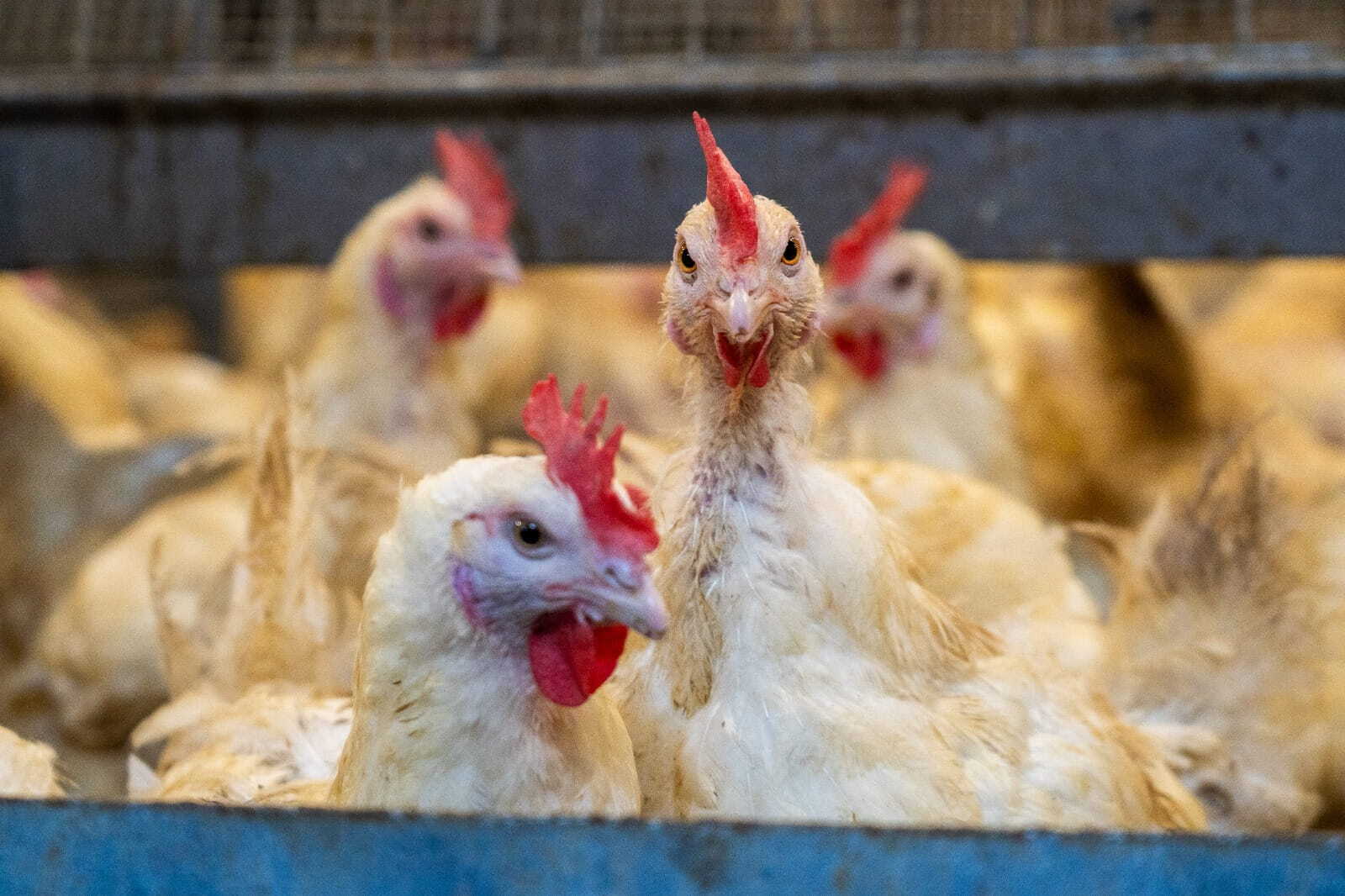
KUALA LUMPUR, July 8 — Salmonella Infantis, an emerging multidrug-resistant strain linked to food safety concerns worldwide, is now among the five most commonly isolated Salmonella serovars found in healthy poultry during Malaysia’s national surveillance programmes.
Department of Veterinary Services (DVS) veterinary regulatory division director Dr Tariq Jaafar said the department officially recognises S. Infantis as one of the top five serovars isolated from healthy poultry based on surveillance data collected between 2021 and 2025, excluding the four priority serovars Salmonella Enteritidis, S. Typhimurium, S. Pullorum, and S. Gallinarum.
“S. Infantis is a major public health and veterinary concern due to its ability to persistently colonise poultry without causing overt clinical symptoms, form biofilms that resist routine farm sanitation, and bypass existing control programmes focused strictly on S. Enteritidis or S. Typhimurium,” Dr Tariq said in a question-and-answer session at the Elanco Food Safety Symposium 2026 on May 20.
While some Salmonella serovars, such as S. Gallinarum and S. Pullorum, can cause disease and mortality in poultry, S. Infantis often colonises apparently healthy birds without obvious clinical signs, making it more difficult to detect and control.
Dr Tariq said the department’s concern was driven not only by the serovar’s increasing prevalence, but also by its association with multidrug resistance, which posed challenges for both animal health and food safety.
“Our strategy focuses on enhanced surveillance, strengthened biosecurity, prudent antimicrobial use, laboratory monitoring, and close collaboration with industry and public health partners under a One Health approach. Early detection and preventive control remain our most effective tools in mitigating the spread of this emerging serovar,” Dr Tariq said.
National surveillance currently prioritises S. Enteritidis, S. Typhimurium, S. Pullorum, and S. Gallinarum for early detection. However, Dr Tariq said DVS adopts a broader approach to all Salmonella detections.
“Although our national framework focuses primarily on early detection of the four priority serovars, a comprehensive approach is taken for all Salmonella spp. cases. Any positive detection triggers standard disease index procedures, allowing authorities and producers to work together on necessary containment and control measures to protect the poultry industry,” Dr Tariq said.
The symposium remarks follow growing concern among veterinary and food safety experts about emerging Salmonella serovars carrying antimicrobial resistance (AMR).
At the same event, researchers warned that repeated detection of non-classical serovars, such as Salmonella Brancaster, could signal wider food safety gaps and warrant closer surveillance, particularly if they are linked to AMR or human infections.
Dr Tariq similarly said DVS regarded non-classical serovars such as S. Brancaster as “potentially significant rather than incidental”, as their detection could point to weaknesses in farm biosecurity, hygiene, environmental management, or surveillance systems that require further investigation.
He noted, however, that rapid risk analysis currently indicated a “low” likelihood of S. Brancaster causing a major disease outbreak in Malaysia despite evidence that the serovar carried zoonotic risks and contributed to the spread of AMR.
Dr Tariq also highlighted the broader AMR challenge facing Malaysia’s poultry industry. According to DVS surveillance data for 2025, about 90 per cent of Salmonella bacteria isolated from broiler chickens and 93 per cent of those isolated from layer chickens were multidrug-resistant.
At the same time, he pointed to one encouraging outcome from antimicrobial stewardship efforts.
“Following the policy ban of colistin in livestock production, our latest data shows absolutely zero resistance to colistin. It proves that when the industry adapts and complies with stewardship policies, we can stop resistance trends in their tracks,” Dr Tariq said.
Colistin is an antibiotic used in both human and veterinary medicine, but in humans it is reserved as a last-resort treatment for certain serious drug-resistant bacterial infections. Its use in livestock is no longer permitted in Malaysia.
Dr Tariq said DVS was addressing AMR through the Malaysian Action Plan on Antimicrobial Resistance 2022-2026, which includes integrated One Health surveillance, antimicrobial use monitoring in food-producing animals, pharmacosurveillance in veterinary premises, improved farm biosecurity, and the promotion of alternatives such as vaccination to reduce antimicrobial use.
DVS explained that Salmonella Infantis wasn’t listed as a priority serovar alongside four others because the term “emerging concern” referred to developments reported in a few countries and scientific studies, and “did not necessarily reflect the same level of risk for all countries”.
Salmonella Infantis, according to DVS, received increasing attention in other countries because of rising detection in poultry production chains and its link to AMR. However, Salmonella Infantis isn’t a disease listed by the World Organisation for Animal Health (WOAH).
“DVS determines the priorities of its National Surveillance Programme based on a risk-based approach that takes into account local epidemiological evidence, the importance of diseases to animal and public health, international obligations, and the optimal use of resources,” DVS told CodeBlue in a written response today.
“Although Salmonella Infantis is not included as a target serovar, DVS continues to monitor all Salmonella serovars through its laboratory diagnostic activities. Based on current data, only 11 cases of Salmonella Infantis have been recorded over the past five years.
“As such, there is currently insufficient epidemiological justification to include it in the National Surveillance Programme. Nevertheless, DVS will continue to monitor detection trends and will review its surveillance strategy should risk assessments indicate any significant changes.”
According to DVS, 11 cases of Salmonella Infantis were reported in Malaysia in the past five years, comprising two cases in 2024 and nine last year. Hence, data shows that Salmonella Infantis is still at a low detection rate here.
Editor’s note: This article was updated with the last six paragraphs on DVS’ response to CodeBlue.


