

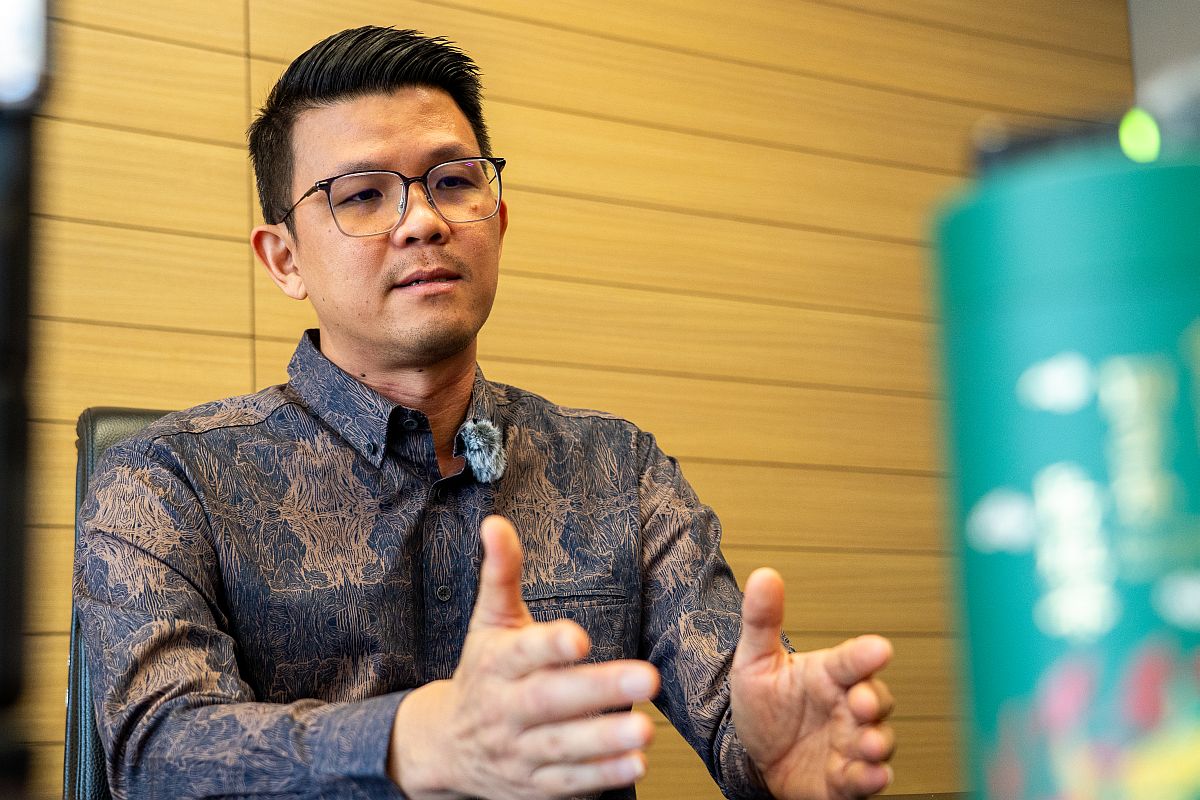
KUALA LUMPUR, Nov 14 — Gopeng MP Tan Kar Hing has urged the government to accelerate smart-farming adoption in Malaysia’s fruit and vegetable sectors, warning that climate risks and an ageing agricultural workforce threaten long-term food security.
The PRK lawmaker said climate change has made traditional farming methods less viable, particularly for fruits and vegetables. He pointed to recent agricultural census data showing a worrying demographic shift.
“We have only about 3 per cent of the total farmers in these industries below 30 years old,” Tan told CodeBlue in an interview at Parliament last Thursday (November 6). “And only about less than 20 per cent of them are having tertiary education.”
He said knowledge and technology gaps are becoming more critical as weather patterns grow more unpredictable.
“Knowing that climate change is getting serious and the application of smart farming is more crucial and critical, it also requires certain knowledge on this segment,” said Tan, who sits on the Parliament Special Select Committee on Domestic Trade, Entrepreneurship, Cost of Living, and Agriculture.
Land Use Policy Favours Plantations, Limits Food Production
Tan said structural land-use priorities continue to hinder expansion of domestic food production, as land availability remains skewed toward plantation commodities.
“For the agricultural sector we can only contribute about 7 per cent of the total GDP but almost 45 to 50 per cent from palm oil,” he said. “Meaning the land use of it is actually quite imbalanced. Seventy per cent of the agricultural land in Malaysia is meant for plantation.”
He said unless the government rebalances land allocation or incentives, Malaysia will struggle to expand vegetable and fruit output needed to reduce import dependence.
“If the land policy and the agricultural policy remain focused on plantation and commodity industrial monocrops, I don’t see we can further expand the industry of vegetables and fruits which is more critical,” he said.
Smart Farming Could Attract Young Talent
Tan said younger Malaysians are not interested in traditional, labour-intensive farming, especially given low wages and continued reliance on foreign labour.
“Looking at the current trend, if we are going to introduce the conventional way of farming, of course I don’t think they want to do that,” he said. “The workforce currently in the agricultural sectors are still very dependent on foreign workers because the wages are relatively low, 3D (dirty, dangerous, and difficult) industries.”
However, Tan said there are signs that smart-farming technologies could draw younger talent, including drone-operated fertilisation and monitoring systems currently used in durian and paddy fields.
“If the government can further introduce the smart farming mechanism over these industries, I think it could generate some attention for the youngsters,” he said. “Some of the farms get a third party to help with flying drones and those companies are younger generation.”
‘We Cannot Treat Agriculture As Business As Usual’
Tan said agriculture has been identified as a high-growth, high-value sector under the 13th Malaysia Plan (13MP), but the roadmap to support that shift has not kept pace.
“If we make it business as usual, I don’t think we can further pull the industries,” he said. Tan urged the government to align land-use reform, youth training, and smart-farming incentives into a coordinated national strategy.
“We should really encourage more young farmers to be involved in this segment,” Tan added. “Compared to livestock, vegetables and fruits are easier, access to the market is larger and its fast-growing crops.”


