

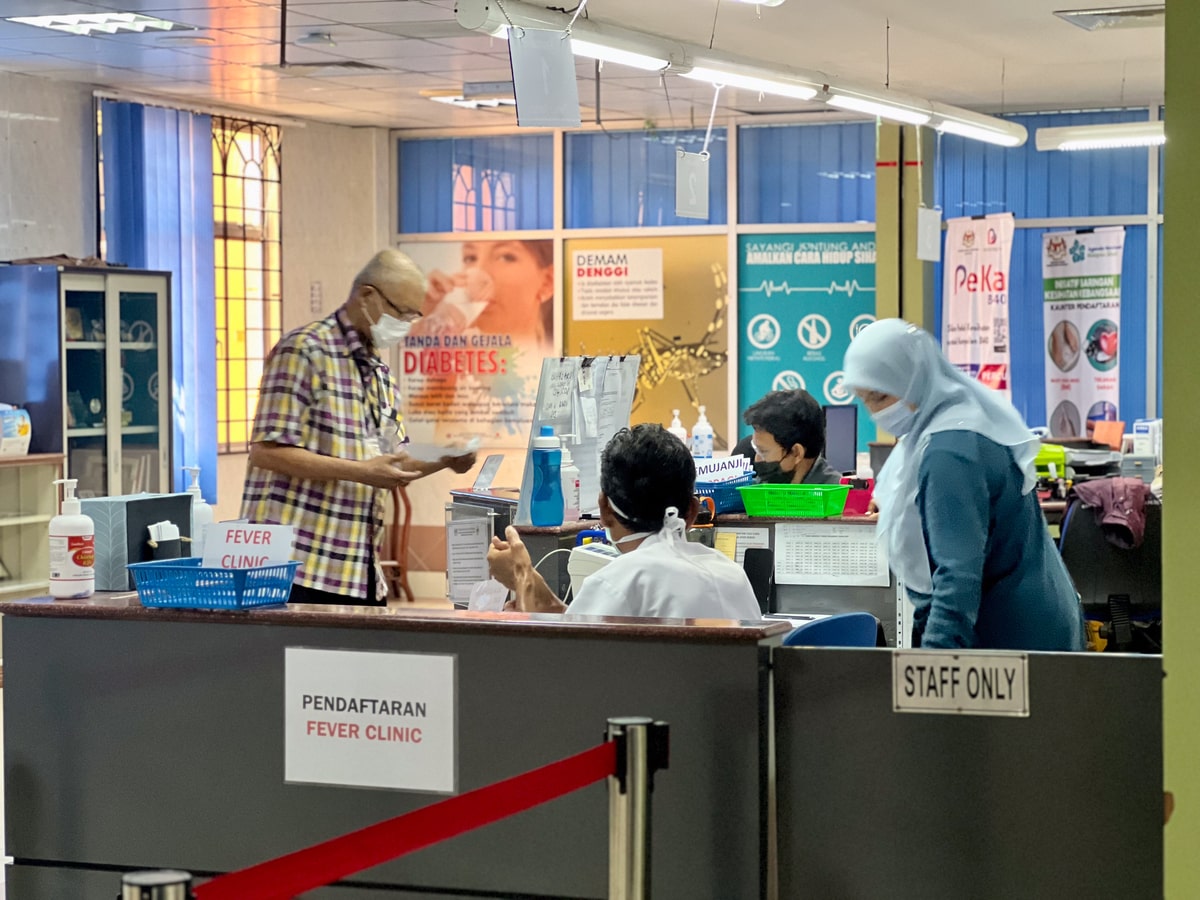
Recent discussions on the future role of Family Medicine Specialists (FMS) in Malaysia have left me with an important question: where exactly are we heading as a specialty?
This is not a criticism of the need for FMS to be clinically competent, clinically visible, or accountable to the people we serve. Those things are fundamental.
The concern is whether, in our attempt to strengthen the clinical role of FMS, we may slowly redefine Family Medicine itself.
What Were We Trained To Be?
Family Medicine in Malaysia has always been more than simply treating illness in a Klinik Kesihatan.
Our postgraduate training is grounded in the principles of 4C and 4P:
4C
• Community-oriented care
• Comprehensive care
• Coordination of care
• Continuing care
4P
• Primary-contact care
• Professional care
• Preventive care
• Patient-centred care
Our training does not focus solely on clinical excellence.
FMS trainees are also deliberately trained in leadership, administration, management, health promotion, population health and community engagement, because many will eventually be expected to provide clinical leadership and help govern primary health care services.
This breadth is not accidental. It reflects what Family Medicine actually is.
Primary care does not only care for people who are sick. We also care for people who are well. We care for children before disease develops, adolescents navigating important transitions, mothers and families, healthy adults, older persons, and communities.
We promote health, prevent disease, identify risks early, coordinate care, and provide continuity throughout different stages of life. When our patients become ill, we manage as much as reasonably possible within primary care before referring them onwards.
That is the strength of Family Medicine.
Clinical Excellence Is Not The Problem
There is merit in calls for FMS to become more clinically visible. Patients should know that specialists exist within primary care.
Medical officers should be able to discuss complex cases with FMS before automatically referring patients to hospitals. More conditions should be safely managed within primary care where the expertise, infrastructure and resources exist.
FMS should be competent in procedures relevant to primary care. Subspecialty expertise and areas of interest can strengthen the whole system when specialists function as mentors, trainers and subject-matter experts.
There is nothing wrong with raising the clinical bar.
The issue is not whether FMS should be clinically strong. We absolutely should. The concern is whether “strengthening the clinical role” eventually becomes “clinical work is the main role”, as other core functions of Family Medicine are slowly pushed aside.
Once that happens, we are no longer merely strengthening Family Medicine. We are changing what Family Medicine is.
Are We Moving Hospital Care Into The Community Or Strengthening Primary Care?
There is another uncomfortable question that deserves consideration.
Are we genuinely strengthening primary care? Or are we gradually transferring the burden of secondary care into Klinik Kesihatan because hospitals themselves are increasingly overwhelmed?
Managing more complex patients in primary care can certainly be appropriate. But simply moving more specialist-level sick care downstream is not automatically primary health care reform.
It can merely become: gali lubang, tutup lubang.
One manpower shortage is addressed by transferring responsibilities elsewhere, without adequately strengthening the receiving system.
If hospital specialists are overwhelmed because of workforce shortages, migration to the private sector or overseas, increasing disease burden and growing patient expectations, shifting increasing amounts of work to primary care may relieve pressure temporarily.
But the workload does not disappear. It simply changes address.
Family Medicine itself risks becoming a form of “hospital medicine outside the hospital.” That should concern us.
What Happens To The Healthy Population?
Malaysia already carries a substantial burden of chronic disease.
Our long-term aspiration should surely be to build a healthier population, not merely create a more efficient system for managing increasingly complicated disease.
If the attention of FMS is increasingly pulled towards complex sick-care clinics, procedures and hospital-substitution services, who protects the preventive and population-health functions of primary care?
Who looks after these below?
• Maternal and child health.
• Healthy adolescents.
• Healthy ageing.
• Vaccination.
• Screening.
• Lifestyle intervention.
• Health literacy.
• Family health.
• Community empowerment.
• Early risk identification.
• Disease prevention.
These activities may appear less dramatic than managing complicated clinical cases. Their impact is often invisible precisely because the disease never happens.
But that is the paradox of prevention. When prevention succeeds, there is no dramatic rescue to celebrate. There is simply a healthier person. A healthier family. And eventually, a healthier country.
There Is Also A Resource Question
If the expectation is genuinely for Klinik Kesihatan and FMS to manage increasingly complex care, then primary care must be strengthened accordingly – not only with more FMS.
Primary care requires adequate:
• Medical officers.
• Nurses.
• Pharmacists.
• Allied health professionals.
• Diagnostic facilities.
• Procedural facilities.
• Administrative support.
• Digital infrastructure.
• Physical space.
• Protected manpower for community and preventive programmes.
An FMS cannot simultaneously be the complex-care physician, clinical supervisor, administrator, service planner, outbreak responder, community leader, trainer, researcher and public-health advocate without sufficient supporting manpower.
FMS are specialists, not magicians. Increasing responsibility without increasing system capacity is not reform. It is workload redistribution.
What About Leadership And Administration?
There is also a contradiction that deserves discussion. Our training deliberately prepares FMS for clinical leadership, administration and management.
Yet absence from clinic for meetings, management responsibilities, or system-level work can sometimes be interpreted as evidence that an FMS is not performing his or her “core business”.
Of course, unnecessary meetings should be avoided. And administrative responsibilities should never become an excuse to abandon clinical practice.
But if every non-clinical responsibility is viewed as a distraction from our “real work”, then we need to ask why these competencies remain central to Family Medicine training. Running a good primary health care service is itself part of patient care.
Good systems save lives too. Someone has to design workflows, improve access, analyse service failures, coordinate multidisciplinary teams, develop community programmes, lead quality improvement, and ensure that tomorrow’s clinic works better than today’s.
That is also clinical leadership.
A Question Of Professional Identity
Perhaps the deeper issue is that Family Medicine continues to struggle with its identity within the larger health care system.
Hospital specialties are often defined by an organ, disease, procedure or patient group.
Family Medicine is different. Its expertise is built around breadth, context, continuity and integration. That makes the specialty incredibly valuable.
But it can also make its boundaries difficult for others to understand. And this raises another important question: Who should determine the future direction of Family Medicine?
Like every specialty, Family Medicine exists within a larger health system and must work closely with policymakers, administrators, public health physicians and other clinical disciplines.
But collaboration is not the same as allowing the identity of a specialty to be defined primarily from outside that specialty.
There is a risk that when major decisions about the role, priorities, and performance of FMS are shaped mainly through the lens of those who were not trained in Family Medicine, the specialty may gradually be moulded according to what the system currently needs from it, rather than according to what Family Medicine was designed to achieve.
That distinction matters.
A cardiologist would rightly expect cardiology to have a strong voice in determining the future of cardiology. A psychiatrist would expect the same for psychiatry. Family Medicine should be no different.
This does not mean FMS should operate in isolation or reject oversight. It means that Family Medicine itself must have sufficient professional autonomy and representation to shape its own development, while remaining accountable to the health system and the population it serves.
Otherwise, the role of FMS risks becoming reactive.
Today, the system needs help with hospital congestion, so Family Medicine absorbs more complex clinical care. Tomorrow, it may be procedures. Another day, mental health. Another day, chronic disease. Another day, administrative responsibilities. Each request may be reasonable individually.
But collectively, without a strong Family Medicine voice defining the boundaries and philosophy of the specialty, FMS can slowly become the answer to every unresolved gap in the health care system.
That is not necessarily strengthening Family Medicine. It may simply be using Family Medicine as the most flexible part of the system. Flexibility is one of our strengths. But flexibility without professional direction can eventually become role dilution.
Perhaps the next generation of FMS should therefore not only be trained to lead Klinik Kesihatan. They should also be empowered to lead the future development of their own specialty.
The direction of Family Medicine should not merely be handed down to FMS, who should also have a meaningful role in deciding where Family Medicine goes next.
So What Should We Do?
First, if Malaysia genuinely intends to redefine the role of the FMS towards a predominantly clinical specialist model, then we should be transparent about it.
Our curriculum, competencies, manpower model, job description and service structure should evolve accordingly.
The principles of a specialty function almost like its constitution. They should certainly evolve when necessary.
But we should understand the consequences before rewriting them simply because the health care system is under immediate pressure.
Second, if increasingly complex clinical responsibilities are transferred into primary care, then resources must follow those responsibilities. Strengthening FMS without strengthening the ecosystem around FMS will not work.
Primary care is a team sport.
Third, and most importantly, we should ask whether this direction represents genuine long-term primary health care reform or simply a short-term response to pressure elsewhere in the system.
The conversation should involve those who understand and practise the principles of Family Medicine, including FMS across different settings, educators, trainees, primary health care teams and, importantly, the communities we serve.
Policy direction should not merely travel vertically down a hierarchy. It should also grow from the realities of the ground. And perhaps more importantly, the profession itself must have sufficient space to articulate where it believes Family Medicine should go.
Consultation should not merely mean informing FMS of decisions already made. It should mean allowing FMS to meaningfully shape those decisions before the direction is set.
Perhaps The Real Question Is This
Nobody is arguing that an FMS should hide in an office while patients wait outside, clinical competence is optional, or against managing more conditions safely within primary care.
The question is much bigger: what kind of Family Medicine do we want Malaysia to have 20 years from now?
A network of community-based physicians primarily managing increasingly complicated disease? Or specialists in comprehensive primary care who remain clinicians, leaders, coordinators, educators, prevention advocates and guardians of population health?
Perhaps these roles do not have to compete. Perhaps a strong FMS should be all of them.
But if that is what we expect, then our policies, manpower, resources and performance indicators must recognise all of them too. The success of Family Medicine should not only be measured by how many sick patients we treat.
It should also be measured by how effectively we prevent people from becoming sick in the first place.
And before we fundamentally reshape one of the pillars of Malaysia’s primary health care system, perhaps we should ask one final question: are we strengthening Family Medicine, or are we slowly turning it into something else?
The author is a concerned specialist doctor. CodeBlue is providing the author anonymity because civil servants are prohibited from writing to the press.
- This is the personal opinion of the writer or publication and does not necessarily represent the views of CodeBlue.


