

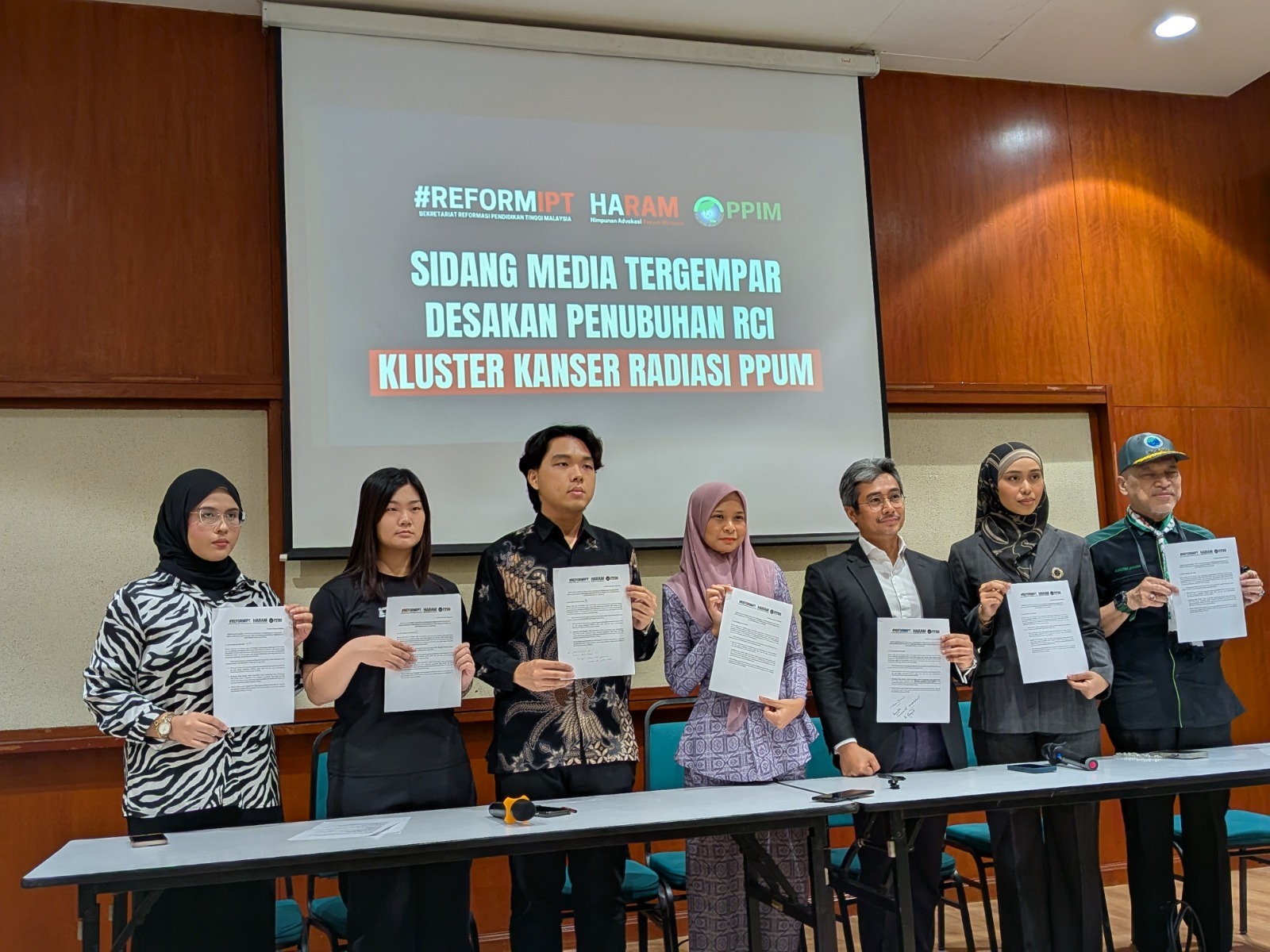
KUALA LUMPUR, Sept 21 — A former radiographer plans to sue Universiti Malaya Medical Centre (UMMC) over alleged radiation safety breaches, as her lawyers seek testimonies from other current or ex-staff who are also suffering cancer or thyroid-related illnesses.
Legal representatives of Nur Fauzia Abdul Razak – who previously worked at the university hospital here and was diagnosed with stage two lymphoma that progressed to stage four in 2023 – said they’re in the final stages of preparing formal civil action.
The lawsuit may be filed within the next two to three weeks, after their efforts to engage UMMC in discussions over the past four months allegedly failed to produce a substantive response.
“This will be our last press conference. The next step is either for us to proceed with a negligence claim straight away or to seek a discovery action against UMMC,” Fauzia’s lawyer Wan Azmir Wan Majid, managing partner of Hafarizam Wan & Aisha Mubarak, told a press conference here today.
Fauzia is also represented by Aimee & Zaim Arif.
“In this case, Fauzia suspects that there are other people who have fallen ill in the same department, and that this could have contributed to her cancer. That is why we need to establish whether it came from UMMC,” said Wan Azmir.
“We have to do that now because radiation exposure is not an issue affecting Fauzia alone. We need to establish whether the radiation exposure at her workplace could have contributed to her cancer. Once that has been ruled out, UMMC can show that its processes were safe and did not cause the cancer.
“We have to do that, and litigation may be the only way for us to establish the facts if UMMC does not come forward to discuss the matter and open up the relevant records.”
The lawyers are seeking written statements from six other individuals, whom Fauzia had previously identified as having developed cancer or thyroid-related illnesses while working at UMMC.
They said they wanted the individuals to come forward so their accounts could be assessed as part of efforts to determine whether there was a broader workplace safety issue at the hospital.
Her lawyers said they had invited UMMC to meet to discuss an alternative dispute resolution process, but had not received a substantive response.
They said legal action could also be necessary to obtain documents and evidence relating to radiation safety at the hospital.
Fauzia’s legal team also wants UMMC to disclose documents on the procurement and management of radiation equipment, including tender records, to allow the procurement, installation and operation of the equipment to be scrutinised.
Legal Team Seeks Other UMMC Workers With Similar Health Problems
Fauzia had previously alleged that several UMMC radiology staff developed cancer or thyroid-related illnesses, which she described as a cancer cluster.
She had cited three other staff members with lung cancer, blood cancer, and breast cancer, as well as four people with thyroid-related illnesses.
The lawyers said they were seeking written statements from six of those individuals, although they do not formally represent them at this stage.
They said multiple accounts describing similar health problems could provide grounds for UMMC or the authorities to investigate whether there was a broader workplace safety concern.
The legal team has not publicly presented epidemiological evidence establishing that the reported cases constitute a cancer cluster or that they share a common cause.
UMMC Pressed To Disclose Radiation Equipment Procurement Records
Fauzia and her lawyers also dispute findings by the Health Ministry’s Medical Radiation Regulatory Division (BKRP) that inspections found no radiation safety breaches and that staff exposure levels remained within permissible limits.
Fauzia has raised concerns about the relocation of the nuclear medicine unit from Menara Timur to Menara Selatan, or South Tower, where a PET-CT machine was installed.
She questioned the size and layout of the facility, its proximity to areas used by other patients and the adequacy of protective equipment.
“BKRP enforcement officers themselves said that my cancer could have been caused by a ‘stochastic effect’ because I was exposed to gamma radiation every day. The problem arose when the unit moved from Menara Timur to Menara Selatan.
“It became a problem at Menara Selatan because the space was small, the layout and separation of the areas were not properly maintained, and I complained that the PPE did not meet international standards,” Fauzia said.
“Previously, the unit was located separately and far from the main building. So why move it to Menara Selatan? There are six or seven lifts at Menara Selatan used by members of the public, including children and pregnant women, who could be exposed to gamma radiation.
“I asked the Radiation Protection Officer what radiation reading was considered safe. If patients are released after one hour and 30 minutes and they say it is safe, what happens to the radiation that remains in the body? Why is there a need for a quarantine period?”
UMMC has previously denied allegations that radiation safety violations caused cancer and thyroid diseases among its staff.
Universiti Malaya said in April that official records showed staff radiation exposure levels were significantly below prescribed dose limits, while a BKRP inspection in October 2025 found no procedural violations.
UM said UMMC complied with its Radiation Protection Programme, the Atomic Energy Licensing Act 1984, and related radiation safety regulations.
Fauzia Calls For Risk Allowance, Insurance For Radiation-Exposed Health Care Workers
Civil society groups supporting Fauzia’s case also renewed their call for the government to establish a Royal Commission of Inquiry (RCI) to investigate the allegations.
They want the proposed RCI to examine radiation safety at UMMC, including the hospital’s procurement and management of radiation equipment, regulatory oversight and the handling of Fauzia’s complaints.
“We will not compromise on issues involving the lives and safety of the people. UMMC’s failure to act professionally over the past four months has forced us to take more aggressive action to seek justice for Fauzia and avoid prolonged litigation,” said representatives of the Secretariat Reformasi Institusi Pendidikan Tinggi Malaysia (#ReformIPT), Himpunan Advokasi Rakyat Malaysia (Haram), and Persatuan Pengguna Islam Malaysia (PPIM).
Fauzia also called for greater financial and employment protection for health care workers routinely exposed to occupational hazards such as radiation, including a dedicated critical or risk allowance and insurance coverage.
Her lawyers are seeking compensation for her treatment costs, loss of income, and reduced quality of life if an investigation establishes that UMMC was responsible for her illness.
Fauzia said she had initially sought to resolve her concerns without damaging UMMC’s reputation, but turned to public campaigning after she felt her concerns had not been adequately addressed.
The legal team said it would proceed with preparing the case if UMMC did not engage with them and provide access to the relevant records.
The groups supporting Fauzia also urged lawmakers to raise the matter during the next Parliament meeting.


