

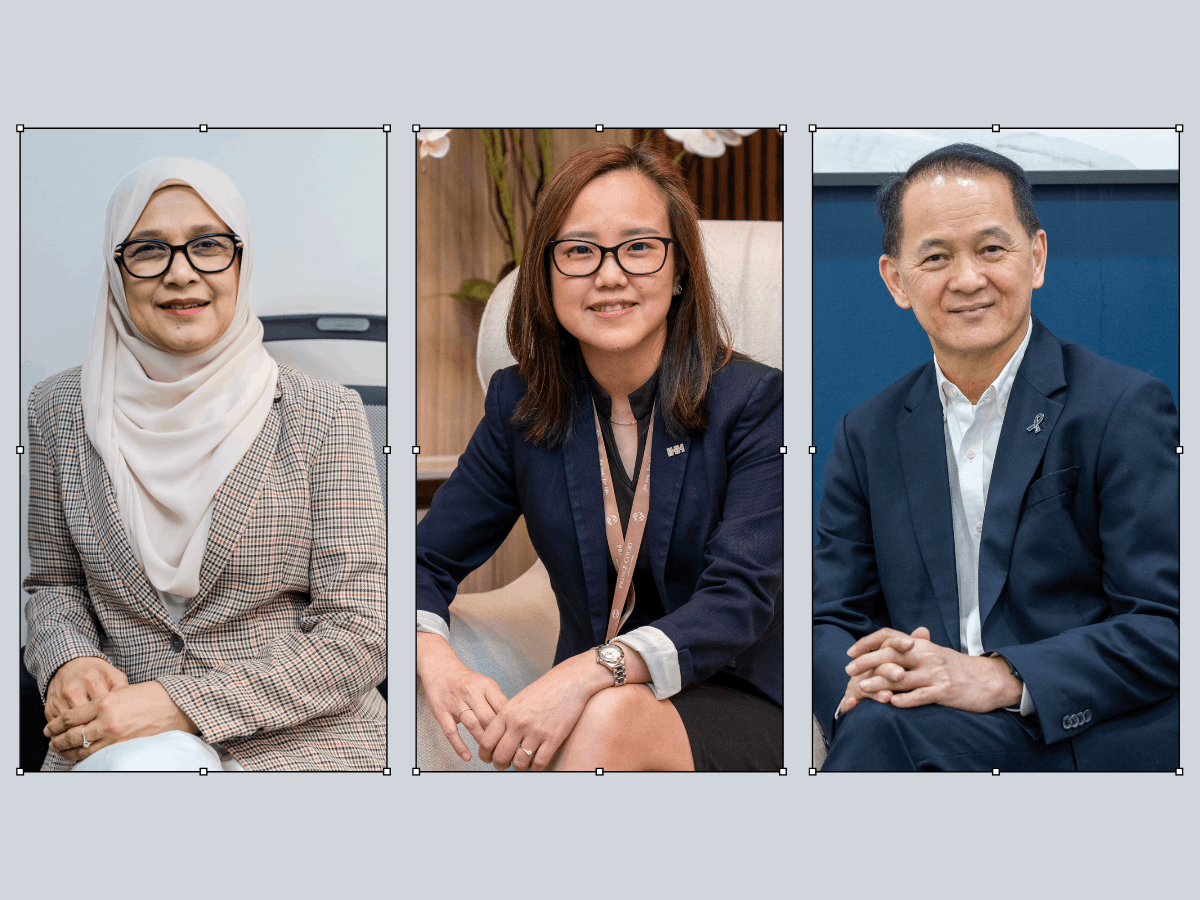
KUALA LUMPUR, August 10 — While government hospitals are primarily run by physicians, the private sector shows how professionals who aren’t medical doctors can successfully manage hospitals as chief executive officers (CEOs).
Bryan Lin – who serves as regional CEO of Asia OneHealthcare and CEO of Subang Jaya Medical Centre (SJMC) and Ara Damansara Medical Centre (ADMC) – has a degree in business administration, management and operations, as well as a Master’s in health care administration/management.
Engku Marina Engku Hatim, regional CEO of Columbia Asia (Region 1), has a degree in accountancy and finance, a postgraduate diploma in health services and hospital management, and an MBA.
Prince Court Medical Centre’s (PCMC) CEO is Tan Sok Kheng, a pharmacist by training.
One of the most striking themes that emerged from CodeBlue’s exclusive interviews with the three hospital CEOs was about how they prioritised all aspects of a patient’s journey – including signages, parking, registration times, toilets, and customer satisfaction surveys – beyond clinical care.
For Lin, Engku Marina, and Tan, clinical excellence and patient outcomes supersede a company’s bottom line and cost efficiency. They explained that a CEO and medical director work on strategic direction and clinical management together to bring their organisations forward.
The three non-MD CEOs acknowledged occasional conflicts with clinicians, but emphasised the use of data and evidence to convince doctors of their point of view.
Another remarkable theme from the interviews was about how crucial nurses are to a hospital’s operations, contrary to public perception in Malaysia that holds doctors in the highest regard, above all other health care professionals.
SJMC CEO: Patient Journey Begins The Minute They Leave Home
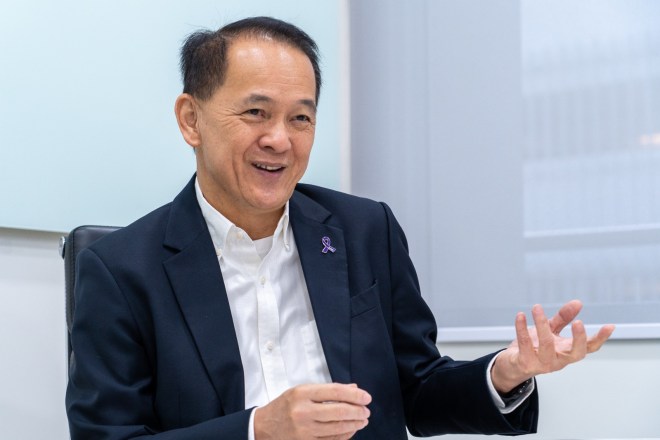
Bryan Lin began his career as a junior statistician in a hospital in Los Angeles in the United States in 1989, before coming home as a financial analyst at SJMC in 1992, after the hospital’s founding in 1985. Lin remained in the hospital industry in Malaysia and pioneered several hospitals in other companies, before returning to SJMC three decades later in 2022.
As CEO of not just SJMC and ADMC under the Asia OneHealthcare group, of which he also serves as regional CEO, Lin said he puts himself in a patient’s shoes and looks at their journey from the moment they leave their house to go to the hospital.
This involves looking at hospital signboards to ensure they’re visible at night (“if an alphabet is missing, I get upset,” says Lin), parking (“if a patient cannot find parking, they won’t use the hospital”), ease of finding lifts in the parking area, and even providing concierge services outside SJMC’s entrance to help guide people to where they want to go.
When CodeBlue visited SJMC for the interview with Lin last Monday, a concierge staff member approached the team and asked about our destination.
Not only does the registration process need to be smooth, said Lin, but the payment process too after receiving hospital services.
The CEO and senior management even gave up their parking spots in SJMC for patients a few years ago and parked off site because the hospital’s parking lot was full then.
“Patient journey is very important to me. So that’s why I say, if my toilet is dirty, that means I’ve not done my job.”
Besides visiting wards, Lin frequents areas with high patient touch points, using the stairs to get around instead of lifts because patients “need it more than me”.
The SJMC CEO even reads Google reviews of the hospital that is currently rated 4.5 out of five stars, including complaints about parking and how people tend to get lost in the hospital. SJMC has received various international awards, including one from the World Stroke Organization (WSO) Angels Awards 2026 in stroke care.
Lin explained that medical equipment purchases must take into account the return on investment and payback period, but stressed that patient needs are prioritised in making such decisions.
SJMC, for example, purchased a digital PET scanner a few years ago that was safer for patients with lower radiation dosage. The hospital also invested in tomotherapy with Synchrony, an advanced technology that allows lung cancer patients to breathe normally without needing to hold their breath during radiation.
“So it actually expedites the treatment time and patients don’t have to suffer too much.”
When asked why he decided to purchase the expensive technology, Lin said the decision was motivated by patients’ clinical needs. “It’s great for patients; that’s priority number one. Two, I can treat the patient faster, I can put in more throughput, therefore I can get my returns faster.”
“So it’s a balance of the non-financials and financials. But for me, I always put the non-financial first because if you look after the patient, everything else will follow,” Lin told CodeBlue.
He explained that clinicians always have a say in management’s decisions in buying new medical equipment. “So with the close partnership that we have, there’s actually very little conflict in running this hospital.”

SJMC also has a “Speak Up” programme that patients can use to contact Lin and the hospital’s medical director directly if they’re not comfortable with their treatment plans or any clinical matters.
Lin touted an inverted pyramid version of his company’s organisation chart, in which the CEO is at the bottom, whereas shareholders are the CEO’s enablers.
“The CEO is an enabler. The CEO finds resources. The boss isn’t the CEO. The boss is actually the patient and the mak cik, pak cik, auntie who brings the patient over. That’s my boss,” said Lin.
“After them are my concierge, housekeeper, radiographers, MLT (medical laboratory technologist), nurses, office assistant. They’re my boss. Then below that is their supervisor. And below that is my assistant manager or manager, and then my directors and division heads. Then only it’s me. So that’s the culture I set for every organisation I work.”
This inverted pyramid is Lin’s “north star”, who described doctors as his partners and co-labourers.
“I can’t do without them, they can’t do without me. We have a symbiotic relationship. So based on that itself, I know how to make my decision. If I want to buy a capex, does it benefit the patient or not? If it doesn’t, forget it. Does it help my staff to work better or not? If yes, it’s worth investing. So that’s how I would arrive at what I need to buy or what I need to do.”
SJMC, which is over four decades’ old, has a workforce of around 1,600, comprising about 270 resident and visiting consultants, while a third are nurses.

Lin believes in reducing health care costs by moving care away from the hospital. SJMC has a Connected Care programme, in which doctors and nurses manning the 24/7 command centre in the hospital can remotely monitor patients at home, especially those who receive an outpatient guarantee letter (GL) from their insurer.
“For us, we’re a bit uncomfortable, let’s say for dengue or certain illnesses. So what we do is, we give this device free for the patient to take home. You monitor yourself; you’re connected to our command centre. From the command centre, we can see if your vital signs are deteriorating or if you’re not getting well,” said Lin. The device monitors one’s blood pressure, temperature, and SpO2.
He pointed out that dengue fever cases can deteriorate, upon which they will be told to immediately seek medical treatment or return to the hospital. “So rather than sending the patient home without anything, there’s this so-called monitoring.”
Senior citizens can also be monitored remotely under Connected Care, as they’re given medical devices by the hospital that can be worn when they have a fever, for example. SJMC doesn’t make use of users’ wearables because they’re not medical grade devices.
“These are some of the examples that we’re doing to try to Uberise health care services,” said Lin.
Staff welfare and remuneration are very important to Lin. SJMC conducts lots of staff engagement, including surveys to identify issues and employee-of-the-month programmes, besides training and upskilling for career development.
“People need to make a living to sustain their lifestyle. Beyond that, there are other intangible needs. We need to also nurture their self-esteem, give them compliments, and give credit when credit is due,” said Lin.
“Beyond money, we cannot programme them to fail. Wherever they are, we must make sure they excel.”
When asked if an MD or non-doctor was better suited to run a hospital, Lin said qualifications in hospital management or administration gave one a more balanced approach in managing the struggles of a hospital and meeting financial targets.
“I think the hospital manager has got to be a professional person who can balance these two and also integrate clinical excellence with business execution. They can be a doctor or non-doctor.”
Prince Court CEO Uses Customer Feedback For Investment In Facilities

Tan Sok Kheng joined Pantai Hospital KL under IHH Healthcare around 2011 as a junior pharmacist after four years in government service, and later became a senior operation manager to run non-clinical operations and project development.
She was part of the initial team brought to PCMC when IHH took over the Kuala Lumpur hospital in 2020 and was then appointed chief operations officer (COO), before going to smaller community hospitals within IHH. Tan later left IHH for private hospitals outside for a short period of time, before returning to PCMC as CEO on March 1, 2026.
When asked how she made the leap from pharmacy to operations, Tan said she was lucky to be identified by senior management for the role.
“Sometimes, I miss the clinical work. But being CEO allows me to look at the entire hospital operation in a more comprehensive and holistic manner. So I’m not only looking at the clinical part, but also a lot of non-clinical parts because the hospital ecosystem is very complicated,” Tan, known as SK, told CodeBlue in an interview at PCMC last July 24.
“Clinical plays a very important role. But the rest of the non-clinical factors are also very important because those are enablers to a lot of clinical management or care to patients. So I think, yes, I do enjoy the CEO role more because it gives me a more holistic and comprehensive platform to run the hospital.”
She explained that her responsibilities as CEO involved driving the hospital’s strategic direction, including clinical service, patient experience, and development of the organisation.
“It’s just like a captain of a ship – how you bring together different stakeholders and move towards the direction that the organisation wants to achieve.”
Tan starts her day by catching up with her nursing team for at least an hour to get updates on operations the previous day, including about doctors, patient care, challenges, incidents, or complaints.
The morning updates are from nurses, rather than doctors because the latter are more independent in the hospital. PCMC’s total workforce is around 1,200, comprising about 700 nurses and some 200 consultants (half are resident doctors).
Then Tan spends most of her lunch time on committee or departmental meetings with doctors because that’s the only time when doctors are free, during which they discuss challenges, plans, or ideas for clinical services. “Those are very important for me to formulate the direction that I want to go into.”
The PCMC CEO also does external stakeholder engagement with sales and marketing, and insurance management, besides walking around the hospital to speak to patients directly or on the phone, saying customer engagement is crucial to inform her whether the hospital is on the right track.
Tan, who works from 9am until after 10pm regularly, said 5pm to 6pm is her “protected time” to clear paperwork. She also works on Saturdays for marketing events, patient awareness campaigns, or engagement with business partners. Sundays are for gym workouts.
Tan stressed that a hospital’s entire environment, including toilets, is very important. She works with her HOD (heads of department) team as an additional pair of eyes to check the hospital environment during scheduled leadership rounds from aspects of patient expectation and experience, as well as safety and compliance because “sometimes, the ground team is too immune to this day-to-day environment”.
“We pay a lot of attention from the top to down. If we walk into a patient’ room, we look at whether the cabinet is dusty, whether housekeeping didn’t do a good job, whether the lighting is nice enough, the ambience, and even the smell. Toilet is a must.”
Although such facilities aren’t technically clinical care, Tan explained that a hospital environment influences patients’ experience and that it’s part and parcel of healing. PCMC is extremely particular, even with chairs for orthopaedic patients. “We pay a lot of attention to this detail because this will make a difference for patient experience.”
Waiting time improvement projects are also common in hospital operations. Tan was trained in the Lean Six Sigma methodology to reduce waiting times for admission, discharge, and even outpatient.
“Process improvement, how do we reduce waste and delays, and optimise the efficiency and effectiveness of the process is something that is in the DNA of most of the leaders in IHH. So that’s something that we very commonly do in our day to day.”

PCMC’s investment decisions for medical equipment are guided by various stakeholders beyond doctors, including nurses and sometimes even patients. Tan said PCMC was the first private centre in Malaysia to use the da Vinci robotic surgical system that has since expanded from urologists to thoracic surgeons, ENT, and gynaecologists.
Feasibility studies are conducted ahead of medical equipment purchases to see whether there is sufficient funding, how much to charge, number of uses for return of investment (ROI), market acceptance, as well as the support ecosystem like staff training for not just surgeons but also nurses.
IHH also has robust patient feedback survey mechanisms to identify areas for investment, such as toilet lighting or facilities in patient rooms. “At the end of the day, it helps us to make our decisions on investments.”
Tan said PCMC’s mobile app was enhanced to simplify the appointment process for patients based on customer feedback. The hospital regularly sends out customer satisfaction forms, with PCMC scoring an average of 96 per cent.
“From March until now, almost every month, I’m speaking to at least one or two patients of ours just to understand what are the things that we can do further to elevate the service for them because they are ultimately the recipients.”
Tan personally attends the hospital’s morbidity and mortality meetings, saying CEOs must have some clinical knowledge to make more informed decisions for hospital management.
When asked if she has ever made unpopular decisions, Tan cited the reduction of coffee machines that was a “big thing” to doctors. Clinicians also disliked the sharing of medical equipment between PCMC and sister hospitals in the region.
“To a clinician, maybe they think you are sacrificing my benefit because you bring my equipment out. But to us, it’s more towards cost efficiency and cost optimisation, rather than everybody spending on the same equipment.”
IHH Healthcare’s value-driven outcome projects also involve switching certain drugs to generic versions, a decision that Tan defended as a pharmacist by training: “Although generics may not work the same for everybody, the same goes for innovator drugs; it doesn’t work for everybody also.”
However, Tan stressed that drug listing in IHH hospital formularies isn’t a unilateral administrative decision, but a collective decision with doctors who are allowed to try different generic medications for their patients before management decides on listing.
“We see a lot of support from our clinicians for the switching towards generic initiative,” she said, adding that IHH doctors ultimately decide which medicines – whether innovative or generics – are best for their patients.
When asked if Tan, a 41-year-old woman with a pharmacist background, ever encountered pushback from older male senior consultants, she acknowledged that doctors and management do not always see things the same way.
“That is not necessarily a problem,” she said. “My role is to understand the different views and ensure the final decision is grounded in evidence and what is best for patients.”
Columbia Asia Regional CEO: ‘Anyone Can Manage Hospitals’

Engku Marina Engku Hatim, who has three decades’ experience in the health care sector, began her career as an auditor, before joining KPJ Healthcare and subsequently Pantai hospitals under IHH Healthcare.
She joined Columbia Asia in 2013 as a general manager and is now a regional CEO, overseeing Columbia Asia hospitals in Bukit Jalil, Cheras, Puchong, and Setapak in the Klang Valley, as well as Iskandar Puteri and Tebrau in Johor.
Engku Marina’s main job is to develop short-term and long-term strategic planning and give direction to hospital CEOs under her supervision to achieve the organisation’s goals. Columbia Asia is under the Asia OneHealthcare umbrella that includes other hospitals like SJMC, as well as advanced surgical centres like CVSKL, Hospital Picaso, Northern Heart Hospital, and ALTY Orthopaedic Hospital.
She explained that her responsibilities cover clinical governance and hospital services, besides ensuring compliance with regulatory agencies and accreditation bodies, such as fire and hospital licences.
A hospital’s medical director, known as the chief of medical services in Columbia Asia, is also involved in clinical governance and reviews medical protocols and SOPs. The medical director, who is the license holder for the hospital, must ensure that all consultants have a valid annual practising certificate (APC), besides conducting credentialing and privileging (C&P) for new consultants who want to join the hospital and reviewing C&P for existing doctors.
“The difference between the CEO and medical director is that the CEO is involved more in the business direction, planning, development, marketing, setting the budget, and ensuring cost efficiency, commissions, expansion plan,” Engku Marina told CodeBlue in an interview last Thursday at Columbia Asia Hospital Cheras (CAHC).
“Besides that, for myself, because I’m regional, I look into the expansion of other hospitals, how to expand beds, and how to expand further the services.”
CAHC is currently undergoing expansion, with its new wing launched last April in the 30th year of Columbia Asia.
Although the hospital now has a capacity of 180 beds, only 134 were opened under its licence as sufficient patient demand and manpower are reviewed before opening more beds in stages. The Private Healthcare Facilities and Services Act 1998 (Act 586) mandates specific nurse-to-patient ratios.
When asked how she made decisions to purchase medical equipment, Engku Marina cited an RM5 million MRI machine as an example that requires projections of ROI and the payback period.
“In order for you to project your volume, you have to do a business plan. How many consultants want to use that machine? So then you have to plan. In order for me to get this volume increase, let’s say 10 per cent every year, I have to bring in more consultants to use the machines.
“But of course, it should be the sub-clinical, subspecialist consultants. At the moment, we have a lot of generalists. So moving forward, we’re supposed to recruit more subspecialist consultants.”
CAHC has about 400 plus staff, including nearly 70 consultants (30 plus are resident doctors). The hospital’s expansion this year came with the recruitment of subspecialists in hand and microsurgery.
Consultants can practise in multiple hospitals under Asia OneHealthcare in the group’s hub-and-spoke hospital model, allowing greater utilisation of expensive equipment like robotic surgery that costs RM10 million. So urologists in CAHC can practise robotic surgery in Hospital Picasso, without CAHC buying its own equipment. Oncologists can practise in either Beacon Hospital or SJMC, while complex cardiothoracic cases are referred to CVSKL.
Engku Marina stressed the importance of a hospital’s non-medical operations, such as human resource, finance, maintenance, security, and housekeeping. “Chillers and air-conditioning have to be maintained regularly.”
She also tracks every point of the waiting stage in a patient’s journey, such as the registration time and how long it takes to see a consultant.
“Maybe, to a clinician, they only think about the disease of the patients and look at the micro – how to treat the patients and the outcome of the surgery. But as a CEO, we look at the ecosystem – the business process, waiting time. We also have to look at the payer’s side, DRG (diagnosis-related groups) side, and make sure it’s cost efficient. We have to make sure our pricing is not higher than our competitor.”
When asked how she balanced between cost efficiency and clinical care, Engku Marina described it as “harmonisation” rather than “balance”, with quality care being the numerator and operating cost the denominator. “So if you reduce the denominator, then you can increase quality.”
Certain things are non-negotiable, such as keeping life-saving drugs in a hospital’s emergency department that are very expensive and have short expiry. “If it’s expired, we have to dispose of it and write it off. But you cannot compromise on this.”
Nursing ratios in an intensive care unit (ICU), which are one nurse to one patient by law for private hospitals, are also non-negotiable, even though nursing manpower is expensive. The monthly salary of specialised nurses in ICU, operating theatre (OT), and maternity ranges from about RM5,000 to RM7,000.

When asked about making unpopular budget decisions, Engku Marina said sometimes the hospital purchases a different brand of medical equipment that still has nearly the same specifications as the brand preferred by consultants.
Engku Marina attends morbidity and mortality meetings, pointing out that CEOs will be called as hospital representatives in court if medical negligence suits are filed. When asked if she could understand the discussions as a non-physician, she highlighted her 30 years’ experience of medical and clinical meetings.
Health worker burnout is a very important issue to Engku Marina, especially for nurses, noting that the on-call team in Columbia Asia sometimes have to work until midnight or the next morning. They can then clock in an hour later at 9am instead of 8am. Consultants too can take a nap before going back to seeing patients.
Columbia Asia follows labour law on working hours for doctors and nurses, who work in shifts in the wards.
Engku Marina described her “north star” as “long-term viability through trusted care”.
“I believe clinical excellence drives financial sustainability.”
“In private health care, quality drives volume, quality drives reputation, and quality drives payer trust. The payer trust can be patients, insurance, corporate clients,” said Engku Marina.
“You have to make sure you deliver good outcomes. Then only comes the image of the hospital and trust by patients. From there, you get the volume. Why do people come to Hospital A rather than Hospital B? It’s probably the reputation of the doctor, and the reputation of the hospital and facility as well.”
Columbia Asia hospitals are led by CEOs from diverse backgrounds: finance, marketing, radiology, doctors, and nurses. Asia OneHealthcare managing director and group CEO is Dr Chan Boon Kheng, a medical doctor.
When asked if she observed a difference between MD and non-MD hospital CEOs, Engku Marina said CEOs with a doctor background tended to be more “micro” in clinical issues.
“I think anyone can manage hospitals,” said Engku Marina.
“However, he or she must have leadership skills and also understand a little bit about finance and balance sheets to analyse the figures. You must have people skills because you need to take care of your nurses and staff. You also have to take care of your doctors.
“Sometimes, you argue with the doctors. Sometimes, it’s like a love-hate relationship as well. So you must have people skills, as well as a little bit of clinical expertise.”


