

KUALA LUMPUR, June 25 — After nearly a decade without a major increase in cigarette taxes, before a modest hike last year, a former senior Ministry of Health (MOH) official is urging the government to adopt annual tobacco tax increases.
He argued that inconsistent policies have made smoking more affordable and weakened efforts to deter it.
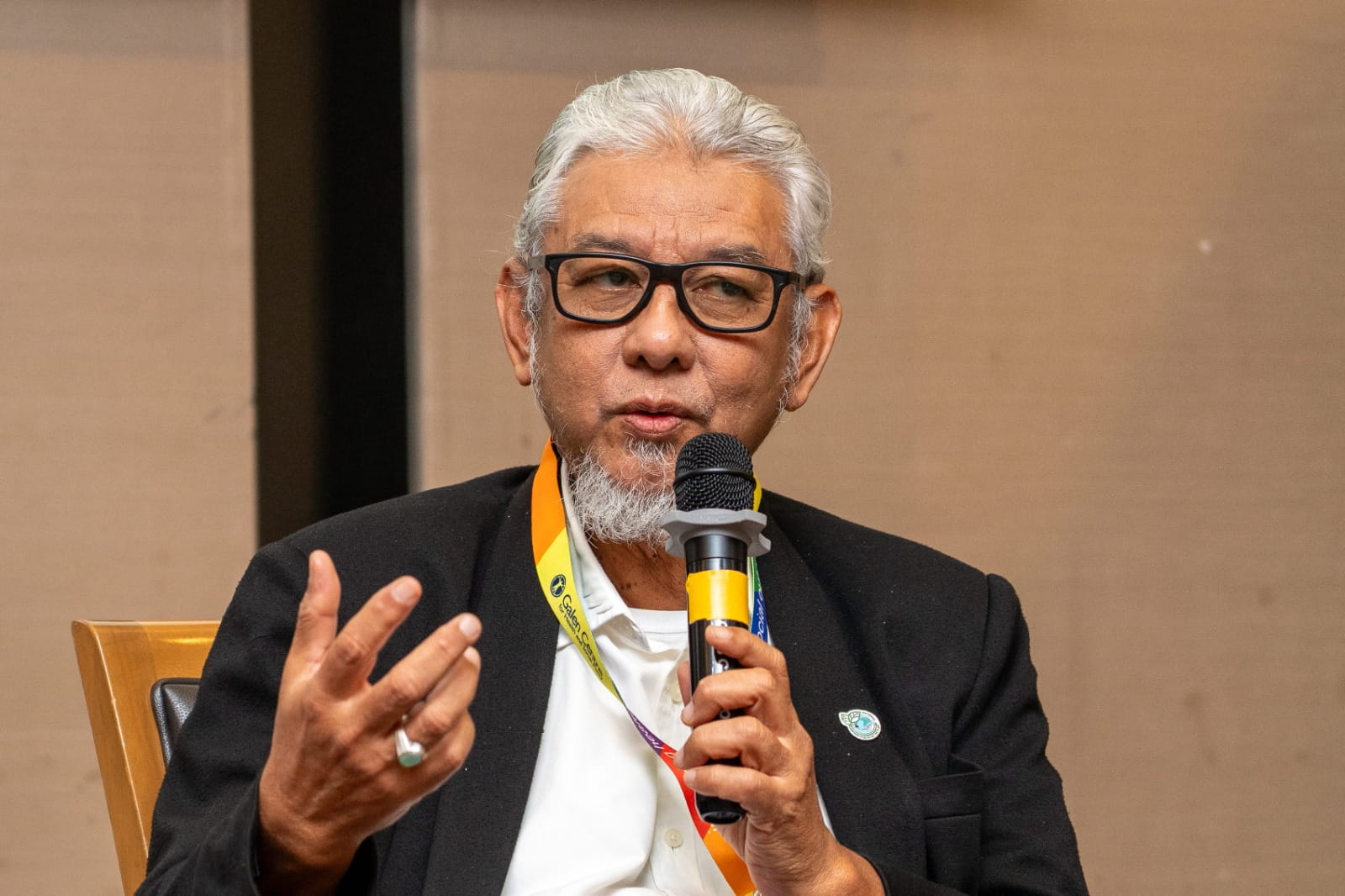
Speaking at a symposium on tobacco control legislation organised by the Galen Centre for Health and Social Policy on April 30, Prof Dr Lokman Hakim Sulaiman, deputy vice chancellor for research at IMU University and former deputy director-general for public health, proposed raising cigarette excise duties by 5 per cent annually over the next five years.
Malaysia’s tobacco excise rates remain well below the level recommended by the World Health Organization (WHO), he said, with excise taxes accounting for about 42 per cent of retail cigarette prices instead of the WHO’s recommended 75 per cent threshold.
“If deterrent is the philosophy behind it, then what does the WHO say? At least 75 per cent of excise on the total retail price but where are we now? 42 per cent,” Dr Lokman said.
“Of course if you suddenly raise it to 75 per cent, everyone will meletup (explode),” he added. “But if we are serious about it, then make it clear. Why not every year, raise it by 5 per cent until we reach 75 per cent – it will take about five years to reach 75 per cent – then everybody knows, it’s clear.”
The remarks came as Malaysia continues to recalibrate its tobacco and vape regulations under the Control of Smoking Products for Public Health Act 2024 (Act 852), which came into force in October last year.
The law established a broader regulatory framework for smoking products, including enforcement powers, advertising restrictions, and public health measures.
Dr Lokman described Malaysia’s approach to tobacco taxation as inconsistent after years without major increases before the government raised cigarette excise duty by two sen per stick under Budget 2026, the first tobacco tax increase since 2015.
“If the philosophy is deterrent, then let’s deal with the strategy,” he said. “We’ve been doing it in a very haphazard way. I say haphazard because I don’t see any consistency.”
RM3 Billion Tobacco Tax Revenue ‘Not Enough’ To Cover Smoking Harm
Dr Lokman further argued that the roughly RM3 billion collected annually from tobacco taxes was insufficient to offset the broader public health costs associated with smoking and non-communicable diseases (NCDs).
“RM3 billion is not enough to fund public health programmes for the Ministry of Health (MOH),” he said. “When I was in the ministry, our budget was RM7 billion just for general public health – don’t talk about managing NCDs and all that.”
He also questioned the underlying purpose of tobacco taxation, asking whether cigarette duties were intended primarily to deter smoking, generate government revenue, or offset the broader social and health costs caused by tobacco use.
“So I think we have to come back to the question of why are we doing this?” he said. “Why are we collecting tax? What’s the purpose? Are we talking about revenue? Are we talking about compensating for the smokers, the sinners paying back the damage that they’ve done to the society? What’s the philosophy behind it? We have to ask this very basic question.”
Dr Lokman also argued that Malaysia’s obligations under the WHO Framework Convention on Tobacco Control (FCTC) extended beyond the Health Ministry.
“When we signed the FCTC, it’s not the MOH that signed the FCTC, it’s the government of Malaysia that signed it,” he said. “The MOH must comply with it, the Ministry of Finance (MOF) must comply with it, the Ministry of Investment, Trade and Industry (MITI) has to comply with it, because we are a signatory of the FCTC.”
“The WHO did not come up with all these recommendations from plucking the air,” he added. “These are evidence-based. A lot of studies were done to show at what price it will deter – to have a significant impact on consumer use. That’s how we got 75 per cent.”
MOF Says Decade Without Tax Hikes Focused On Curbing Illicit Cigarettes
Finance Ministry official Adlin Rafizah Ab Rahman explained the government’s approach to tobacco excise taxation, saying cigarette duties were intended both to influence consumer behaviour and generate revenue.
“Excise duty is most importantly used to influence consumer behavior. We always support MOH in this taxation and mostly particularly for products that give major social and health implications,” said Adlin, principal assistant secretary of the Customs and Indirect Tax section under the MOF’s tax division.
Citing Customs Department data, Adlin said excise duty collected from tobacco products between 2015 and 2025 totalled RM29.7 billion, while total revenue from all smoking products reached RM29.83 billion, averaging about RM3 billion annually.
Although cigarette taxes remained largely unchanged during that period, Adlin said the government had focused on reducing illicit cigarette trade instead of raising tobacco duties.
“During this time, the government was focusing more on reducing the percentage of illicit trade. We did cooperate with the industry and related enforcement agencies,” she said, adding that the prevalence of illicit cigarettes fell to 54.4 per cent in 2025 from a peak of 63.8 per cent in 2020.
Adlin also said constitutional limitations prevented tobacco tax revenue from being directly channelled to the MOH.
“Our Federal Constitution does not allow for us to practice earmark allocations, meaning whatever we tax from health-related products, we cannot give it back to MOH,” she said.
However, she noted that the government had provided special allocations linked to sugar-sweetened beverage (SSB) tax collections. Malaysia first introduced the SSB excise duty in 2019 at 40 sen per litre before raising it to 50 sen per litre in 2024 and 90 sen per litre this year.
“For the SSB tax, we give special allocation to MOH, we gave about RM80 million to MOH until 2025,” Adlin said, adding that the allocation was currently used for dialysis treatment.
The burden of kidney disease treatment has risen sharply in Malaysia. Health Minister Dzulkefly Ahmad said last month that Malaysia’s spending on end-stage chronic kidney disease treatment surged from RM572 million in 2010 to RM3.3 billion annually today.
Responding to a question about proposals to increase vape excise duty from 40 sen per milliliter to as high as RM4 per milliliter, Adlin said the Finance Ministry was awaiting a final policy direction from the Health Ministry before proceeding with any tax revision.
“On excise duty on vape, we have already thought about increasing the excise rate but we are waiting for MOH’s policy on whether they want to ban it or not,” she said.
“We brought this suggestion to the ministry (MOF) but at the time, MOH wanted to present proposals on banning vape products, so we have yet to introduce a rate increase because we don’t want people to think the government likes to make a U-turn on policies.”
Illicit Cigarette Trade Driven By Corruption, Weak Enforcement — Not Higher Taxes
Muhammad Daniel Kittu, a senior researcher at the Social & Economic Research Initiative (Seri), challenged longstanding arguments that higher tobacco taxes would necessarily drive smokers toward illicit cigarettes.
“The main driver for illicit trade is not high tobacco taxes, not high cigarette prices, it’s enforcement, it’s corruption,” Daniel said. “That’s what’s driving the prevalence of illicit cigarettes.”
“Even if you don’t increase tobacco taxes and you still have a problem with enforcement corruption, illicit trade is still going to be a problem,” he added. “So there’s no point in just taking a tax holiday when it’s not going to improve the situation.”
Daniel argued that only a small proportion of smokers were likely to switch to contraband cigarettes following tax increases because most Malaysian smokers consumed premium brands.
“The reality is in Malaysia, the most popular cigarette brands are actually the premium ones like Dunhill, Marlboro and so on,” he said. “Most Malaysians would either smoke less or shift to a cheaper legal one because it’s right in front of them.”
Cigarettes More Affordable Today Than Before Last Tax Hike
Daniel said cigarettes had become more affordable over time because excise duties had not kept pace with inflation and income growth since the last major tax increase in 2015.
“So one of the things that I did last year when we first embarked on this project, we were trying to figure out how affordable cigarettes have become since the last tax increase in 2015,” he said.
According to Daniel, restoring cigarette affordability to 2015 levels alone would require a RM5 increase per pack, equivalent to roughly a 50 per cent increase in specific excise tax.
“But actually if I were to take into account inflation and GDP growth, it would have to be 80 cents,” he said. “So that’s like an over 100 per cent increase.”
Daniel described the two-sen cigarette excise increase announced in Budget 2025 as “modest to say the least” but said it nevertheless suggested that policymakers might still be receptive to regular future tax increases.


