

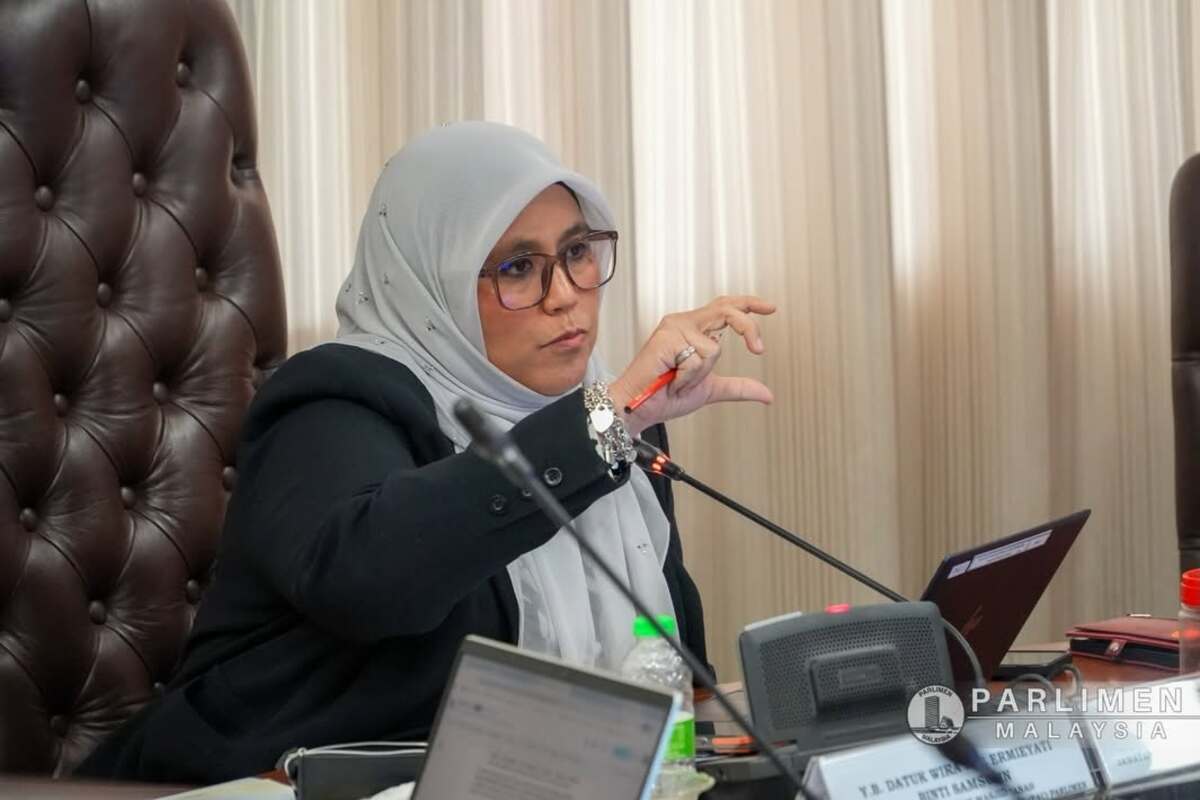
KUALA LUMPUR, June 25 — The Public Accounts Committee (PAC) has pointed the finger at both insurance and health care providers for rising premiums and private health care costs.
The committee, which tabled its report in the Dewan Rakyat later today on increased health insurance premiums and private hospital charges, highlighted the systemic design of health insurance and hospital charges that it said affected patients or policyholders.
“The spike in hospital bills and insurance premiums in Malaysia has become an increasingly worrying issue, triggering multiple discussions on social media, media reports, and official statements,” said PAC chairwoman Mas Ermieyati Samsudin in a statement yesterday.
“This issue has a direct impact on people’s financial burden, besides raising anxiety about access to quality health care.”
The PAC’s report was based on two public hearings in Penang and Kuala Lumpur on February 14, 2025, and February 21, 2025 respectively, besides 19 proceedings from February 24, 2025 to August 14, 2025.
A total of 21 witnesses were called to provide testimony to the PAC, including representatives from the Ministry of Finance (MOF), Ministry of Health (MOH), Bank Negara Malaysia (BNM), Association of Private Hospitals’ Malaysia (APHM), Life Insurance Association of Malaysia (LIAM), General Insurance of Malaysia (PIAM), Malaysian Takaful Association (MTA), as well as academics and non-governmental organisations.
Rising Health Insurance Premiums
The PAC took issue with three characteristics of health insurance that it attributed for a rise in premiums: risk selection, closed pool, and investment-linked policies.
“Risk selection vulnerability: Malaysia’s private insurance model is vulnerable to risk selection practices and fails to function as a long-term social safety net because vulnerable groups are excluded through pricing mechanisms,” said Mas Ermieyati.
“Closed pool inequity: Existing practices of closing older risk pools while offering cheaper products to new participants penalise long-standing policyholders. As the pool shrinks and becomes concentrated with sicker members, claims increase sharply, forcing premium hikes.
“Multi-year financial shock: Investment-linked policies (ILPs) transfer age-related increases in the cost of insurance (COI) entirely to consumers. Cyclical repricing has resulted in premium increases of between 40 per cent and 70 per cent.”
The PAC observed that sharp premium hikes have forced some policyholders aged 60 years and older to cancel unaffordable medical policies, exposing themselves to risk at a time when protection is most needed.
The parliamentary committee urged BNM to strengthen risk-pooling in similar cohorts, including closed portfolios, besides issuing standardised FAQs to prevent insurance companies from “manipulating” interpretations of interim measures.
“BNM must ensure that the insurance and takaful industry shift towards incremental annual repricing to avoid financial shocks for policyholders.
“BNM must review cohort-based premium pricing models and consider an appropriate approach with careful calibration to improve fairness in risk-sharing and retain affordability and long-term sustainability,” said Mas Ermieyati.
The PAC noted that the central bank lacked legal authority to control the cost of treatment in private hospitals that it cited as the root cause of rising health insurance premiums.
Medical Inflation Outpaces General Inflation
The PAC said a free market couldn’t maintain stable and consistent health insurance premiums because medical inflation continued to outpace general inflation.
“Premium hikes are closely related to the increase in health care costs that requires a comprehensive approach covering the health sector, not solely the insurance sector,” said Mas Ermieyati.
The PAC criticised the structure of private hospital charges that is based on a fee-for-service model, namely opaque cross-subsidies, unbundling and price discrimination, and a regulatory gap in tackling medical inflation.
The committee described hospital billing as “less ideal and failing to reflect actual costs”, noting that medicines and medical supplies are subject to high mark-ups, sometimes up to 300 per cent, to cover operational costs that aren’t charged or subsidised, such as charges for wards, intensive care unit (ICU), and a 24-hour emergency department.
“The PAC has found unbundling of charges for basic items like clinical waste disposal, pillow covers, and alcohol swabs that should have been included in the room charge. There is also price discrimination, in which patients with guarantee letters (GL) are charged higher than cash or pay-and-claim patients,” said Mas Ermieyati.
The PAC attributed the main cause of medical inflation to a spike in the costs of supplies, devices, medicines, laboratory tests, and “fancy” technology that aren’t subject to regulatory controls, unlike doctors’ fees that have been strictly regulated under the Private Healthcare Facilities and Services Act 1998 (Act 586) since 2013.
Staffing and utility costs in private hospitals are also rising, coupled with increasing pressure from litigation costs and defensive medicine.
The private health care sector, said the PAC, comprises 94 per cent imported medicines. More than 1,500 drugs only have one product registration holder in Malaysia, thus creating a “monopoly” in setting high prices without competition.
“The median mark-up is very high at various levels of the drug supply chain, in which generic medicines in hospitals are sometimes charged more than innovators,” said the PAC.
Proposed Solutions: New Independent Regulatory Structure For Consumer Protection
The PAC urged the MOF, BNM, and MOH to create a new and independent regulatory structure for consumer protection in private health care, including powers to review and control health insurance charges and benefits.
“The Malaysia Competition Commission (MyCC) must provide guidance to stakeholders to ensure that discount arrangements between hospitals and insurers are fair and do not affect patient access,” added Mas Ermieyati.
The PAC urged MOF, BNM, and MOH to expedite the full implementation of their Reset initiative, but acknowledged that its success depended on policy coordination and cross-agency cooperation if the industry did not fully cooperate.
Even as the PAC criticised the risk selection design of health insurance, the Base MHIT product designed by the central bank adopts the same risk-rating used in the private market, in which premiums will be based on an individual’s age, gender, and health status, instead of more equitable community rating.
Mas Ermieyati further suggested that the MOH explore outsourcing by prioritising domestic suppliers to reduce reliance on dominant suppliers or certain “cartels”.
The PAC also mooted two contradictory proposals: implement the diagnosis-related groups (DRG) reimbursement model in the private sector and price controls for medicines, medical devices, and private hospital services besides doctor fees.
Under DRG, patients are charged a bundled rate for an episode of care based on their diagnosis, instead of a fee-for-service model in which each item is charged separately. Hence, with a DRG model, the issue of charging patients for medicines, devices, or supplies doesn’t come into play.
Lastly, the PAC touted preventive health care and health insurance or takaful products that are preventive in nature.


