

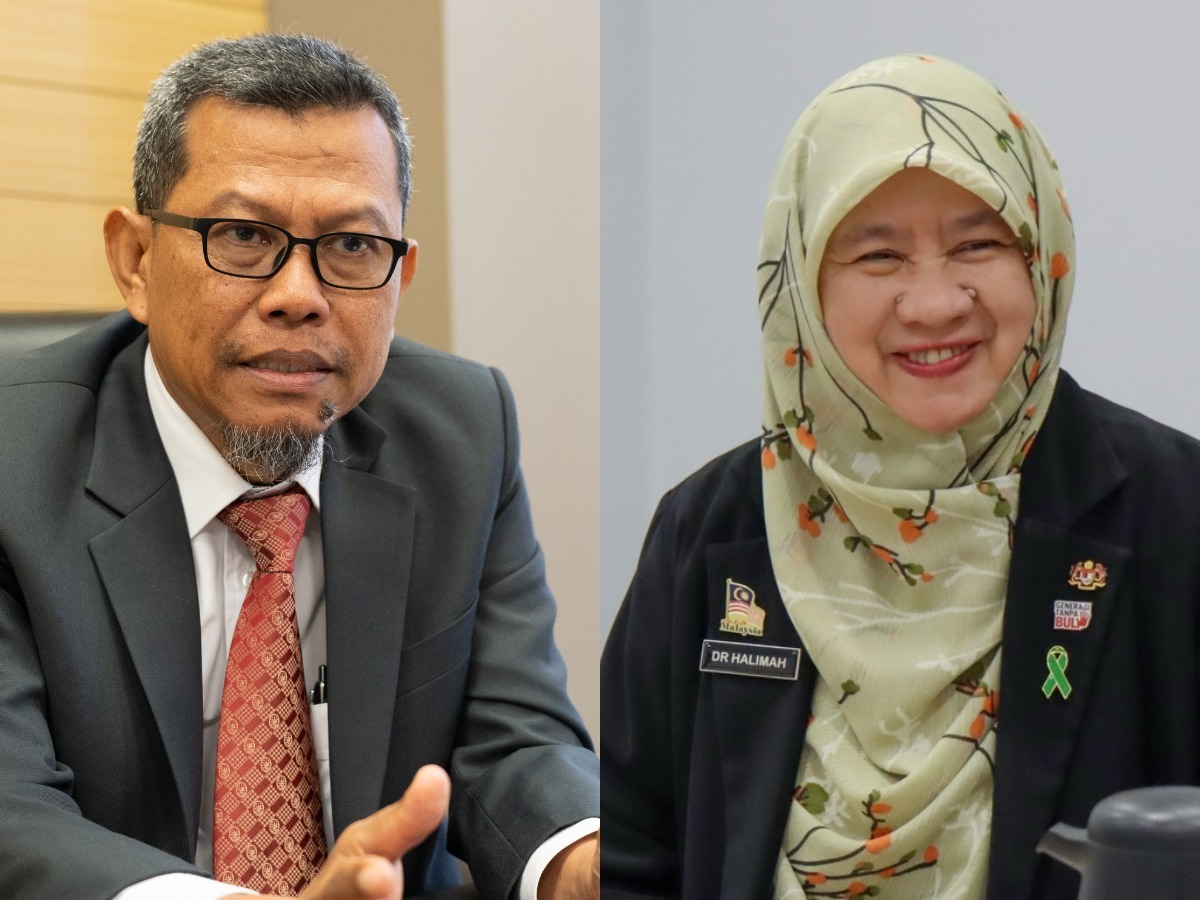
KUALA LUMPUR, Dec 5 — Two Opposition MPs have called for regulation of Malaysia’s private health insurance industry, including claims processing timelines to prevent delays and prohibiting the denials of claims based on pre-existing conditions.
Kapar MP Dr Halimah Ali and Kuala Langat MP Dr Ahmad Yunus Hairi, who are both medical doctors, urged the government to limit how long insurers can “investigate” a claim, and narrow the situations in which insurers can ask for old records.
Pakatan Harapan’s Bayan Baru MP Sim Tze Tzin, meanwhile, highlighted the role of existing complaint channels and said the government should avoid close “micromanagement” of the industry.
CodeBlue earlier reported on the case of 57-year-old Ramu Krishnan Sinnamuthry, a stage four tongue cancer patient whose three cancer-related claims to Allianz Life Insurance Malaysia Berhad remain unpaid, over four months after a CT scan last July.
Allianz deferred all claims pending an investigation into a 2024 hypertension episode that he did not claim for at the time. The insurance company asked Ramu to provide medical records dating back to 2017. He has spent about RM69,000 out of pocket on diagnostic procedures and cancer treatment over the past four months.
Kapar MP: ‘Insurance Should Protect People, Not Exhaust Them’
Dr Halimah, who sits on Parliament’s Public Accounts Committee (PAC), said Ramu’s case reflected recurring issues in the industry, including prolonged delays tied to investigations of past medical conditions and extensive documentation demands that stretch back years, even when patients urgently need financial support.
The Perikatan Nasional (PN) lawmaker told CodeBlue that such practices place an unreasonable burden on patients who are seriously ill. She cited mySalam’s 54 per cent payout rate as an example of operational shortcomings that warrant attention.
mySalam is a government takaful protection scheme under the Ministry of Finance and operated by Great Eastern Takaful Berhad (GETB) that provides critical illness and hospitalisation income replacement benefits.
“Insurers should not be allowed to delay decisions indefinitely by repeatedly asking for more documents,” Dr Halimah told CodeBlue when contacted. “Once a claimant has provided the required core documents, the insurer should be legally bound to approve or reject the claim within a fixed number of days.”
“There should also be a limit on how far back they can demand medical records. Forcing a critically ill patient to produce documents from six or seven years ago, especially for conditions that were never claimed for, is unreasonable and burdensome. Transparency, accountability, and a fair appeals process must be central to any reform,” added the PAS MP.
On the government’s proposed basic medical and health insurance/takaful (MHIT) product, Dr Halimah told Putrajaya to legislate strong consumer protections if private insurers are to underwrite the scheme.
These protections must include a prohibition on indefinite deferrals of claims; clear rules defining valid grounds for investigation; pre-established limits on document requests; automatic approvals for certain critical conditions once diagnosis is verified; and penalties for insurers that unnecessarily delay, deny, or complicate legitimate claims.
“Ultimately, MHIT must not repeat the weaknesses we saw with mySalam, where excessive documentation and low approval rates left many families struggling during their most vulnerable moments. The core principle is simple: insurance should protect people, not exhaust them.”
During Question Time in Parliament on November 27, Dr Halimah raised similar concerns about the burden placed on low-income Malaysians when making health-related claims.
She questioned why mySalam – a government scheme intended to protect the B40 – had an approval rate of only 54 per cent, far below the roughly 90 per cent average in the private insurance and takaful industry. Since 2019, she noted, more than 921,000 mySalam claims have been denied.
Dr Halimah also contrasted the heavy documentation requirements for mySalam claims with the ease of accessing Skim Perubatan Madani (SPM), where patients only present their MyKad. Unlike mySalam, SPM isn’t administered by a private insurer and takaful operator (ITO), but by ProtectHealth Corporation Sdn Bhd, a company fully owned by the Ministry of Health (MOH).
Deputy Finance Minister Lim Hui Ying, in her parliamentary reply, merely said mySalam claims are processed according to established procedures by GETB.
Kuala Langat MP: Don’t Deny Coverage Based On Unrelated Pre-Existing Conditions
Kuala Langat MP Dr Ahmad Yunus Hairi said insurers must stop using pre-existing conditions as a blanket reason to delay or deny claims, especially when those conditions have no clinical link to the patient’s admission diagnosis.
“ITO must take into account the morbidity trends of Malaysians when setting certain prerequisites in their insurance policies,” he told CodeBlue.
“With the yearly increase in non-communicable disease (NCD) rates, ITOs cannot simply deny patients coverage, especially if the pre-existing conditions they have are not related to the diagnostics being carried out.”
The Malaysia National Cancer Registry Report 2017-2021 shows that late-stage cancer detection in the country has increased, with about 65 per cent of cases diagnosed at stages three and four.
The National Health and Morbidity Survey (NHMS) 2023 also found that more than two million adults have at least three NCDs – diabetes, hypertension, high cholesterol, or obesity – while about 500,000 have all four. Many are unaware they are ill.
“Any reform must completely prohibit insurers from denying coverage for any medical interventions such as procedures, medicines, and therapies that have been determined by medical professionals, unless there is clear evidence that the treatment is not required,” Dr Ahmad Yunus said.
The head of PN’s health committee added that clear, standardised operating guidelines are needed so that insurers and third-party administrators (TPAs) will follow predictable and transparent processes.
“The absence of standardised guidelines has created a situation where each ITO or TPA operates based on its own interpretation and procedures. This standardisation must include clear timelines for every stage of the process, from the submission of the initial claim and the processing of the guarantee letter, up to the final decision on the claim,” Dr Yunus said.
Insurers must not interfere with clinical decisions, he added. “The separation of powers between clinical decisions and financing decisions is critical to ensure that patient safety and health are not compromised by financial considerations alone.”
“The complexity of modern medicine requires those who manage insurance claims and guarantee letters to have a solid basic understanding of medical principles, clinical terminology, and the rationale for treatment,” said Dr Yunus, who is a member of the Health parliamentary special select committee (PSSC).
“At present, many insurance agents and administrative staff who make decisions on claims do not have formal training in health care, which leads to irrational decisions that often disadvantage patients.”
ITOs and TPAs generally do not have specialist doctors. PMCare Sdn Bhd, the oldest TPA in Malaysia, has 15 medical doctors, which it said is far more than insurance companies with usually only two to three doctors. None of PMCare’s doctors are specialists.
Malaysia should also set up a dedicated health insurance tribunal to handle disputes quickly and fairly, Dr Yunus said.
“This tribunal must be led by a panel consisting of legal experts, medical professionals, and insurance specialists who understand both the technical medical aspects and the contractual aspects of insurance.
“The tribunal’s decisions must have binding force and must be enforceable immediately. The tribunal must also have the power to impose penalties on insurance companies found to have intentionally delayed or denied valid claims,” added the PAS MP.
On the government’s upcoming basic MHIT product, Dr Yunus said the underwriter must accept all applicants regardless of their health status, age, or pre-existing conditions.
He added that strict timelines and oversight of premium changes are needed to protect consumers. An independent panel must review any denial or appeal.
“If the total claims exceed the allocation provided by the government, any premium increase must go through review by the Ministry, PSSC, and or the National Audit Department,” he said.
Bayan Baru MP: Consumers Have Formal Complaint Avenues, Government Should Not ‘Micromanage’ Industry
Sim declined to comment on Ramu’s case reported by CodeBlue, but said the underlying problems are common because many policyholders “don’t know where to turn to” when their health insurance claims run into difficulties.
The Bayan Baru MP, who is also a member of the PAC, said many Malaysians rely only on their insurance agents without realising there are formal complaint and dispute resolution channels.
“That’s why the government has a redress mechanism. For complaints, step one: they must go directly to their insurance company for claims and complaints. If they are not satisfied, the second step: go to Bank Negara. If they are still not satisfied with Bank Negara’s response, they can go to the third step, which is the Financial Markets Ombudsman Services (FMOS),” Sim told CodeBlue.
“I hope that more policyholders will understand their rights. They still have rights. The government still has a mechanism to help them. They are not alone,” the PKR lawmaker said.
When asked if mandatory timelines for claims processing are needed, Sim said it was not the government’s role to set deadlines for insurers.
“They must have that SOP. How can the government go in and say how many days? I think that’s not the way to address this issue. We don’t micromanage,” he replied.
Sim said the government’s responsibility was to ensure a functioning redress system, not to dictate insurers’ internal processes. “We cannot regulate everything. The complaint mechanism is there.”
On the upcoming government MHIT product, Sim said it was “too early” to comment because the product was still being designed.
“Let’s wait for them to roll out. Be patient. Let them do their job. We don’t want to rush things and then they come out halfway and then we have a bigger problem.”


