

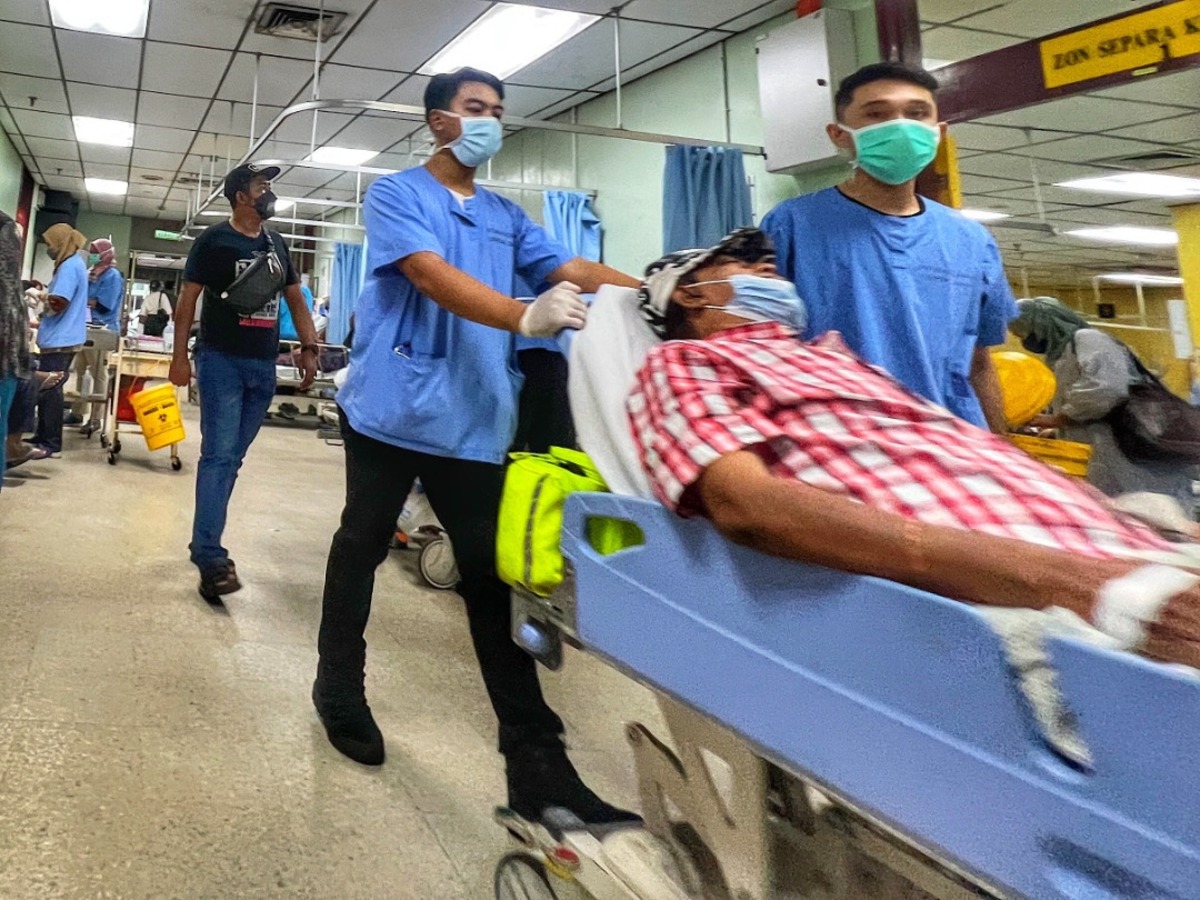
KUALA LUMPUR, Sept 4 — Patient arrivals in Ministry of Health (MOH) facilities increased by 17.7 per cent from 2020 to 2023, comprising inpatient, outpatient, and day care arrivals.
According to MOH data tabled to the Health parliament special select committee (PSSC) at a hearing last February 27, the year 2020 recorded 57.9 million patient arrivals across the three categories, rising by about 18 per cent (10.2 million arrivals) in the space of three years to 68.2 million arrivals in 2023.
Outpatient arrivals saw the biggest increase at 18.3 per cent from 53.7 million in 2020 to 63.5 million in 2023. In that same period, inpatient arrivals rose 12.4 per cent from 2.4 million to 2.7 million, whereas day care arrivals increased 5.6 per cent from 1.8 million to 1.9 million.
These patient arrivals were reported for MOH hospitals, special medical institutions, and public health care facilities.
In response to Health PSSC member Dr Ahmad Yunus Hairi (PN-Kuala Langat), MOH planning division director Dr Enna Mohd Hanafiah said patient arrivals in private hospitals were similarly on the rise.

MOH also presented 2023 data that showed hospital admissions and outpatient arrivals were heavily concentrated in the public health care sector at 67 per cent and 83 per cent respectively, compared to the private sector.
The public sector recorded 2.7 million hospital admissions in 2023, double the 1.4 million admissions in the private sector. The 19.6 million outpatient arrivals in the public sector were nearly five times higher than 4.1 million in private health care facilities that year.
Although the 212 private hospitals in Malaysia exceeded the number of 149 public hospitals, government hospitals comprised the majority of beds at 71 per cent (45,964 beds) compared to 18,779 beds in private hospitals.
More than half of the country’s health expenditure was in the public sector at 53 per cent.
The MOH slide also showed that 77 per cent of doctors in the country were in the public sector in 2023 at 54,919 doctors.
However, Health deputy director-general (medical) Dr Nor Azimi Yunus clarified that doctor numbers in the MOH fell to 32,558 medical officers and 8,515 specialist doctors this year.
There are 69,801 nurses in MOH facilities in 2025, which Health PSSC member Young Syefura Othman (PH-Bentong) characterised as falling far short of a needed 104,000 nurses.
MOH has 15,251 assistant medical officers (AMOs) this year, which Dr Nor Azimi deemed to be a “rather comfortable” number.

When Health PSSC chairman Suhaizan Kaiat (PH-Pulai) asked about the progress of campaigns for healthy lifestyles, MOH human resource division (BSM) division secretary Dr Nazarudin Bahari cited the ministry’s campaigns like taking 10,000 steps daily and its War on Sugar with the sugar-sweetened beverage tax.
He also cited the Control of Smoking Products for Public Health Act 2024.
“Our challenge is outside – meaning, involving the community and also the Health Ministry’s desire for healthy lifestyles,” said Dr Nazarudin.
Plans To Expand Madani Medical Scheme To Cover NCDs
Dr Enna told parliamentarians that the MOH was planning to expand the scope of the Madani Medical Scheme (SPM) – which provides fully subsidised treatment for low-income patients at private general practitioner (GP) clinics – to cover non-communicable diseases (NCDs) like diabetes, beyond acute cases like flu and fever.
SPM saw 1.15 patient arrivals last year and participation from about 2,500 GPs nationwide.
“Patients who need follow-up treatment for diabetes no longer need to go to public health clinics, but can simply go to a GP,” she said.
“So in that context, we need a few measures like training for GPs and a reimbursement mechanism for GPs at the government level.”
She added during the February 27 meeting that a paper on the proposed expansion of SPM was being prepared for approval at the MOH and central agency levels.
In response to a suggestion by Health PSSC member Dr Alias Razak (PN-Kuala Nerus) for the government to outsource stable cases to private hospitals, Dr Mohd Ridzwan Shahari, a public health medicine specialist from MOH’s medical development division, confirmed that elective procedures were already being outsourced to private hospitals.
Dr Enna noted that a comparable economy like Hong Kong had a higher bed-to-population ratio than Malaysia.
“With a possible increase in the population size, we need new beds or facilities, be they new hospitals or public health clinics. However, capacity for staffing positions must also be increased at a similar rate,” she said.
The MOH official acknowledged a gap between manpower capacity and service needs this year, saying the ministry was now working on optimising existing resources.
“We can see the potential of the collaboration with the private sector, but however the financial scheme, or health care financing, must be looked at in terms of what kind of benefit package needs to be approved by the government, like what YB said just now about the government bearing the cost in the private sector,” Dr Enna told Suhaizan.
The Health PSSC’s 455-page report titled “Proposal to Form a Health Service Commission” was tabled in the Dewan Rakyat last August 27.


